


GM’s Record-Breaking EV Sales in 2025

General Motors (GM) has been enjoying a historic surge in electric vehicle (EV) sales this year. In August 2025, the automaker sold over 21,000 EVs in the U.S.—a new monthly record that even surpassed July’s 19,000 units. Add it all up, and GM has already moved 118,000+ EVs in the first eight months of 2025, beating its 2024 full-year total of 114,000.

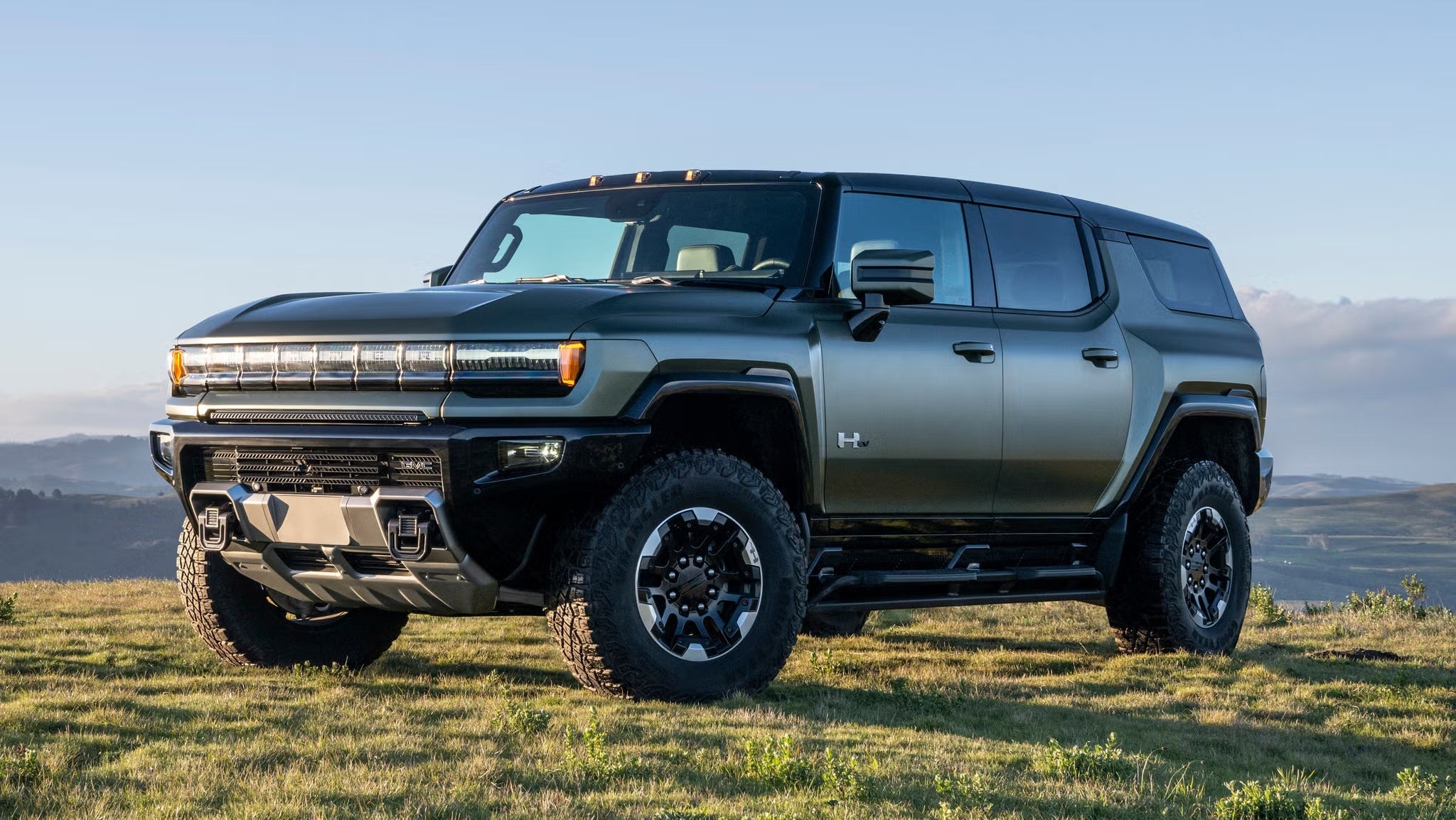
This surge is driven by an expanded lineup that appeals to multiple buyer segments. Luxury shoppers are drawn to the Cadillac Escalade IQ, an electric version of the brand’s iconic SUV, while budget-conscious families have flocked to the Chevrolet Equinox EV, which has emerged as one of the market’s hottest-selling affordable EVs. Meanwhile, new models like the Cadillac Optiq, Chevy Blazer EV SS, and Cadillac Lyriq-V have broadened GM’s portfolio across performance and design.

Chevrolet Equinox EV


The FOMO Effect and the EV Tax Credit Rush

While GM’s new models are certainly a factor, analysts agree that FOMO (fear of missing out) is the true accelerant behind recent record sales. The One Big Beautiful Bill Act, signed into law on July 4, 2025, eliminates all federal EV tax credits starting October 1.

That means buyers currently have a short window to claim the $7,500 federal credit—a deadline that has triggered a stampede to dealerships. Experts had predicted that July through September 2025 would be the strongest quarter ever for U.S. EV demand, and GM’s numbers so far are proving them right.


GM Prepares for the Inevitable Slowdown

GM executives are under no illusions that this sales boom will last. Duncan Aldred, GM’s President of North America, acknowledged in a company blog post that sales will inevitably slow once incentives disappear.

“We’re expecting strong demand once again in September. The question, of course, is what’s next? There’s no doubt we’ll see lower EV sales next quarter after tax credits end September 30, and it may take several months for the market to normalize. We will almost certainly see a smaller EV market for a while, and we won’t overproduce.”

The end of subsidies will raise the effective price of EVs, reducing their competitiveness in a still price-sensitive market.


Policy Shifts Reshape America’s EV Market

The challenges don’t stop with tax credits. The Trump administration’s rollback of vehicle efficiency regulations removes key pressures that had been pushing automakers toward electrification. Without regulatory sticks or financial carrots, consumer adoption is expected to cool significantly.

Research firm BloombergNEF recently slashed its U.S. EV adoption forecasts, projecting that 14 million fewer plug-in vehicles will be sold between 2025 and 2030 compared with earlier estimates.

cadillac escalade IQ


Long-Term Commitment to EVs Remains

Despite looming headwinds, GM and other major automakers remain committed to EVs. The company has poured billions into battery plants, software platforms, and new electric models, betting that EVs represent the future of transportation. While the U.S. market may contract sharply in late 2025 and 2026, the long-term trajectory still points toward electrification as technology improves and costs come down.

For now, GM is bracing for turbulence. After a record-breaking summer, the real test will come this fall—when America’s EV market faces its first major policy-induced slowdown.

Recommend Reading: GM Temporarily Halts Production of Hummer EV and Escalade IQ

FAQs - Best-Selling EVs in the U.S. (2025)

Which electric vehicles are the top-selling models in the U.S. market in 2025?

The most popular EVs in 2025 include the Tesla Model Y, Model 3, Ford Mustang Mach-E, Chevrolet Bolt EV, Hyundai Ioniq 5, and Kia EV6. These models dominate U.S. sales charts thanks to their combination of range, pricing, and availability.

What is the range and price of the Tesla Model Y?

The Tesla Model Y offers an EPA range between 318–330 miles (Long Range AWD) at a starting price around $46,000. The Performance version provides dual motor acceleration while maintaining a strong range, typically above 300 miles depending on driving conditions.

How much does the Ford Mustang Mach-E cost and how far can it go?

The Mustang Mach-E starts near $40,000–$45,000 for the standard range RWD version, with EPA-estimated range of 230–270 miles. The extended-range AWD and GT Performance variants offer improved range (up to 320 miles) and acceleration, justifying their higher price.

Is the Chevrolet Bolt EV still a good choice in 2025?

Yes. Priced under $30,000 after federal incentives, the Bolt EV offers a solid EPA range of ~260 miles, making it a budget-friendly, reliable compact EV ideal for urban and suburban commuters.

What makes the Hyundai Ioniq 5 stand out among EVs?

The Ioniq 5 is praised for its ultra-fast charging (800V architecture, 10-80% in ~18 minutes), spacious interior, stylish design, and EPA range of 220–303 miles depending on battery and drive combination. Pricing starts around $44,000 after incentives.

How does the Kia EV6 compare with the Ioniq 5?

The Kia EV6 shares many components with the Ioniq 5 but emphasizes a sportier look and driving experience. Range varies between 240–325 miles depending on trim, with pricing similar—typically in the $44,000–$55,000 range after incentives.

Which EV among the top models offers the best value for long-distance travel?

The Tesla Model Y Long Range offers the best all-around value for long trips due to its extensive Supercharger network, ~330 miles range, and advanced driving assistance. Hyundai Ioniq 5 and Kia EV6 also offer excellent efficiency with fast charging, making them strong alternatives.

How do these EVs compare in terms of charging compatibility and charging time?

Most models—Tesla (NACS), Mach-E / Bolt EV / Ioniq 5 / EV6 (CCS1)—are brightening compatibility. The Ioniq 5 and EV6 stand out with 800V fast charging up to 233 kW, allowing 10–80% in about 18 minutes. Mach-E and Bolt EV charge at slower rates (~150 kW). Tesla offers up to 250 kW via NACS Superchargers.

What is the total cost of ownership (TCO) like for these top-selling EVs?

Although prices vary, EVs like the Bolt EV and Ioniq 5 have some of the lowest TCO due to lower maintenance and energy costs. While Model Y and Mach-E have higher upfront costs, resale value and long-term savings on fuel can offset the initial expense over 5–10 years.

How do federal and state incentives impact the MSRP of these EVs?

Federal tax credit of up to $7,500 can significantly reduce the up-front purchase price. Additionally, many states offer rebates, HOV lane access, and utility discounts. For example, a Trim-level Mach-E or Model Y effectively costs $40–45k after combined incentives, increasing affordability.

EV News

View all

Global Plug-In Vehicle Sales Hit 20 Million in 2025 as U.S. Momentum Fades

Global Plug-In Vehicle Sales Hit 20 Million in 2025 as U.S. Momentum Fades

Global plug-in vehicle sales reached 20.7 million in 2025, led by Europe and emerging markets. The U.S. lost momentum after ending federal EV incentives, while China’s growth slowed and policy stability proved critical worldwide.

Read more

Trump Signals Openness to Chinese EV Makers—If They Build in America

Trump Signals Openness to Chinese EV Makers—If They Build in America

Trump says Chinese EV brands can enter the U.S. if they invest locally and create jobs. As Chinese automakers eye America, Detroit faces rising competition, shifting consumers, and a more global EV market.

Read more

Which EVs Still Grew After Incentives Ended—and Why It Matters

Which EVs Still Grew After Incentives Ended—and Why It Matters

After the $7,500 EV tax credit expired, most models saw Q4 sales fall. Yet about a dozen EVs—from Tesla to Porsche—still grew, showing that strong products and premium buyers can overcome policy headwinds.


Read more