





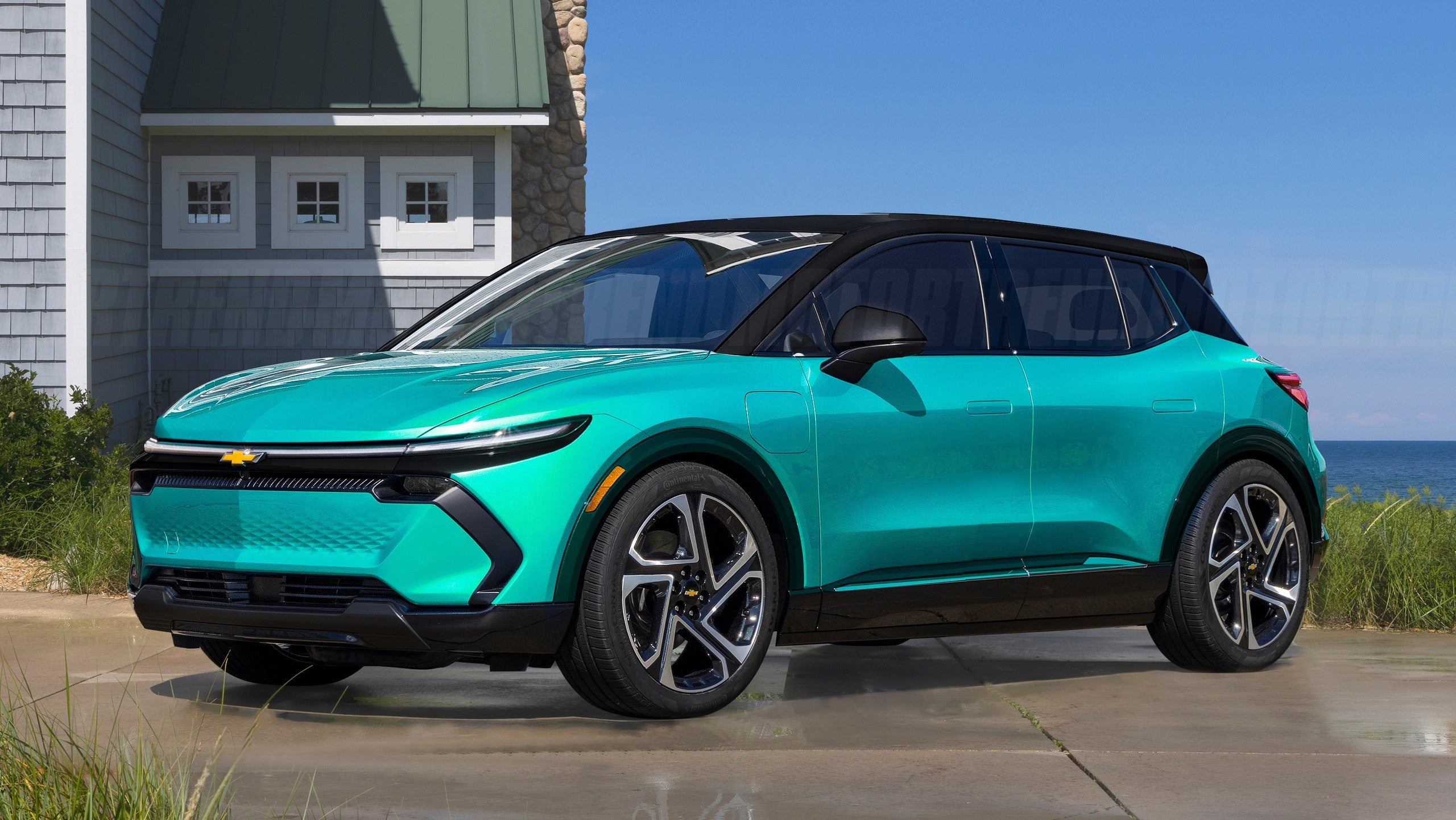
A Rare Affordable EV in a Market Moving Upmarket
Electric vehicles in the United States face a persistent contradiction. Policymakers and industry leaders often emphasize the need for lower-priced EVs, yet the vehicles that generate the strongest sales are typically larger and more expensive. Many buyers gravitate toward crossovers and luxury-leaning models even as monthly car payments climb.
Within that environment, the 2027 Chevrolet Bolt stands out as an unusual product. It aims to deliver practical electric transportation at a price point far below most rivals. On paper, it represents exactly the type of car advocates say the market needs: compact, efficient, and relatively inexpensive.
However, structural factors within the U.S. auto market suggest that the Bolt’s future may be limited from the start. Even though the vehicle improves on its predecessor in several ways, its long-term prospects appear uncertain.

Revisiting One of the First Practical EVs
When the original Bolt debuted in 2016, it became one of the earliest electric cars offering more than 200 miles of driving range at a price reachable for many mainstream buyers. At the time, this combination made it one of the few EVs that could realistically replace a gasoline vehicle for daily use.
Yet the first generation also had shortcomings. Early versions lacked certain technologies that later became common in EVs, such as efficient thermal systems for battery conditioning. Charging speeds were also modest, which limited its usefulness on longer journeys.
The 2027 iteration attempts to address many of those limitations. Charging capability has improved significantly, and the vehicle integrates newer digital features found in other recent Chevrolet electric models.
2027 Chevrolet Bolt Specifications
| Specification | Details |
|---|---|
| Base Price | $28,995 (including destination) |
| Battery | 65 kWh lithium-iron-phosphate (LFP) |
| Charging Time | 10%–80% in 26 minutes |
| Range | 262 miles |
| Drive Configuration | Front-wheel drive |
| Power Output | 210 hp / 169 lb-ft |
| 0–60 mph | 6.8 seconds |
New Battery Technology Improves Efficiency
One of the most significant changes is the introduction of a 65-kWh lithium-iron-phosphate (LFP) battery pack. This chemistry differs from the nickel-rich cells widely used in many Western electric vehicles.
LFP batteries offer several advantages. They are generally less expensive to manufacture, tolerate frequent full charging better, and tend to maintain capacity more consistently over time. Because of these characteristics, they are increasingly viewed as well suited for lower-cost EVs designed primarily for daily commuting.
Although the battery capacity remains similar to that of the previous Bolt EUV, the updated version delivers an estimated 262 miles of range, slightly higher than before. Fast-charging capability has also improved significantly. Chevrolet says the battery can recharge from 10% to 80% in about 26 minutes, making longer trips more practical.

Familiar Powertrain With Enough Performance
Power comes from a single front-mounted electric motor producing 210 horsepower and 169 lb-ft of torque. While those numbers may appear modest compared with larger electric SUVs, they are adequate for a vehicle of this size.
Chevrolet estimates the Bolt can accelerate from 0 to 60 mph in roughly 6.8 seconds, which places it comfortably within the range expected for compact EVs. Instant torque from the electric motor also helps the car feel responsive in everyday driving conditions.
Importantly, the Bolt remains the least expensive electric vehicle currently available in the United States, with a starting price of $28,995 including destination fees. In a market where many EVs cost far more, this price point is notable.
Interior Technology and Practical Design
Inside the cabin, the changes are more visible than on the exterior. The vehicle incorporates Google-based infotainment software, allowing built-in access to services such as navigation, streaming music, and integrated route planning for charging stops.
However, the system replaces support for Apple CarPlay and Android Auto, a decision that may divide buyers. Some drivers appreciate fully integrated software ecosystems, while others prefer the familiarity of smartphone mirroring.
The cabin layout prioritizes practicality. Numerous storage compartments appear throughout the front seats, including shelves, cupholders with adjustable dividers, and multiple bins for everyday items. Rear seating space is also relatively generous for a vehicle in this segment.
Another noteworthy feature is a 360-degree camera recording function that can store footage on a USB drive, similar in concept to the surveillance systems offered by some competitors.
Physical controls remain available for key functions such as climate adjustments and seat heating, which may appeal to drivers who dislike touch-only interfaces.

Driving Experience Focused on Everyday Use
Behind the wheel, the Bolt is designed primarily for daily transportation rather than performance driving. Its compact dimensions and short wheelbase make it easy to maneuver in city environments.
On winding roads, the instant torque and small footprint can make the car feel lively. However, suspension tuning prioritizes comfort and efficiency rather than aggressive handling. As with many small vehicles, bumps and rough pavement may be more noticeable than in larger SUVs.
On highways, cabin noise remains relatively controlled, and Chevrolet’s Super Cruise hands-free driving system is available as an option. This technology can assist with lane positioning and automated lane changes on certain highways.
The feature, however, adds significant cost when combined with the packages required to enable it. Buyers seeking the full driver-assistance system may pay several thousand dollars above the base price.

Market Forces That Could Limit Its Lifespan
Despite its strengths, the Bolt faces structural challenges that go beyond the vehicle itself. U.S. consumer preferences have increasingly shifted toward larger SUVs and trucks, leaving smaller cars with a shrinking share of the market.
In addition, policy changes and manufacturing priorities have influenced production planning. Reports indicate that the Kansas facility building the Bolt may eventually shift toward manufacturing more profitable gasoline-powered SUVs.
If that transition occurs as expected, the Bolt’s production run could be relatively brief. Limited manufacturing timelines can restrict sales potential regardless of product quality.
A Practical EV That Reflects a Bigger Question
From a technical perspective, the 2027 Bolt demonstrates that an electric vehicle can deliver solid range, reasonable charging times, and useful technology at a relatively accessible price.
Yet its uncertain future highlights a larger question within the American EV market: whether buyers truly want compact, affordable electric cars in significant numbers. While industry discussions often emphasize affordability, actual purchasing patterns suggest many consumers continue to prioritize size, luxury, and power.
Until that preference shifts, vehicles like the Bolt may remain niche products rather than mainstream successes.
Recommend Reading: 2027 Chevy Bolt Gains Extra Range While Holding the Title of America’s Cheapest EV


Share:
Slate Appoints New CEO Ahead of Affordable EV Pickup Launch
2027 Chevy Bolt EV Fast-Charging Test Shows Major Upgrade