


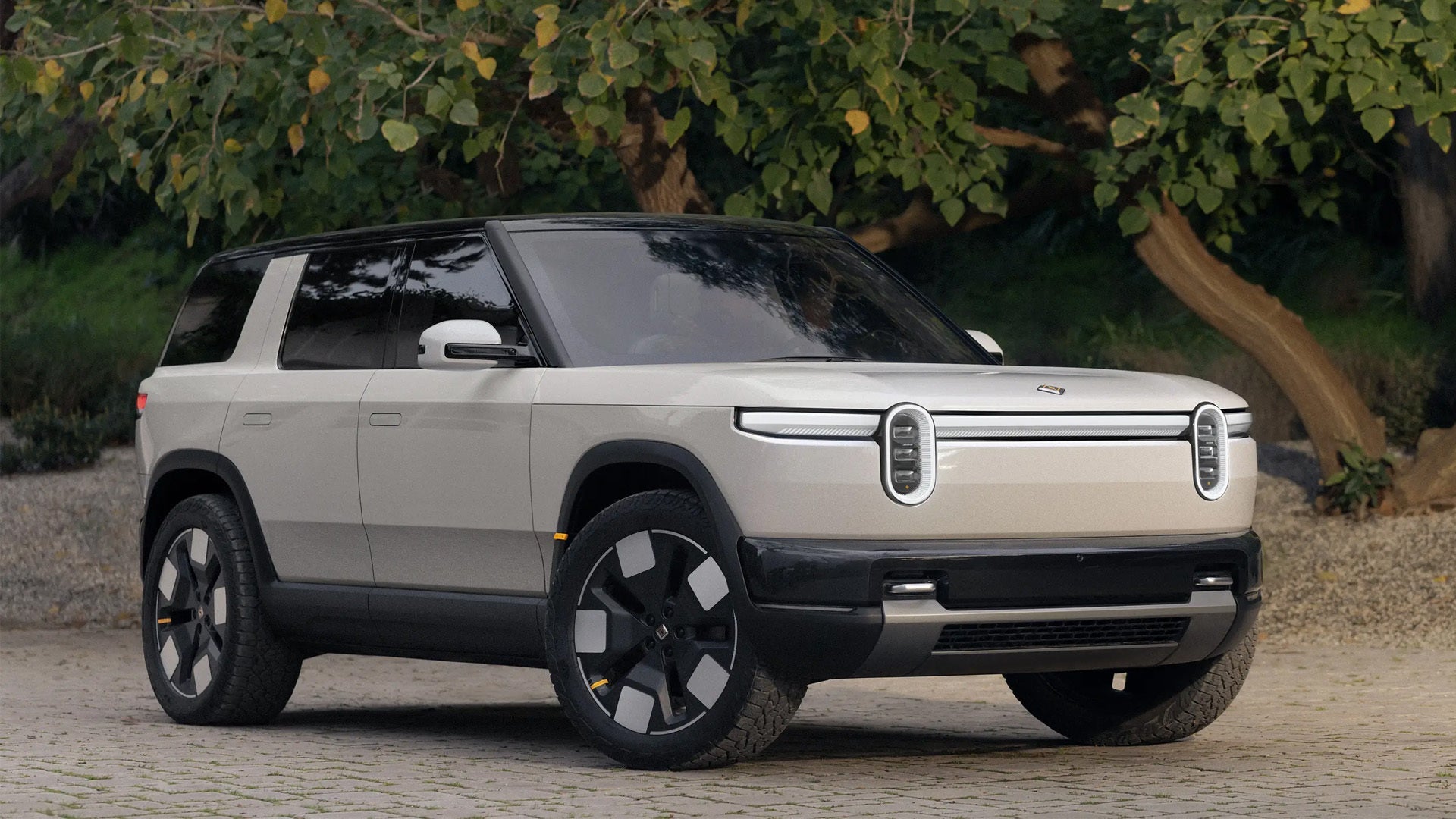
Rivian has taken a significant step toward launching its next-generation electric crossover. The company confirmed it has completed its first manufacturing validation builds of the Rivian R2, bringing the long-awaited model closer to customer deliveries planned for 2026.
For Rivian, this milestone is more than procedural. The R2 is widely viewed as the company’s most important product to date—and one that could determine whether the EV startup can finally reach sustainable scale.

What Manufacturing Validation Builds Really Mean
Rivian announced that the initial R2 manufacturing validation builds (MVBs) were completed at its factory in Normal, Illinois. These vehicles are not prototypes in the traditional sense. Instead, they are near-production cars built using production-intent tooling, equipment, and assembly processes.
According to Rivian, the goal of this phase is to confirm that the factory can build the R2 correctly, consistently, and at volume. This is the point where engineering ambition meets manufacturing reality. It answers a critical question for any automaker: not just whether a vehicle can be built, but whether it can be built reliably and repeatedly.
Delivery Timeline Remains on Track
Alongside the announcement, Rivian reiterated its plan to begin customer deliveries of the R2 in the first half of 2026. That timeline places the vehicle squarely in the middle of a crowded EV launch window, with more than 30 new electric models expected to debut across the industry next year.
Staying on schedule will be essential. Any production delays could weaken Rivian’s competitive position, especially as rivals refine their mass-market EV offerings and pricing strategies.
Why the R2 Is Critical for Rivian’s Future
The R2 is designed to start at around $45,000, targeting the heart of the U.S. EV market and competing directly with vehicles like the Tesla Model Y. This marks a major shift for Rivian, whose current lineup—the R1T pickup and R1S SUV—typically sells for well over $90,000.
While those vehicles have earned strong reviews, their high prices limit volume. Rivian is betting that the R2 can unlock real economies of scale, broaden its customer base, and create a viable path toward profitability. Company leadership has been clear: Rivian’s long-term success depends on making smaller, more affordable EVs work.
Scaling Production Is the Real Test
Launching a new vehicle is always difficult, and EV startups have often struggled during early production ramps. Tesla faced quality issues in its early years, while newer players like Lucid have dealt with software and integration challenges.
That context makes Rivian’s validation builds especially important. This phase is designed to surface manufacturing issues early—before full-scale production begins—when fixes are faster and less costly. Execution, not design, is now Rivian’s biggest risk.
A Promising Concept in a Tough Market
The R2’s smaller footprint, lower price, and brand identity give it strong potential appeal in a market that remains cautious about EV adoption. Industry analysts see the model as a possible bright spot during a period of slower growth and reduced incentives.
Still, optimism alone will not carry the program. Rivian must prove it can produce the R2 at scale, control costs, and maintain quality—all while managing cash burn and investor expectations.

The Road Ahead for Rivian
With manufacturing validation builds underway, Rivian has crossed an important internal checkpoint. But the most difficult phase still lies ahead. Turning a promising EV into a high-volume, profitable product is where many startups stumble.
If Rivian succeeds, the R2 could become the company’s defining model. If it falters, the consequences could extend far beyond a single vehicle launch.
Recommend Reading: Rivian R2 Launches Without Lidar; Hardware Upgrade Plans Announced

Partager:
Tesla Model Y Remains America’s Best-Selling EV Despite Market Shifts
Which EVs Still Grew After Incentives Ended—and Why It Matters