




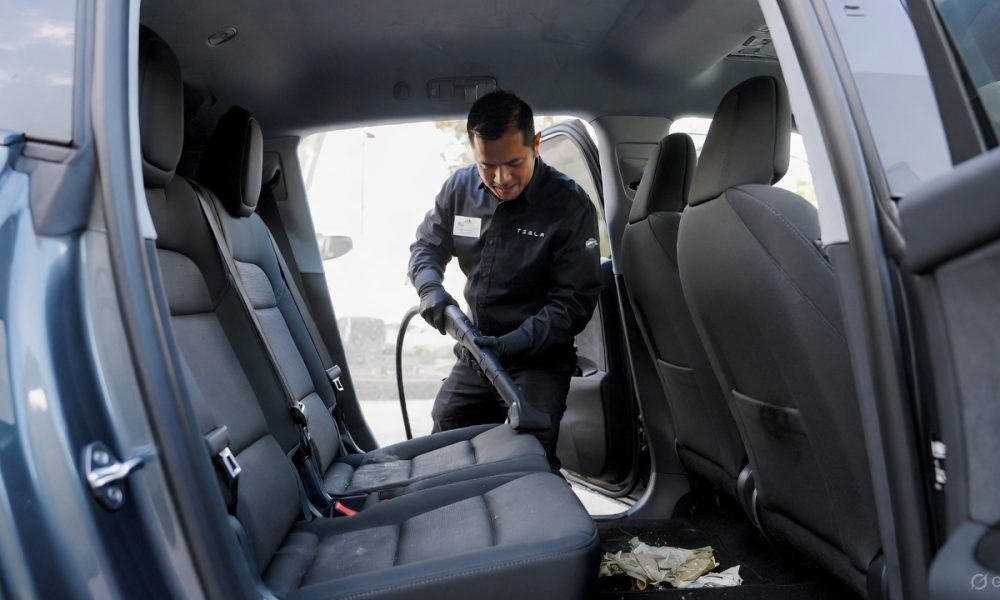
Tesla is taking a page from the traditional ride-hailing playbook. Riders using its Robotaxi service can now be charged cleaning fees if they leave a mess behind, including food spills, smoking residue, or worse. While the policy itself is not unusual, it highlights a growing gap between Tesla’s autonomous vision and the practical realities of running a shared vehicle fleet.

How the New Cleaning Fees Work
According to information shared by Tesla watchers, the company has introduced two tiers of cleaning charges for Robotaxi rides. The amount billed depends on how much effort is required to return the vehicle to service.
Minor issues, such as crumbs, dirt tracked inside, or small food spills, fall into a lower tier and can result in a $50 fee. More serious incidents—including vomiting, smoking inside the vehicle, or significant interior contamination—can trigger charges up to $150.
Tesla states that any mess deemed substantial enough to disrespect the vehicle interior may qualify for the higher fee. The policy mirrors long-standing practices used by Uber, Lyft, and other ride-hailing services.
Why the Fees Matter More Than They Seem
Cleaning fees themselves are not controversial. What makes this move notable is how it contrasts with Tesla’s messaging around autonomy. The company has long positioned Robotaxi as a low-friction, highly automated service that could operate with minimal human involvement.
Tesla has previously suggested that autonomous vehicles would be able to clean and recharge themselves, dramatically lowering operating costs. In reality, today’s Robotaxi fleet still depends heavily on people for routine tasks, including cleaning, inspection, and repositioning.
Charging riders for messes is a practical necessity, but it also underscores how far current systems remain from Tesla’s fully autonomous ideal.
The Human Labor Behind Autonomous Rides
Despite the branding, Tesla’s Robotaxi vehicles are not fully independent machines. Cleaning cannot yet be automated at scale, and charging infrastructure still requires oversight and coordination.
Until Tesla develops reliable automated cleaning bays and self-service maintenance processes, every dirty interior takes a car out of circulation and requires human labor to fix. Cleaning fees help offset these costs and discourage behavior that slows fleet utilization.
From an operational standpoint, the charges make sense. From a narrative standpoint, they quietly acknowledge that autonomy alone does not eliminate human work.
Trust and Cleanliness Are Core to Adoption
Cleanliness is not a luxury for shared vehicles; it is a baseline expectation. Riders are unlikely to trust a service if they regularly encounter dirty interiors or signs of previous passengers.
This concern becomes even more critical in a driverless environment. Without a human present to address problems in real time, post-ride enforcement becomes the only deterrent. Automated penalties ensure accountability, even when no driver is there to intervene.
In that context, Tesla’s cleaning fees are less about punishment and more about maintaining confidence in a shared autonomous product.
Automation Solves Driving, Not Human Behavior
Tesla’s Robotaxi policy highlights a broader truth about autonomy. Self-driving technology can handle navigation, traffic, and routing, but it does not eliminate human unpredictability.
People spill food. People smoke. People get sick after a night out. Automation changes how consequences are enforced, not whether they are needed.
In Tesla’s case, the Robotaxi does not scold riders or ask for compensation. It simply logs the issue and applies a fee after the fact. The enforcement is automated, but the problem remains human.

A Necessary Step for a Growing Fleet
As Tesla continues to expand Robotaxi operations, rules like these are unavoidable. Shared vehicles require standards, and standards require consequences.
The introduction of cleaning fees may not align perfectly with Tesla’s long-term vision of seamless autonomy, but it reflects the current reality of operating a ride service at scale. For now, the cars may be learning to drive themselves, but keeping them clean still depends on basic incentives and accountability.
Recommend Reading: Tesla Begins Unsupervised Robotaxi Tests in Austin, Raising Stakes for Autonomy









Share:
Geely Xingyuan: How a Sub-$10,000 EV Is Overtaking Tesla and BYD in China
A High-Mileage Tesla Model 3 Reveals What Really Wears Out Over Time