





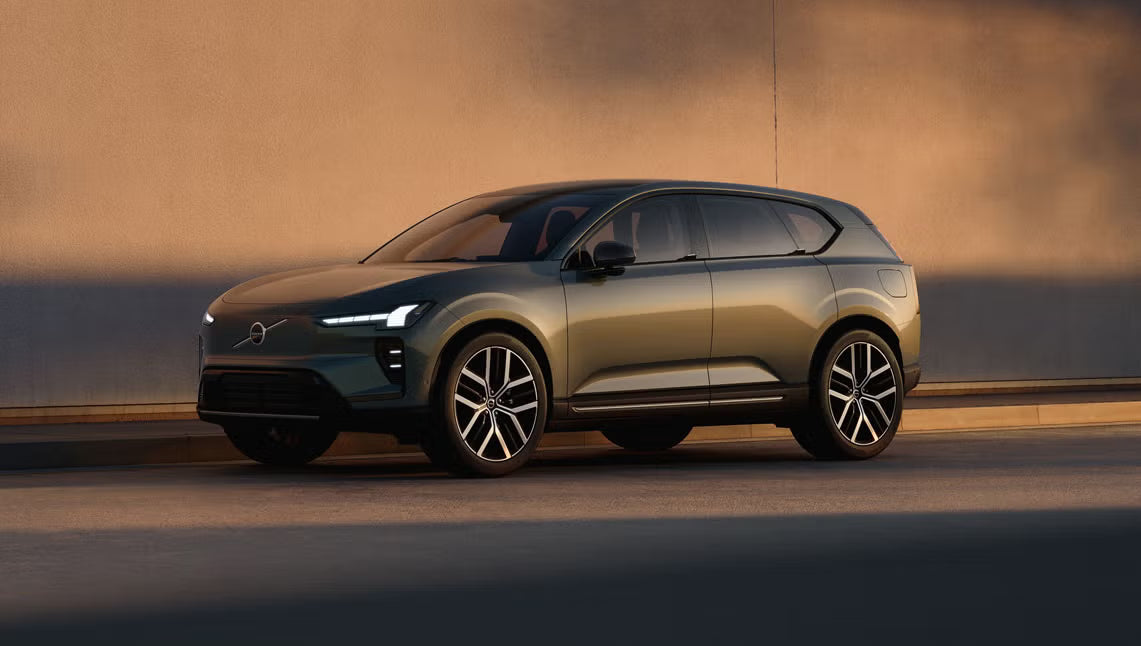
Volvo is using the EX60 to reset its electric vehicle strategy. As automakers recalibrate their EV plans amid rising competition and market uncertainty, Volvo’s latest midsize electric SUV aims to restore confidence with long range, fast charging, and a reworked technology foundation.
Positioned in the heart of the luxury crossover segment, the EX60 targets rivals such as the Tesla Model Y, BMW iX3, and Mercedes-Benz GLC EV. According to Volvo, this model represents not just another addition to its lineup, but a clear shift in how the brand designs and delivers electric vehicles.

A Clean-Sheet EV Platform
The EX60 is the first Volvo built on the company’s new SPA3 platform, marking a departure from earlier EVs adapted from gasoline architectures. This updated platform features a cell-to-body battery design, a lighter and more efficient structure, and an 800-volt electrical system.
Volvo will offer the EX60 in three configurations. The range-topping P12 AWD delivers dual-motor all-wheel drive with 400 miles of EPA-estimated range. The P10 AWD offers 320 miles, while the rear-wheel-drive P6 is rated at 310 miles. Regardless of version, Volvo positions the EX60 as a long-distance-capable electric SUV.
Charging Speed and Power Take Center Stage
Range alone is not the EX60’s main selling point. Volvo says the vehicle can charge at up to 370 kW, far exceeding the typical fast-charging speeds seen in the U.S. market today. The EX60 also adopts the North American Charging System (NACS) connector, allowing access to Tesla’s Supercharger network.
Additional highlights include bidirectional charging, a 19.2 kW onboard AC charger, and up to 670 horsepower in the top trim. Volvo claims a 10–80% charge in under 19 minutes, with up to 173 miles of range added in 10 minutes under optimal conditions.
Software, AI, and Driver Assistance
The EX60 shares its computing hardware with the larger EX90, using Nvidia’s Drive AGX Orin chip to power Volvo’s Pilot Assist system. While it does not enable hands-free driving, Volvo emphasizes long-term improvements through over-the-air software updates, with full in-house control over the vehicle’s software stack.
Volvo is also introducing Google’s Gemini AI assistant across its Android Automotive-based vehicles. In the EX60, drivers can use natural language to plan charging stops, search personal data, or manage navigation tasks more intuitively.
All of this runs through a new landscape-oriented central touchscreen, replacing Volvo’s long-used portrait-style display.
Interior, Exterior, and a New Safety Belt
Inside, the EX60 debuts Volvo’s first fully redesigned cabin since the original XC90. The layout features a minimalist design with an upright center console, reduced physical buttons, and a floating driver display.
The exterior design sits between the smaller EX30 and larger EX90, balancing compact proportions with a more upright stance. While the battery-heavy floor affects visual sleekness, Volvo leans into comfort with a panoramic roof, light interior materials, and its signature seating design.
Most notably, the EX60 introduces Volvo’s multi-adaptive safety belt, which uses sensors and AI to adjust belt load during a crash based on occupant size and severity, further reinforcing Volvo’s safety-first identity.

Pricing and Market Timing
Volvo has not released full pricing, but says a well-equipped P10 AWD model will cost around $60,000, placing it squarely against upcoming German rivals. Deliveries are expected to begin this summer.
With the EX60, Volvo is betting that meaningful range gains, faster charging, and smarter software can restore its competitive edge in a crowded luxury EV market.
Recommend Reading: Volvo EX60 Targets Long-Range Leadership in the Electric SUV Segmen









Share:
Mazda Delays Its Next EV as Hybrid Strategy Takes Priority
Lemonade Cuts Tesla Insurance Costs for Drivers Who Use FSD Regularly