





Entry-Level Version Put on Hold
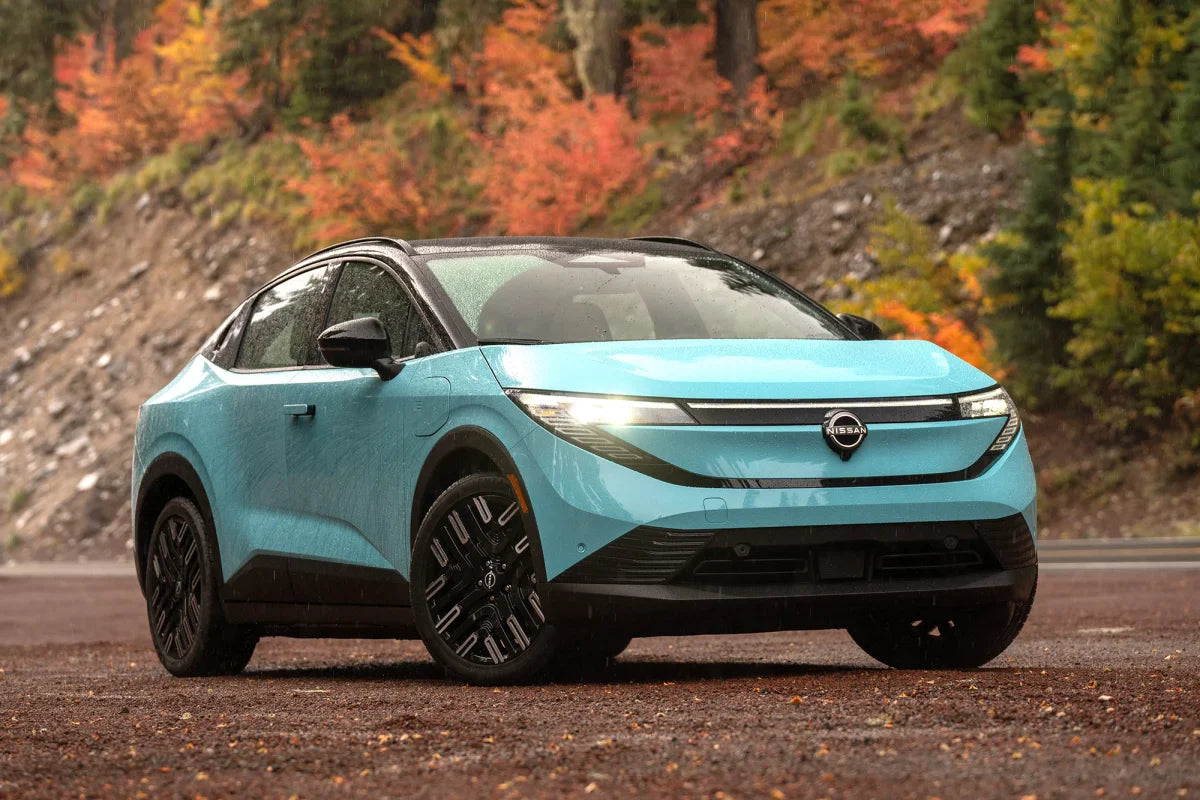
Nissan has decided not to launch a lower-cost variant of the Leaf in the United States as originally anticipated. The company confirmed that the smaller-battery configuration planned for the 2026 model year will not arrive on schedule, leaving its introduction without a defined timeline.
The current Leaf begins at $29,990 before destination charges and delivers up to 303 miles of driving range in its higher-capacity form. That combination of price and capability helped it earn recognition as a standout value in the affordable EV segment. A more economical trim was expected to push the entry price even lower, potentially reshaping competition at the bottom of the market. Instead, that plan has been paused.

What the Canceled Trim Would Have Offered
The postponed version, known internally as the Leaf S, was set to feature a 52-kilowatt-hour battery pack and a 174-horsepower motor. While Nissan did not disclose official pricing, industry observers believed it might have undercut the forthcoming 2027 Chevrolet Bolt, which is expected to start at $28,995. Had that happened, Nissan could have claimed the title of America’s least expensive new electric vehicle.
In a written statement, Dominic Vizor, Nissan’s U.S. director of product communications, said the company regularly reviews customer preferences and broader market dynamics to determine where to allocate resources. As part of that assessment, Nissan opted not to proceed with the smaller-battery Leaf this year. The company added that it remains open to revisiting different battery configurations in the future, depending on demand.
Although executives emphasized that the variant has not been formally scrapped, they declined to provide a revised launch date. Even a debut for the 2027 model year remains uncertain.
Competitive Pressures Are Mounting
The delay comes at a time when the affordable EV segment is becoming more crowded. Chevrolet is preparing a redesigned Bolt, while Kia plans to introduce the EV3 to the U.S. market. Both vehicles are positioned to attract cost-conscious buyers seeking practical electric transportation.
On paper, a cheaper Leaf could have strengthened Nissan’s hand. Lowering the barrier to entry is often a powerful strategy in a category where upfront cost remains a key obstacle. Yet pricing alone does not determine success, particularly when consumers prioritize driving range.
Tariffs and Profitability Concerns
One factor complicating the equation is manufacturing location. The Leaf sold in the U.S. is built in Japan, which means it is subject to import duties. Given that reality, maintaining profitability on a vehicle priced around $30,000—especially one equipped with a 75-kWh battery in higher trims—may already be challenging.
Reducing the battery capacity by roughly 25% would likely place estimated range in the low 200-mile bracket. While that figure could suffice for daily commuting, the U.S. market has shown a strong preference for vehicles capable of traveling 250 miles or more on a single charge. Models falling short of that benchmark have historically struggled to gain traction.
From that perspective, Nissan’s hesitation reflects more than simple cost-cutting. A lower-priced Leaf with modest range might not resonate with buyers who view long-distance capability as essential.
Sales Data Paints a Mixed Picture
The broader performance of the new-generation Leaf also raises questions. Although the nameplate has long been associated with accessible electrification, its recent sales trajectory has been uneven.
For the fourth quarter of 2025, Leaf sales dropped 86% compared with Q4 2024. Interpreting that figure requires caution. Some analysts point to production limitations, while others note that buyers rushed to complete purchases before federal tax incentives expired, potentially pulling demand forward into earlier quarters. Additionally, Nissan may have prioritized higher-margin vehicles during constrained supply periods.
Regardless of the cause, the numbers indicate that the updated Leaf has yet to achieve strong momentum in the U.S. market.
A Narrowing Electric Lineup
Compounding the challenge is Nissan’s current portfolio. The Ariya crossover will skip the 2026 model year in the United States, leaving the Leaf as the brand’s sole fully electric offering in this market for the time being.
That situation places greater strategic weight on the hatchback’s performance. Without a broader range of EVs to spread risk, Nissan must ensure that its primary electric product meets both profitability targets and consumer expectations.

Outlook Remains Uncertain
Delaying the smaller-battery Leaf removes what could have been a compelling entry point for budget-focused shoppers. At the same time, concerns about range, tariffs, and market demand provide understandable reasons for caution.
Whether the postponed variant eventually reaches showrooms will depend on how the competitive landscape evolves and how buyers respond to existing options. For now, Nissan appears focused on balancing affordability with financial sustainability in a rapidly shifting electric vehicle environment.
Recommend Reading: 2026 Nissan Leaf Highway Range Test at 70 MPH: Real-World Results Explained










Share:
Why Is Tesla’s Cybertruck Priced Under $60,000 for 10 Days?
How Long Do Used EV Batteries Really Last? New Data Explained