A Short-Term Price Cut Draws Attention

Tesla has introduced a lower-priced version of the Cybertruck, bringing the starting figure to $59,990. For many prospective buyers, this marks the first time the stainless-steel pickup has approached a price point that feels broadly attainable without stripping away core comfort and technology features.

However, the adjustment may not last. Shortly after the announcement, Elon Musk indicated on X that the offer would remain in place for “only the next 10 days.” After that window closes, the company intends to reassess. According to Musk, the future price will depend on how buyers respond at this level, suggesting Tesla is testing demand elasticity rather than committing to a permanent reduction.

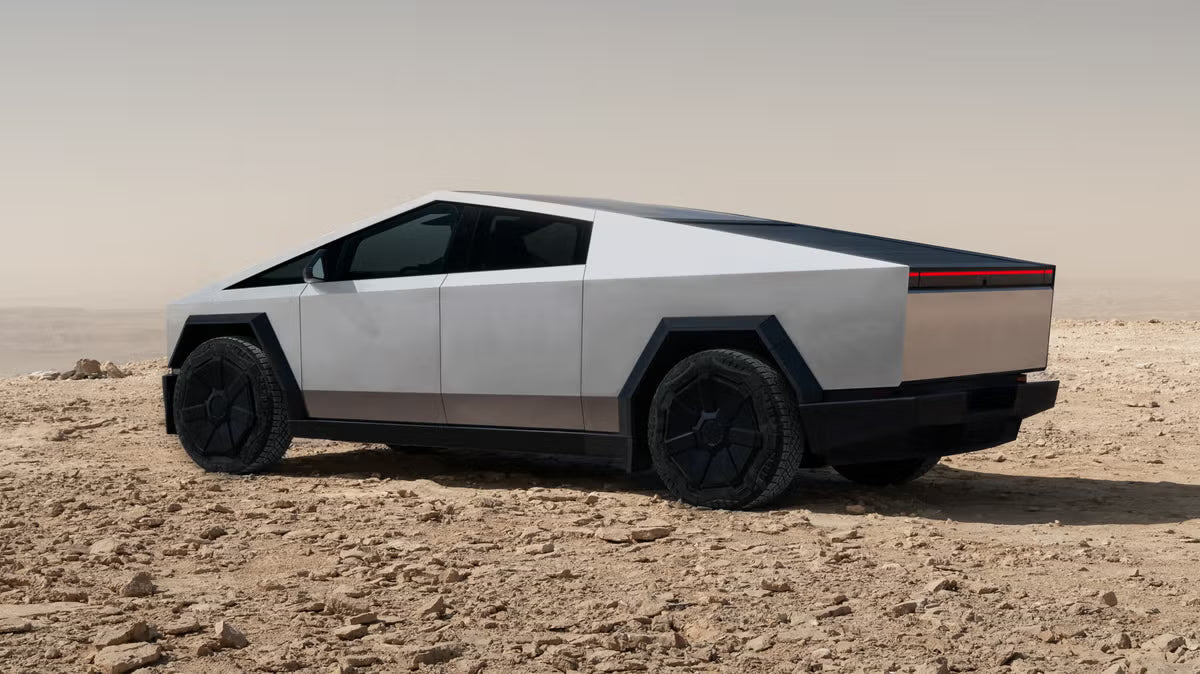
CyberTruck driving on the road.


A Familiar Pattern in Tesla’s Pricing Strategy

Tesla has a history of headline-grabbing price moves. The company’s fluctuating pricing for the Model 3 became so frequent that enthusiasts created informal tracking tools to monitor the changes. The much-publicized $35,000 Model 3 once touted as an affordable breakthrough ultimately appeared in limited form before disappearing.

The Cybertruck’s temporary sub-$60,000 price follows a similar pattern. By announcing a defined time frame, Tesla adds urgency while retaining flexibility. Rather than locking in a long-term baseline, the automaker can evaluate order volume and adjust margins accordingly.

This approach also reflects Tesla’s broader practice of treating pricing as a dynamic lever. Instead of adhering to traditional model-year adjustments, the company frequently recalibrates figures in response to supply conditions, demand signals, or strategic shifts.


Changes Across the Lineup

The recent revision is not confined to the entry-level variant. Tesla has also adjusted pricing higher up the Cybertruck range, including the performance-focused Cyberbeast trim. At the same time, the company removed a previously mandatory option package that had significantly increased the vehicle’s cost.

That bundle, known as the “Luxe Package,” included Tesla’s Full Self-Driving (FSD) capability and added approximately $15,000 to the purchase price when it was introduced about six months ago. With the package no longer required, buyers can configure the truck at a lower base cost.

The reversal appears linked to a shift in how Tesla distributes its advanced driver-assistance software. Instead of emphasizing a lifetime license purchased upfront, the company has increasingly steered customers toward a subscription-based model. By separating software from hardware pricing, Tesla gains recurring revenue while reducing the initial financial barrier for buyers.


Context: Expectations vs. Reality

When the Cybertruck was first revealed in 2017, Tesla cited a starting price of $40,000. Adjusted for inflation to 2026 dollars, that figure would be roughly $52,750. Even so, the new limited-time offer still exceeds the original projection by a notable margin.

In practice, the production Cybertruck has consistently carried higher prices than early estimates. Last year, Tesla introduced a rear-wheel-drive configuration at a price point roughly $10,000 above what many observers had anticipated. That version was later discontinued, leaving buyers with more expensive alternatives.

Against that backdrop, a $59,990 entry price can appear relatively competitive—particularly for consumers drawn to the vehicle’s unconventional design and electric performance credentials. While it does not match the initial promise from seven years ago, it narrows the gap between expectation and current reality.


Demand as the Deciding Factor

Musk’s statement makes clear that the present figure is effectively an experiment. If order volume proves strong, Tesla may interpret the response as justification for maintaining or even increasing pricing. If interest softens, the company could opt for further adjustments.

Such responsiveness underscores Tesla’s willingness to let market reaction guide financial decisions in real time. Rather than issuing long-term guarantees, the automaker often uses limited windows to stimulate engagement and gather data.

For potential customers, this creates both opportunity and uncertainty. The temporary reduction offers a chance to secure the truck at a comparatively lower price, yet it also signals that future costs may shift without much notice.

Tesla Cybertruck Slowdown Triggers Major Losses for a Key Battery Supplier


Implications for Buyers and the Market

The Cybertruck occupies a niche within the broader EV landscape. Its angular exterior, stainless-steel body panels, and polarizing styling have ensured high visibility but also limited mainstream appeal. Pricing plays a critical role in determining how wide its customer base can become.

A starting figure below $60,000 positions the model closer to other premium electric pickups and large SUVs, though it remains far from entry-level territory. Whether the short-term strategy translates into sustained sales growth will depend on consumer appetite at this price band.

For now, Tesla has effectively turned a pricing decision into a timed event. As the 10-day window approaches its end, observers will be watching closely to see whether the company locks in the lower rate or pivots once again.

Recommend Reading: Tesla Cybertruck Slowdown Triggers Major Losses for a Key Battery Supplier
Laissez un commentaire

Veuillez noter que les commentaires doivent être approuvés avant d'être publiés.

Ce site est protégé par hCaptcha, et la Politique de confidentialité et les Conditions de service de hCaptcha s’appliquent.

FAQ - Tesla Cybertruck

Quel est le prix du Tesla Cybertruck aux États-Unis pour 2025 ?

Le prix du Tesla Cybertruck démarre autour de 60 990 $ pour le modèle à transmission intégrale , et les versions plus performantes comme le Cyberbeast coûtent plus de 99 990 $ . Les prix peuvent varier en fonction de la configuration, des extensions logicielles comme la conduite entièrement autonome (FSD) et des avantages ou crédits d'impôt disponibles.

Quelle est l'autonomie du Tesla Cybertruck par charge complète ?

Le Tesla Cybertruck offre une autonomie estimée entre 400 et 550 km , selon la version. La transmission intégrale à deux moteurs offre environ 480 km, tandis que la finition Cyberbeast offre des performances équilibrées avec environ 515 km. Un futur prolongateur d'autonomie pourrait porter l'autonomie totale à plus de 750 km .

À quelle vitesse le Tesla Cybertruck peut-il se charger avec NACS et Supercharger V4 ?

Le Cybertruck est compatible avec la norme de recharge NACS de Tesla , donnant accès au réseau Supercharger . Avec un Supercharger V4 , il peut gagner environ 206 km en 15 minutes , selon la capacité de la batterie et les conditions. Cela le rend compétitif face à d'autres camions électriques comme le Ford F-150 Lightning et le Rivian R1T.

Quelle est la capacité de remorquage du Tesla Cybertruck ?

Le Cybertruck offre une capacité de remorquage allant jusqu'à 5 000 kg , rivalisant avec des camions traditionnels comme le Ford F-150 et le Chevrolet Silverado. Conçu pour le transport de charges lourdes, de matériel de camping, de bateaux et de remorques , il est un choix de choix pour les propriétaires de véhicules électriques en quête de polyvalence.

Le Tesla Cybertruck est-il équipé d'un exosquelette en acier inoxydable pare-balles ?

Oui. Le Cybertruck utilise un exosquelette en acier inoxydable laminé à froid Ultra-Hard 30X , conçu pour résister aux chocs, à la corrosion et même aux impacts de balles de petit calibre. Associé à des vitres blindées , il améliore la durabilité pour les conditions tout-terrain et les utilisations extrêmes.

Quelles sont les caractéristiques intérieures du Tesla Cybertruck ?

L'intérieur du Cybertruck comprend un écran tactile de 17 pouces avec système d'exploitation Tesla , un volant à fourche , des sièges pouvant accueillir jusqu'à 6 passagers et une prise de courant 120/240 V pour les outils et les appareils électroménagers. Tesla privilégie un design minimaliste , avec des matériaux haut de gamme et des solutions de rangement astucieuses.

Comment le Tesla Cybertruck se compare-t-il au Ford F-150 Lightning et au Rivian R1T ?

Le Cybertruck offre une capacité de remorquage supérieure, une autonomie accrue et l'accès au réseau Supercharger de Tesla , ce qui lui confère un avantage en termes de commodité de recharge. Le F-150 Lightning offre une meilleure connaissance de la marque et un service après-vente plus complet , tandis que Rivian met l'accent sur les fonctionnalités d'aventure tout-terrain .

Le Tesla Cybertruck est-il équipé d'un système de conduite entièrement autonome (FSD) ?

Oui, le Cybertruck est compatible avec le pack optionnel de conduite entièrement autonome de Tesla, qui comprend la navigation en mode pilote automatique, le changement de voie automatique, l'appel intelligent et le stationnement automatique . Bien que le système Tesla FSD ne soit pas encore totalement autonome (niveau 5), il continue de s'améliorer grâce aux mises à jour logicielles à distance .

Le Tesla Cybertruck peut-il être utilisé pour des aventures hors route ?

Oui. Le Cybertruck est équipé d'une suspension pneumatique adaptative offrant une garde au sol allant jusqu'à 40 cm , d'une direction intégrale pour les manœuvres serrées et d'un exosquelette étanche . Ces caractéristiques le rendent particulièrement performant pour le camping tout-terrain, le tout-terrain et les terrains accidentés .

Quand les livraisons de Tesla Cybertruck s’étendront-elles au-delà des États-Unis ?

Les premières livraisons ont commencé fin 2023 aux États-Unis. L'expansion au Canada, en Europe et sur d'autres marchés internationaux devrait se faire progressivement, en fonction des approbations réglementaires et de l'augmentation de la production dans l'usine Giga Texas de Tesla .

Actualités sur les véhicules électriques

Tout afficher

How Uber Is Partnering to Compete in the Robotaxi Market

How Uber Is Partnering to Compete in the Robotaxi Market

Uber is building a global web of robotaxi partnerships, aiming to deploy autonomous rides in 15 cities by 2026. With 200M monthly users, it seeks to scale AV fleets while facing regulatory, financial and operational hurdles.


Plus

Can Rivian Handle R2 Demand With Its Service Network?

Can Rivian Handle R2 Demand With Its Service Network?

Ahead of the R2 launch, Rivian will expand to over 150 U.S. service centers and grow its mobile fleet by 50%. With up to 67,000 deliveries projected in 2026, service capacity faces a major test.

Plus

Europe EV Sales Rise in January as U.S. Market Slows

Europe EV Sales Rise in January as U.S. Market Slows

January EU data shows EVs taking 19.3% of registrations despite a shrinking overall market. Renault and BYD posted strong gains, Tesla fell, and affordable models drove adoption.

Plus