





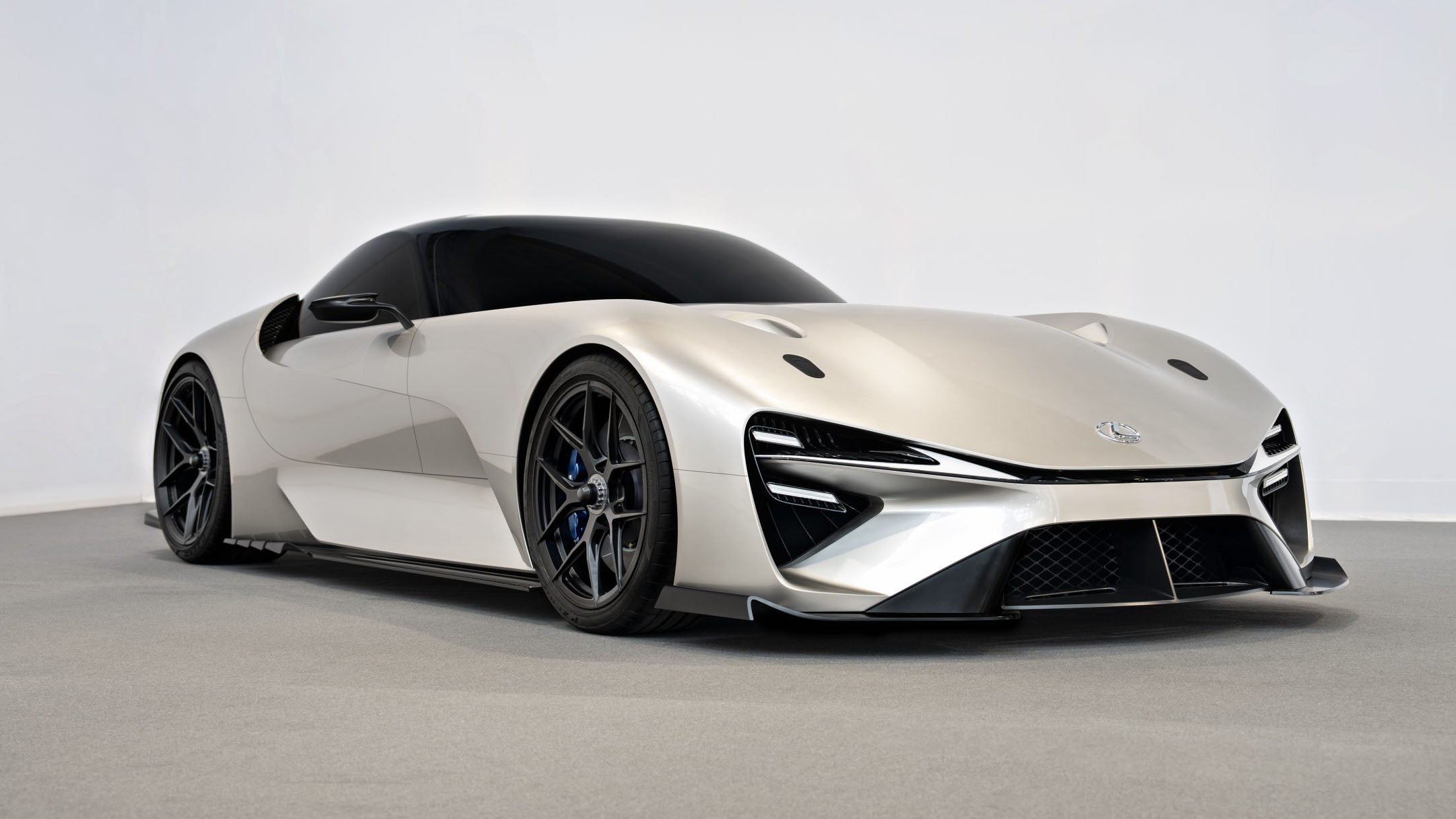
Lexus appears to be preparing a dramatic revival of its most iconic performance badge. The LFA name is returning, but not as a roaring V10 supercar. Instead, it is being positioned as a fully electric flagship, signaling a major shift in how Toyota’s luxury brand approaches halo performance in the EV era.
While production has not been officially confirmed, recent concepts and strategic moves suggest Lexus is seriously considering an electric LFA as a statement vehicle for its next phase of electrification.

A Concept Rooted in Toyota’s GR Performance Program
The foundation for a new LFA begins with Toyota’s long-rumored GR GT, a front-engine sports car developed by Toyota’s motorsports division. Industry observers have speculated for years that Lexus would develop a more premium counterpart, and that speculation gained traction after Lexus unveiled its Lexus Sports Concept at Monterey Car Week and the Japan Mobility Show.
The resemblance is no coincidence. The newly surfaced LFA concept is effectively a rebranded evolution of that earlier design, aligning Lexus styling with Toyota’s racing-derived architecture while pushing it further upmarket.
Why the LFA Name Still Matters Inside Toyota
Reviving the LFA badge carries deep internal and emotional weight. The original LFA was developed under the close oversight of Akio Toyoda, now Toyota’s chairman, and guided by legendary test driver Hiromu Naruse, Toyota’s first “Master Driver.”
Produced between 2010 and 2012, the original LFA featured a high-revving V10 engine, a carbon-fiber-intensive structure, and one of the most distinctive exhaust notes ever fitted to a production car. Technically brilliant and emotionally engaging, it remains a standout in Lexus history.
Why the Original LFA Fell Short as a Halo Car
Despite its engineering excellence, the LFA struggled commercially. Lexus priced it at over $400,000, even in 2010 dollars, in an effort to recover its massive development costs. At the same time, it was meant to signal a broader shift toward sharper-driving Lexus models—an evolution that never fully materialized.
As a result, the LFA failed to elevate the brand’s performance image at scale, limiting its impact as a true halo vehicle during its production run.
A Reputation Rebuilt Over Time
In the years since, the LFA’s standing has changed dramatically. Today, it is widely regarded as a collector-grade supercar, admired for its engineering purity, distinctive sound, and unique development story.
Meanwhile, Lexus has made meaningful progress in performance design. Models like the GS F and the LC 500 demonstrated improved dynamics and emotional appeal. Although the LC 500 never targeted the supercar segment, it helped rebuild Lexus credibility among enthusiasts.
An Electric LFA Would Be a Clean-Sheet Statement
An electric LFA would represent a fundamentally different proposition. The low, wide stance of the concept and its GT3-inspired proportions suggest something more aggressive than any EV Lexus or Toyota has built to date.
To deliver a true supercar experience, weight reduction will be critical—one of the biggest challenges facing high-performance EVs today.
Solid-State Batteries Could Be the Key
One potential solution lies in solid-state battery technology. Toyota has repeatedly confirmed its intention to commercialize solid-state batteries later this decade, citing advantages in energy density, weight, and thermal stability.
A lightweight electric supercar would be an ideal demonstration platform. If Lexus uses the LFA as a showcase for solid-state batteries, it could outperform even the upcoming gasoline-powered GR GT3 while redefining expectations for electric performance cars.

A Strategic Gamble Lexus May Need to Take
For now, Lexus remains silent on production timelines or final specifications. But the broader context is clear. Toyota is financially strong, yet behind competitors in high-profile EV launches. A bold halo project could shift perceptions quickly.
An electric Lexus LFA would not just revive a legendary name—it would signal that Lexus intends to compete at the very top of the electric performance market.
Recommend Reading: Toyota Stays Committed to New EV Launches in 2026 Despite Market Slowdown


Share:
Skoda Signals an Electric Octavia Wagon With the Vision O Concept
Geely Xingyuan: How a Sub-$10,000 EV Is Overtaking Tesla and BYD in China