



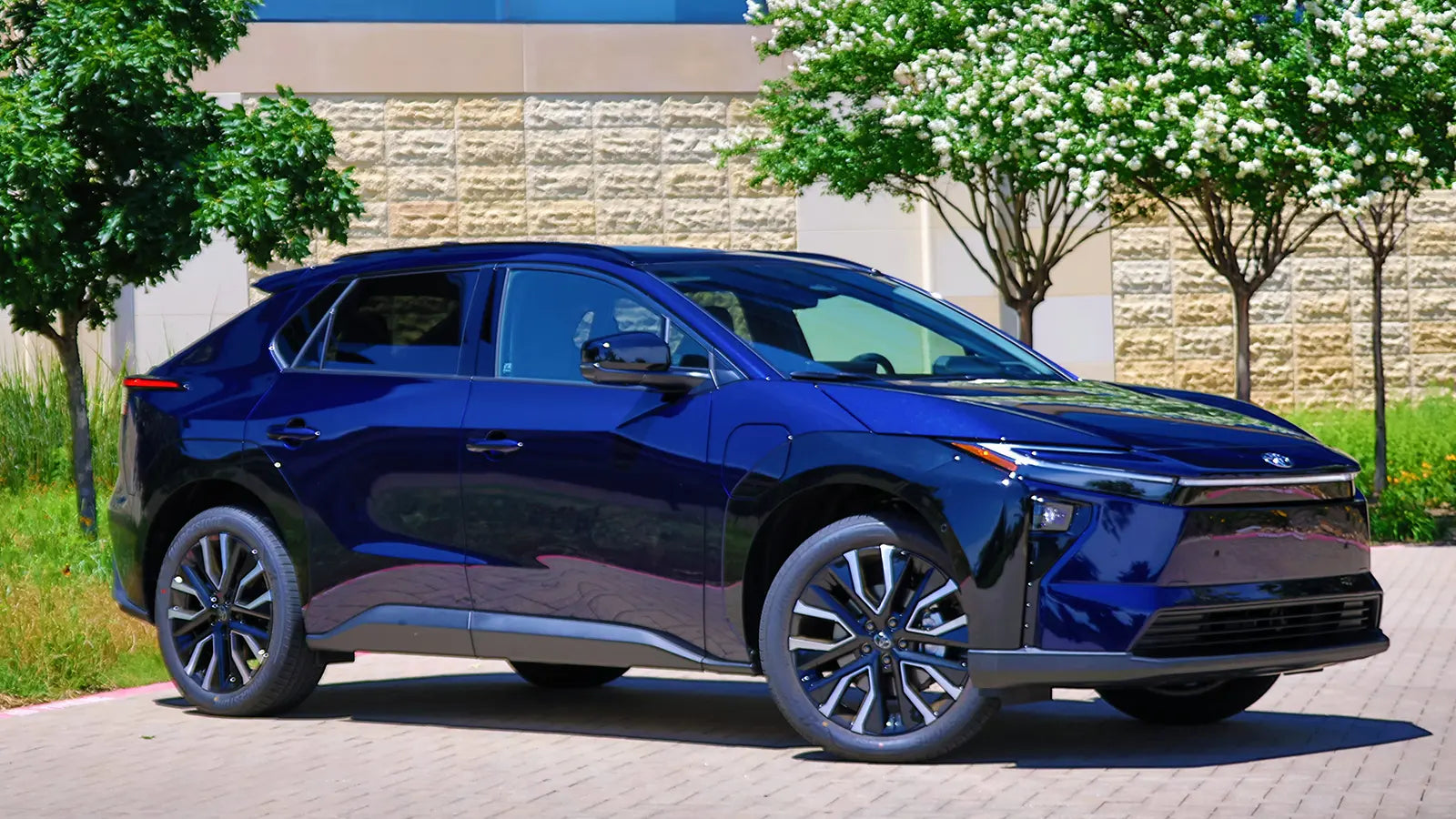
A Steady Path as Other Automakers Pull Back
The U.S. electric vehicle market has entered a turbulent phase. With federal EV tax credits eliminated and new tariffs reshaping import economics, many carmakers have delayed, scaled back, or canceled upcoming electric models. Several high-profile EVs that once generated strong anticipation among American buyers have now been postponed indefinitely or removed from U.S. plans altogether.
Amid these shifting conditions, Toyota—long known for hybrids but slower than rivals in full EV development—maintains a markedly different stance. The company says it remains fully committed to its next wave of electric vehicles.

Toyota Confirms Two New EVs Are Still on Schedule
Toyota told InsideEVs that its two upcoming electric models, the bZ Woodland and the compact C-HR EV, remain firmly on track. According to a company spokesperson, both vehicles are set for an early 2026 U.S. launch, with development progressing as planned.
This is welcome news in a market where product cancellations have become increasingly common. While Toyota has typically moved cautiously in the EV space, the brand’s decision to stay the course stands out at a time when consumer demand and policy incentives are in flux.
Tariffs and Pricing Challenges for Japanese-Built Models
These forthcoming EVs—and the latest version of the bZ currently sold—are all built in Japan. That means they do not qualify for U.S. EV tax credits and remain subject to import tariffs, potentially raising costs for consumers.
Even so, early pricing expectations suggest Toyota aims to keep the vehicles competitive. The bZ Woodland is expected to start between $45,000 and $50,000, while the C-HR EV will likely be priced below $35,000. Two additional electric models may eventually be produced in Kentucky, but these will not be part of the 2026 launches.
Performance and Features of Toyota’s New EV Lineup
Toyota’s updated bZ lineup introduces several enhancements meant to appeal to drivers transitioning away from gasoline. The newest bZ variant delivers improved fast-charging capability, increased horsepower, and compatibility with the North American Charging Standard (NACS). It offers up to 314 miles of range, positioning it as a competitive option among mainstream EVs.
The bZ Woodland builds on this platform with more space, greater ground clearance, and a projected 260-mile range, making it a better fit for outdoor travel and family use.
Meanwhile, the electric C-HR—sold as the C-HR+ in Europe—aims for up to 290 miles of estimated range and a 0–60 mph time of under five seconds, giving Toyota a performance-oriented option in the compact EV segment.
Industry-Wide Retrenchment Creates a Contrasting Backdrop
Toyota’s consistency is notable given broader industry trends. Over recent months, numerous automakers have scaled back their U.S. EV ambitions after sales growth fell short of earlier expectations.
Several significant changes include:
-
Kia delaying the budget-friendly EV4 indefinitely
-
Nissan pausing further development of the Ariya platform
-
Mercedes-Benz slowing its first-generation EQ lineup
-
Volkswagen facing uncertainty around future EV offerings in the U.S.
These shifts reflect a market recalibration as companies reassess EV demand, infrastructure growth, and regulatory environments.

A Reliable Option for American EV Shoppers
With multiple brands stepping back, Toyota’s stable timeline could give American consumers welcome clarity. For buyers who trust the brand’s record in hybrids and are ready to switch to full electric, Toyota dealerships may offer some of 2026’s most dependable new EV options.
Although tariffs and a lack of tax incentives remain hurdles, Toyota’s commitment signals confidence in long-term EV adoption and positions the company to capture demand as market conditions evolve.
Recommend Reading: Toyota Unveils All-Electric Hilux Pickup With 150-Mile Range
Share:
China Advances Solid-State EV Battery Tech With 2026 Launch Plan
Nissan Introduces 2026 Rogue Plug-In Hybrid With Key Compromises