





Early EVs Focused on Ideals, Not Desire
For much of the modern electric vehicle era, EVs were sold primarily as ethical choices. Buyers were encouraged to think about emissions reductions, fuel savings, and environmental responsibility, often at the expense of excitement, performance, or convenience. Early models reinforced the idea that going electric meant compromise.
That narrative began to change with the arrival of the Tesla Model S, which proved an EV could compete directly with high-end luxury sedans on performance, comfort, and technology. But according to Lucid Motors’ interim CEO Marc Winterhoff, the industry failed to fully embrace that lesson—and it may now be paying the price.

A Messaging Failure the Industry Avoids Discussing
Speaking at CES 2026, Winterhoff argued that automakers have leaned too heavily on sustainability-based messaging while neglecting the most compelling reason to buy an EV: it is often the superior vehicle.
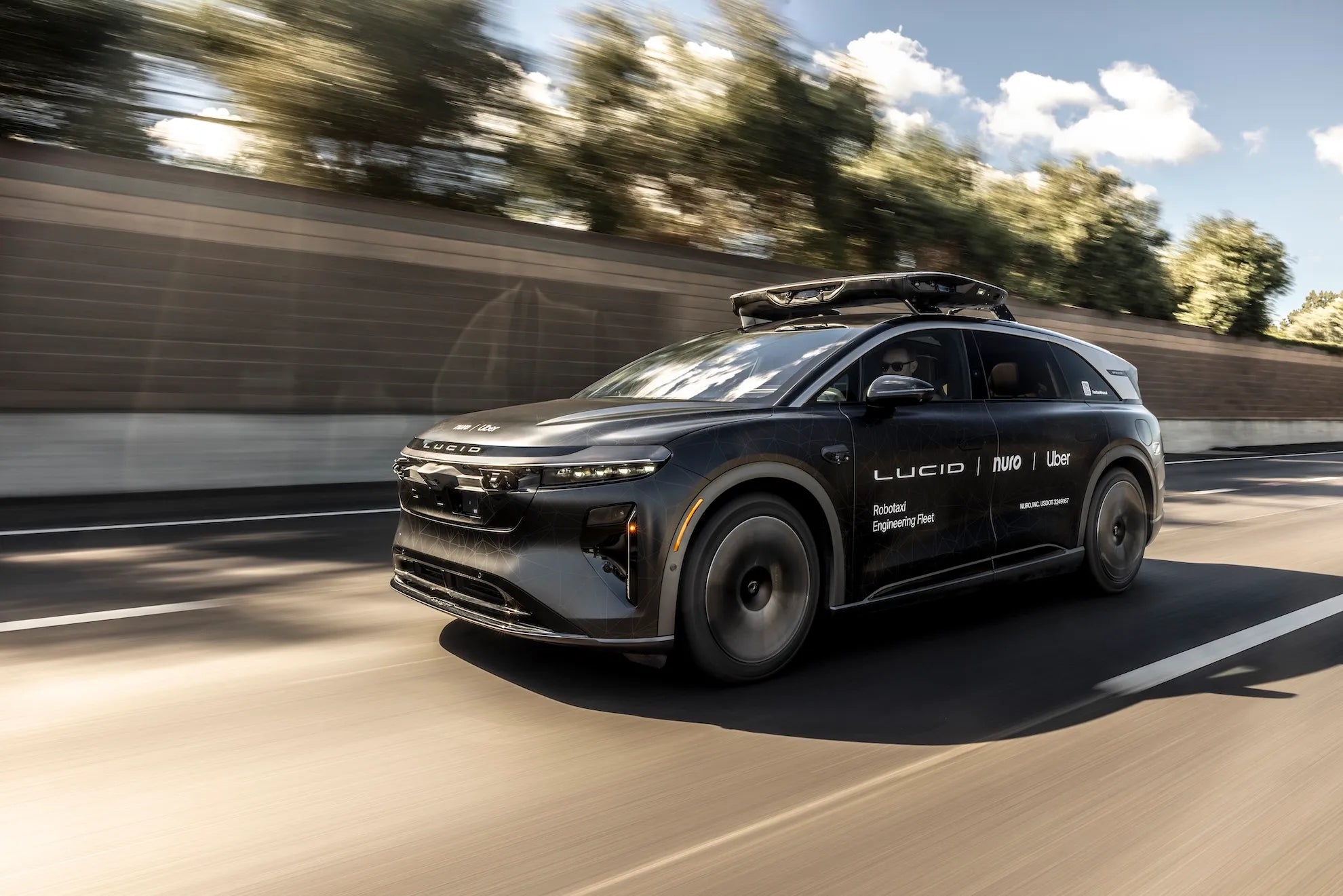
He made the comments while discussing Lucid’s autonomous vehicle partnership with Uber and Nuro, noting that EVs are widely accepted as the best platform for robotaxis. But Winterhoff went further, saying the same logic applies to consumer vehicles.
According to him, the industry has done a poor job explaining why EV technology outperforms internal combustion engines in everyday use—especially for buyers who are not motivated by climate concerns.
Comparing EVs to Luxury Gas Vehicles Changes the Conversation
To illustrate his point, Winterhoff pointed to the Lucid Gravity Grand Touring SUV. Rather than comparing it to other EVs, he said buyers should compare it directly to top-tier luxury SUVs powered by gasoline.
He listed competitors such as the Mercedes-AMG GLS 63, BMW X7 M60i, Porsche Cayenne GTS, Range Rover SV, and even the Lamborghini Urus. On paper, he argued, the Gravity holds its own—or wins outright—in several key categories.
With an EPA-rated range of 450 miles, the Gravity exceeds or matches the real-world driving range of most large luxury SUVs that average between 17 and 21 mpg. Some rivals approach that range only in hybrid form, and typically at much higher fuel and maintenance costs.
Performance and Space Without the Usual Tradeoffs
Winterhoff also highlighted performance and packaging advantages. The Gravity delivers 828 horsepower, accelerates from 0–60 mph in 3.3 seconds, and offers interior space comparable to a minivan—along with a large front trunk.
He pushed back against the argument that gasoline vehicles are more practical because refueling is faster and more widespread. For most buyers, he said, trips exceeding 400 miles are rare, and even then, drivers typically stop for breaks anyway.
His broader point was that EV ownership realities are often misunderstood or misrepresented, even as the technology quietly surpasses traditional benchmarks.
Why Automakers Hesitate to Sell EV Advantages
Despite these benefits, many legacy automakers rarely emphasize EV strengths such as lower maintenance, instant torque, or superior packaging. Winterhoff suggested the reason is simple: doing so would highlight the shortcomings of the gasoline vehicles that still generate most industry profits.
This hesitation has left room for misinformation to flourish, from exaggerated concerns about battery longevity to fears about grid strain. Compounding the problem, multiple studies show dealerships are often ill-equipped—or unmotivated—to explain EV benefits clearly.

Looking Ahead to a Broader EV Audience
While Lucid currently operates in the premium segment, Winterhoff said the company plans to address a wider market soon. New, more affordable models aimed at Tesla Model Y buyers are expected to be unveiled later this year.
He acknowledged near-term challenges, including slower U.S. EV sales following the loss of the $7,500 federal tax credit and relaxed fuel economy regulations. Still, he remains optimistic.
Winterhoff described the current slowdown as an “EV winter,” adding that industries—like seasons—eventually turn.
Recommend Reading: Lucid Reports Strong Late-2025 Growth Despite EV Market Headwinds







Share:
Zeekr 7GT Signals a New Direction for Premium Electric Wagons
Volvo PHEV Battery Health After 42,000 Miles Shows Minimal Wear