



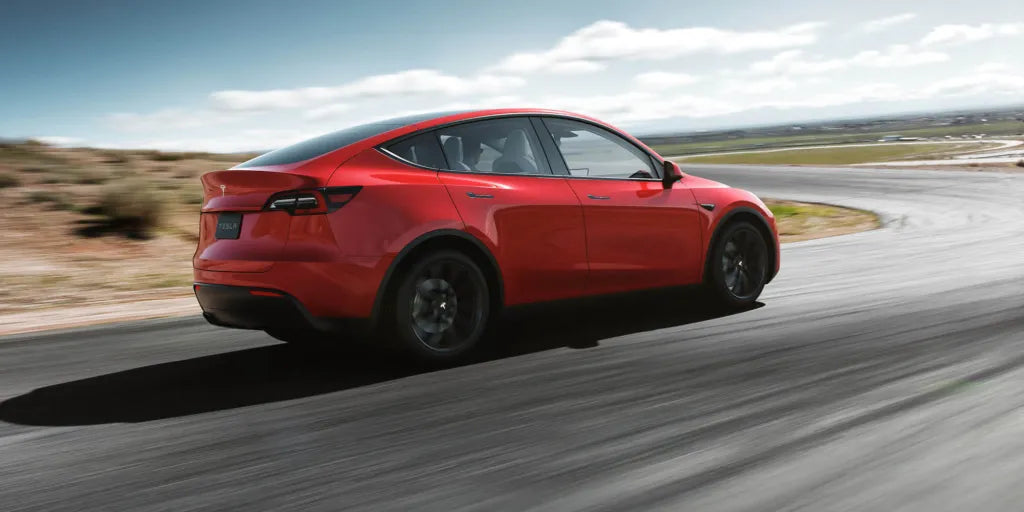
The Most Affordable Model Y Comes With Trade-Offs
The Tesla Model Y Standard is now the lowest-priced version of America’s best-selling electric vehicle, with a starting price of $41,630 including destination and order fees. To reach that number, Tesla made several compromises. The base model drops FM radio, adds a covered glass roof, and skips some interior refinements found on higher trims.
Yet these cost-saving choices appear intentional rather than accidental. By reducing weight, complexity, and auxiliary power demands, Tesla has quietly optimized the Model Y Standard for energy efficiency, positioning it as a practical option for buyers who care less about features and more about operating costs.

A Real-World 70 MPH Test Tells the Real Story
In a recent 70-mile-per-hour highway range test conducted by Out of Spec Testing, the Model Y Standard delivered results that surprised even seasoned EV observers. With cruise control locked at 70 mph, climate control set to 70 degrees, and unnecessary air vents disabled, the vehicle was driven until it could no longer maintain highway speed.
The result: 268 miles of sustained highway driving, followed by an additional 18 miles at reduced speeds. That puts the Model Y Standard well ahead of many competitors in real-world efficiency, especially when measured under constant highway conditions rather than mixed-use cycles.
Why Highway Tests Matter More Than EPA Ratings
The Model Y Standard carries an EPA-rated range of 321 miles, but that figure is based on a test cycle weighted toward lower-speed city driving, where EVs are naturally more efficient. At steady highway speeds, aerodynamic drag increases sharply, and most EVs fall short of their official ratings.
What makes the Model Y’s result notable is how close it came. Achieving 268 miles at a steady 70 mph places it among the strongest performers in its class, especially considering its relatively modest battery size.
Efficiency Numbers That Rival Smaller EVs
During the test, the Model Y Standard consumed 69.2 kilowatt-hours of energy. That translates to an average of 241.9 watt-hours per mile, or 4.13 miles per kWh. These figures are on par with the Tesla Model 3 Premium, long considered a benchmark for efficiency in the EV market.
This level of efficiency has practical implications. Lower energy consumption directly reduces charging costs, making the Model Y Standard especially appealing to ride-hailing drivers, taxi operators, and high-mileage commuters who track cost per mile closely.
Slower Driving Still Makes a Big Difference
For comparison, the same Model Y Standard was tested by Edmunds on a different route and achieved 337 miles of range, exceeding its EPA estimate. However, that test involved 60% city driving and lower average speeds, which naturally favor EV efficiency.
The contrast highlights a familiar lesson in electric driving: speed matters. Slowing down remains one of the most effective ways to extend range, regardless of battery size or vehicle class.
Efficiency Doesn’t Equal Perfection
While the numbers are impressive, efficiency alone does not define a vehicle’s overall appeal. Critics have pointed out that the Model Y Standard’s stripped-down feature set and ride quality may not satisfy every buyer. As recent reviews have noted, cost-cutting is visible, and not all compromises will feel acceptable at this price point.
Still, Tesla appears to be making a calculated trade. By prioritizing efficiency, simplicity, and low operating costs, the company has created a version of the Model Y that excels at what many EV buyers value most: going farther on less energy.

A Quiet Win for Practical EV Buyers
The Model Y Standard may not be flashy, but its performance in highway efficiency testing sends a clear message. In a market increasingly focused on affordability and real-world usability, efficiency can matter more than features. For drivers who value range consistency and lower charging costs, this entry-level Model Y quietly stands out.
Recommend Reading: Tesla Expands Model Y Lineup With 400-Mile Option in Europe

Aktie:
Tesla Cybertruck Sees Sharp Sales Decline as EV Market Cools in 2025
Canada Cuts Tariffs on Chinese EVs, Splitting North America’s Auto Strategy