





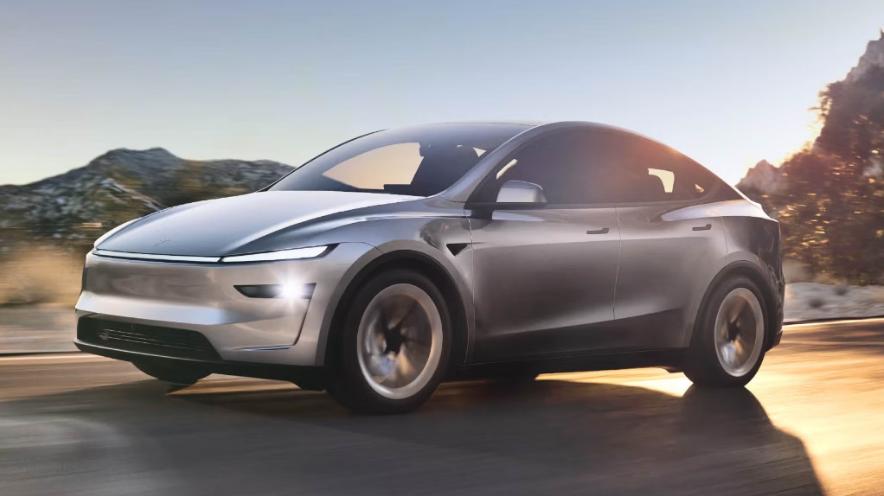
Tesla has quietly reshaped its European Model Y range with the launch of a new long-range variant aimed squarely at buyers who prioritize efficiency and distance over features. The newly introduced Model Y Standard Long Range Rear-Wheel Drive combines a larger battery with aggressive cost-cutting, delivering over 400 miles of WLTP-rated range while stripping the vehicle down to essentials.
On paper, it becomes the longest-range Model Y currently sold in Europe. In practice, it raises new questions about value, positioning, and how far Tesla can push minimalism before mainstream buyers push back.

A Longer-Range Take on Tesla’s Entry Model
The new variant builds on the existing Model Y Standard, but swaps in a higher-capacity battery. Tesla lists a WLTP range of 657 kilometers (408 miles), a notable jump over both the regular Standard and the better-equipped Premium Long Range Rear-Wheel Drive model.
Tesla also claims this is the most energy-efficient Model Y to date, with consumption rated at 12.7 kWh per 100 kilometers under the WLTP cycle. That figure equates to roughly 4.9 miles per kWh, underscoring Tesla’s continued focus on drivetrain and software efficiency rather than raw battery size alone.
As with all WLTP figures, real-world range will likely be lower, but the number still places this Model Y near the top of the midsize electric SUV segment in Europe.
Pricing Creates an Awkward Middle Ground
In most European markets, the Model Y Standard Long Range RWD starts at €46,990. That positions it above the base Model Y Standard, which starts at €39,990, but below the Model Y Premium Long Range RWD, priced at around €49,990.
The pricing strategy creates an unusual trade-off. For €3,000 less than the Premium Long Range, buyers get more range, but they give up a long list of comfort, technology, and convenience features. For a relatively small step up in price, the Premium model delivers a far more complete experience, even if its WLTP range is lower at 622 kilometers (386 miles).
What Tesla Removed to Hit the Numbers
To achieve this range-and-price combination, Tesla leaned heavily into decontenting. The new long-range Standard keeps the same minimalist approach as the base version, including fewer speakers, smaller wheels, and a simpler suspension setup.
Additional omissions include no rear touchscreen, no adaptive high beams, no ambient lighting customization, no heated rear seats, and no auto-dimming side mirrors. The glass roof is covered rather than tinted, the steering wheel is manually adjustable, and even FM radio support is absent in some markets.
Performance is also dialed back. The rear motor is detuned, resulting in a 0–100 km/h time of 7.2 seconds, compared to 5.6 seconds for the Premium Long Range RWD. For drivers accustomed to Tesla’s brisk acceleration, the difference is noticeable.
Who This Model Is Actually For
Tesla’s strategy here appears highly targeted. For fleet operators, taxi drivers, and ride-hailing services, maximum range at the lowest possible operating cost may outweigh missing features. Fewer electronics and simpler hardware could also mean lower long-term maintenance complexity.
For private buyers, however, the value proposition is less clear. As recent U.S. driving impressions have shown, Tesla’s most stripped-down Model Y can feel compromised, especially when competitors—and Tesla itself—offer better-equipped alternatives for slightly more money.

Efficiency First, Experience Second
The new Model Y Standard Long Range RWD reinforces Tesla’s belief that efficiency and range remain powerful selling points, particularly in Europe, where charging costs, long-distance driving, and regulatory pressures differ from the U.S.
Still, the launch highlights a growing tension in Tesla’s lineup. As the company pushes further into cost optimization, buyers are increasingly asked to choose between headline range figures and a more balanced ownership experience.
Whether European customers embrace this trade-off will likely determine how far Tesla continues down this path of extreme simplification.
Recommend Reading: Cheaper Tesla Model Y and Model 3 Struggle to Lift U.S. Sales


Share:
EV Battery Replacement Costs Aren’t the Whole Story, Owner Argues
2027 Chevy Bolt Gains Extra Range While Holding the Title of America’s Cheapest EV