





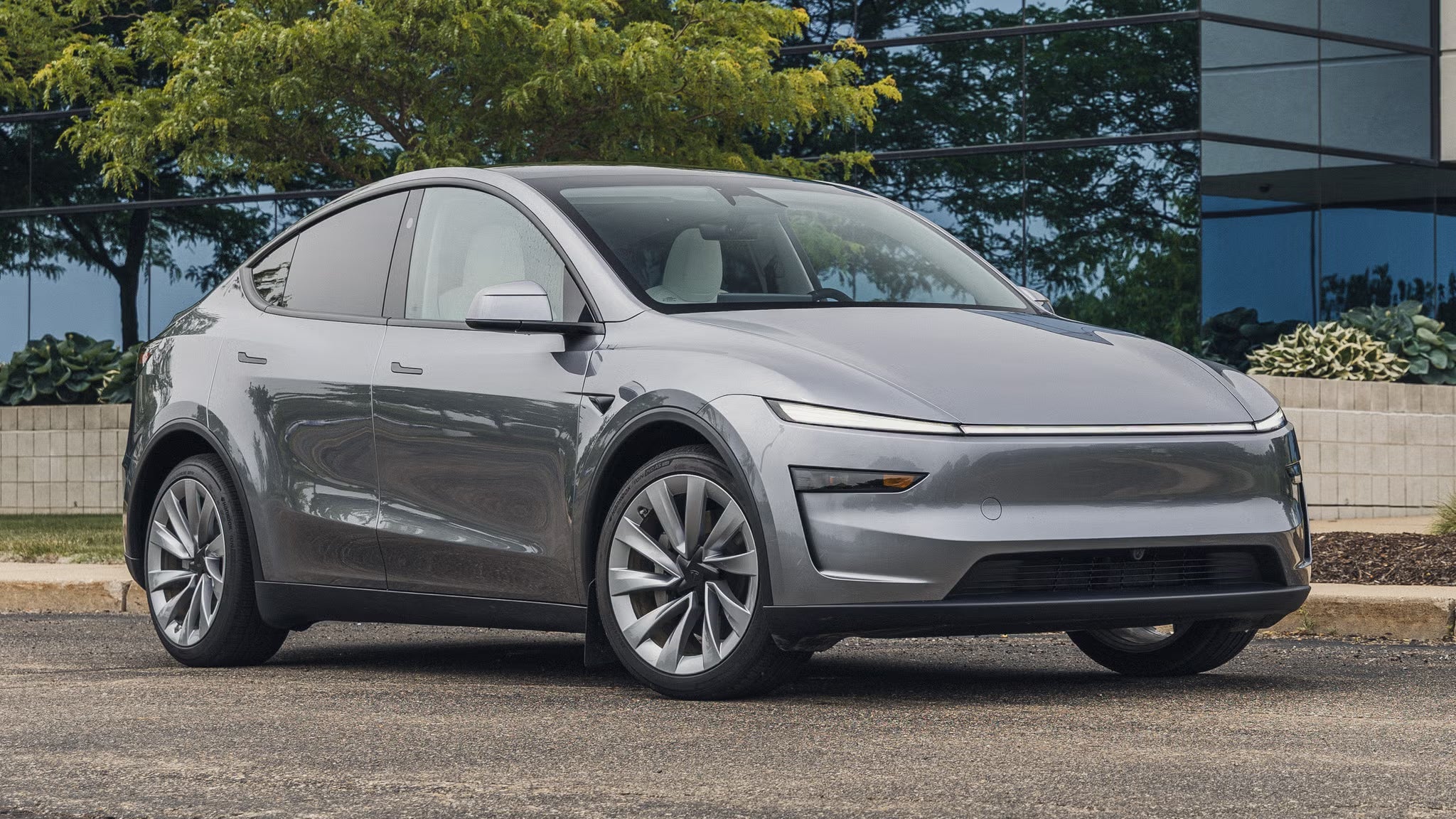
Despite frequent headlines questioning Tesla’s momentum, the company’s Model Y continues to dominate the U.S. electric vehicle market. Even as competition intensifies and overall EV growth slows, Tesla’s compact crossover remains the default choice for a large share of American buyers—and by a wide margin.
According to new estimates from Cox Automotive, Tesla sold more than 357,000 Model Ys in the U.S. in 2025, making it the country’s best-selling electric vehicle for yet another year. While that figure represents a modest year-over-year decline, the Model Y’s lead over rivals remains substantial.

Model Y Sales Still Tower Over the Competition
Cox estimates that Model Y sales fell about 4% from 2024, when roughly 373,000 units were sold. Even so, the vehicle accounted for 28% of all EV sales in the U.S. in 2025, a level of market concentration few automakers can match.
The gap widened even further at the end of the year. In the fourth quarter alone, the Model Y captured nearly 40% of all EV sales, underscoring its resilience despite incentive changes and rising competition from legacy brands and new entrants alike.
Tesla’s Model 3 followed in second place with approximately 192,000 units sold, meaning roughly four out of every ten EV buyers in 2025 chose a Tesla sedan or crossover.
Why the Model Y Still Resonates With Buyers
Tesla has undeniably lost market share over time as alternatives like the Hyundai Ioniq 5, Cadillac Lyriq, and Ford Mustang Mach-E gained traction. Yet the Model Y remains dominant because it avoids many of the compromises that still define parts of the EV market.
The crossover offers competitive range, strong charging access, practical interior space, and familiar pricing, all wrapped in a package that feels easy to live with rather than experimental. Years after its launch, it continues to set a usability benchmark that many newer EVs still struggle to match.
This success directly challenges the narrative that Americans are unwilling to adopt electric vehicles. Instead, it suggests buyers are selective—and willing to switch when the product meets their expectations.
How the Broader EV Market Performed in 2025
Beyond Tesla, the EV market delivered mixed results. Cox Automotive reports that U.S. consumers purchased about 1.28 million new electric vehicles in 2025, marking a 2% decline from 2024.
That softening followed a predictable boom-and-bust cycle. Sales surged in the third quarter as buyers rushed to lock in the $7,500 federal tax credit, then fell sharply in Q4 once the incentive expired. Many purchases were effectively pulled forward, distorting year-end demand.
Still, given widespread concerns about EV cancellations and collapsing interest, the overall result was more stable than feared.
Policy Headwinds Are Slowing Momentum
Longer term, however, the outlook is more cautious. Rollbacks of federal EV incentives and clean-air regulations have cooled the rapid growth the market experienced earlier in the decade. EV adoption surged from roughly 250,000 annual sales in 2020 to a peak in 2024, but that pace has clearly slowed.
Cox expects EV market share to remain relatively flat in 2026, as automakers adjust product strategies and investment plans to reflect the new policy environment.

What Tesla’s Lead Says About the EV Future
Tesla’s continued dominance—driven largely by the Model Y—highlights both the strength and fragility of the U.S. EV market. On one hand, a single model capturing such a large share points to limited consumer choice maturity. On the other, it proves that demand exists when the product feels complete, convenient, and familiar.
As Cox Automotive notes, long-term electrification is still expected, supported by ongoing product innovation and infrastructure improvements. For now, the Model Y remains the clearest proof point that EVs can succeed at scale—when they meet buyers where they are.
Recommend Reading: Tesla Delivers Fewer Vehicles Again as 2025 Sales Slide


Share:
Testing GM Super Cruise in Heavy Rain Reveals Its Real-World Limits
Rivian Moves R2 Closer to Market With Key Factory Milestone