



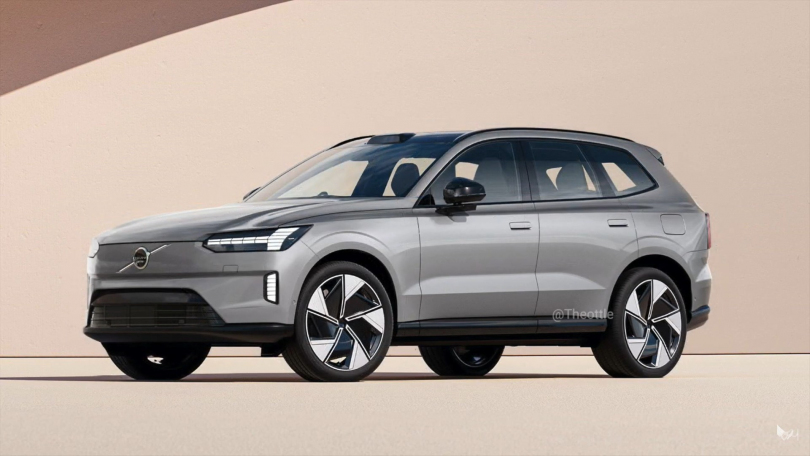
Volvo Cars closed 2025 facing a mixed and uneven electric vehicle landscape. While the brand made notable progress with fully electric models in the United States, results in Europe and China told a very different story. The year ultimately underscored how regional policy, consumer behavior, and product mix continue to shape global EV performance.

Global Sales Decline Reflects Market Pressures
Volvo reported global sales of 710,042 vehicles in 2025, representing a 7% decline year over year compared with 763,389 units sold in 2024. Although deliveries rose modestly in December, the late-year improvement was not enough to reverse the broader downward trend.
According to Volvo’s Chief Commercial Officer Erik Severinson, the company operated in a market “under pressure on multiple fronts.” Still, Volvo pointed to increased deliveries of its fully electric models, particularly the EX30 and flagship EX90, as a positive signal amid an otherwise challenging year.
Severinson acknowledged that 2025 was difficult for both Volvo and the wider auto industry, but emphasized that the company has taken steps to strengthen its position in the battery-electric and plug-in hybrid segments, which remain central to its long-term strategy.
Europe and China Drag on EV Performance
Regional results highlight the scale of Volvo’s challenge outside North America. In Europe, Volvo’s total vehicle sales fell 10% in 2025. The decline was even sharper for electrified models, with EV sales down 22% and plug-in hybrids slipping 3% year over year.
China told a similarly uneven story. Overall sales dropped 4%, while fully electric vehicle deliveries plunged 46%. However, Volvo’s plug-in hybrids performed strongly in the Chinese market, posting 116% growth compared to the previous year.
To capitalize on that momentum, Volvo is betting on the newly launched XC70 plug-in hybrid, which the company hopes will support PHEV growth in 2026—even as some Chinese buyers continue shifting directly to full EVs.
U.S. EV Growth Stands Out
The United States was the brightest spot in Volvo’s 2025 results. While overall U.S. sales across all powertrains declined 3%, the brand’s fully electric vehicle sales surged 91%, rising from 5,608 units in 2024 to 10,708 units in 2025.
That growth came despite a steep downturn in plug-in hybrids. Volvo’s U.S. PHEV sales fell 40%, dropping from 37,294 units to 22,379. As a result, total plug-in vehicle sales in the U.S. were down 23% overall.
Volvo is counting on the upcoming U.S.-built XC60 PHEV to stabilize this segment, leveraging local production to improve pricing, supply, and competitiveness.
Electrified Sales and Cost-Cutting Measures
Across all regions, Volvo sold 323,294 EVs and PHEVs in 2025, an 8% decline from the 352,787 electrified vehicles it delivered in 2024. The slowdown prompted the automaker to initiate cost-cutting measures, including the elimination of approximately 3,000 jobs.
The company cited rising material costs, softer-than-expected EV demand, and global trade uncertainty driven by import tariffs as key factors behind the decision. CEO Håkan Samuelsson previously stated that improving cash flow and structurally lowering costs were essential to navigating the current industry downturn.

EX60 Seen as a Turning Point
Looking ahead, Volvo is preparing to launch what may be its most critical new EV in years: the EX60, a fully electric midsize crossover built on an 800-volt architecture. The model is expected to deliver up to 670 horsepower, support 10% to 80% charging in around 20 minutes, and feature advanced Nvidia Drive Thor computing hardware.
With production approaching and an official unveiling scheduled later this month in Stockholm, the EX60 is positioned as a cornerstone of Volvo’s next phase of electrification—one that could help rebalance regional performance and restore global momentum.
Recommend Reading: Volvo Offers One Year of Free Home Charging for New EV Buyers in Sweden

Aktie:
Chevrolet Equinox EV Emerges as America’s Best-Selling Non-Tesla Electric Car
Waymo Introduces the Ojai Robotaxi as Fleet Expansion Accelerates