





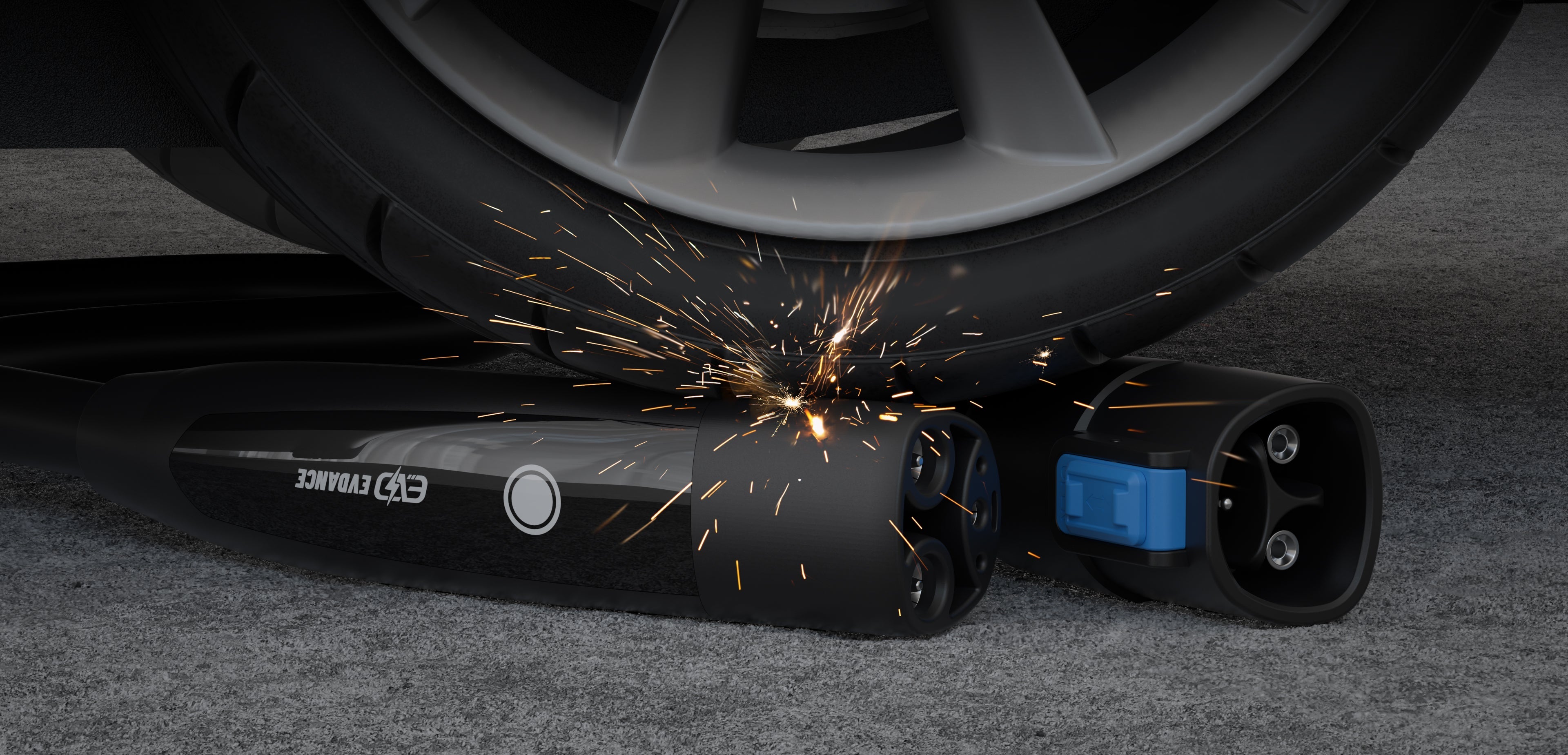
Why EV Extension Cables Require Extra Care
EV extension cables are designed to solve real-world charging limitations—driveways that are too short, outlets that are out of reach, or temporary charging needs while traveling. However, unlike EVSE chargers or adapters, extension cables do not actively control power flow, which means safe usage depends heavily on the user.
When used correctly, a high-quality EV extension cable can be a reliable tool. When used incorrectly, it can introduce overheating, voltage drop, or connector damage. Understanding how and when to use an EV extension cable is essential to minimizing risk.

Choose the Right Extension Cable First
Safety starts before you even plug in.
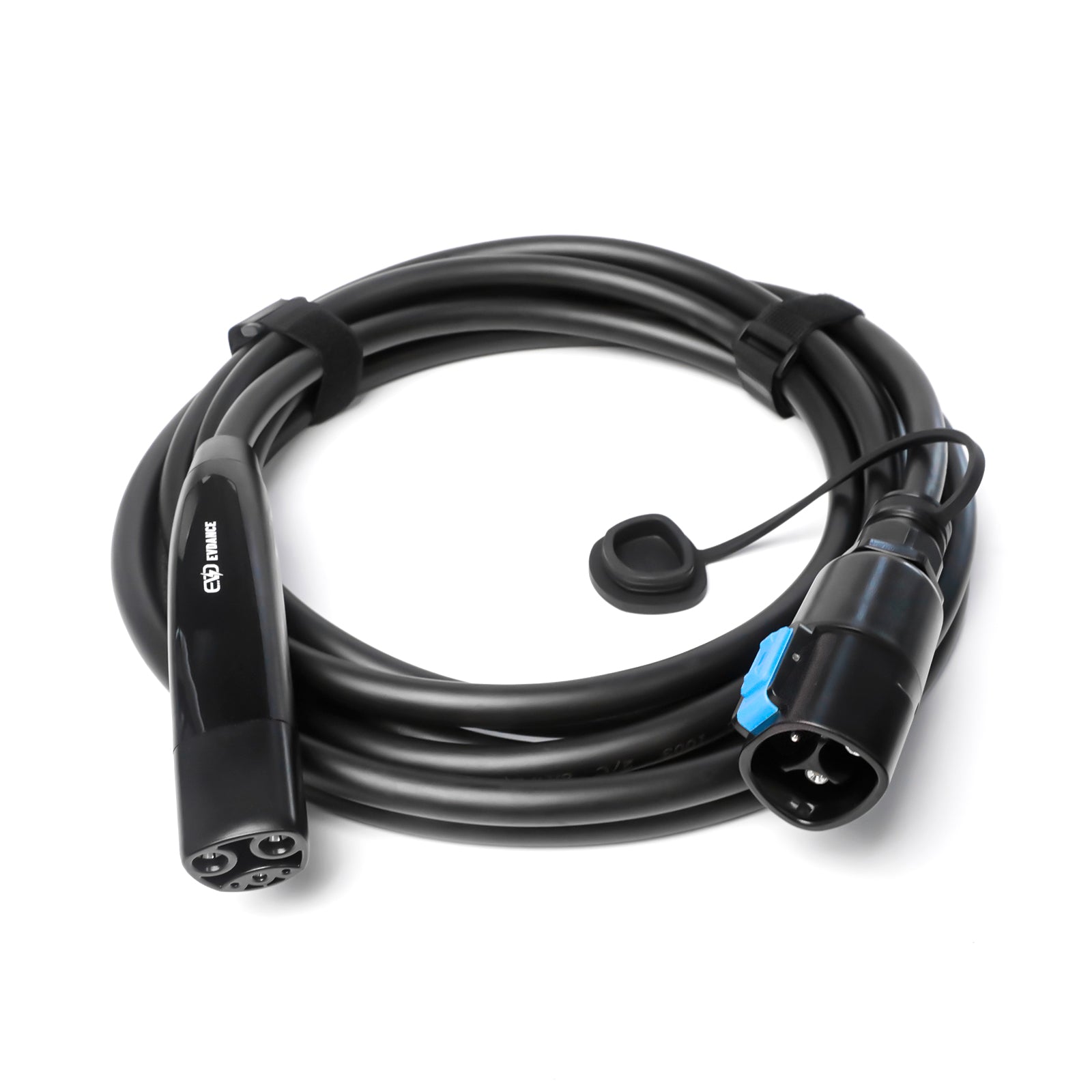
An EV extension cable must be purpose-built for electric vehicle charging, not a household or RV extension cord. Look for the following baseline requirements:
-
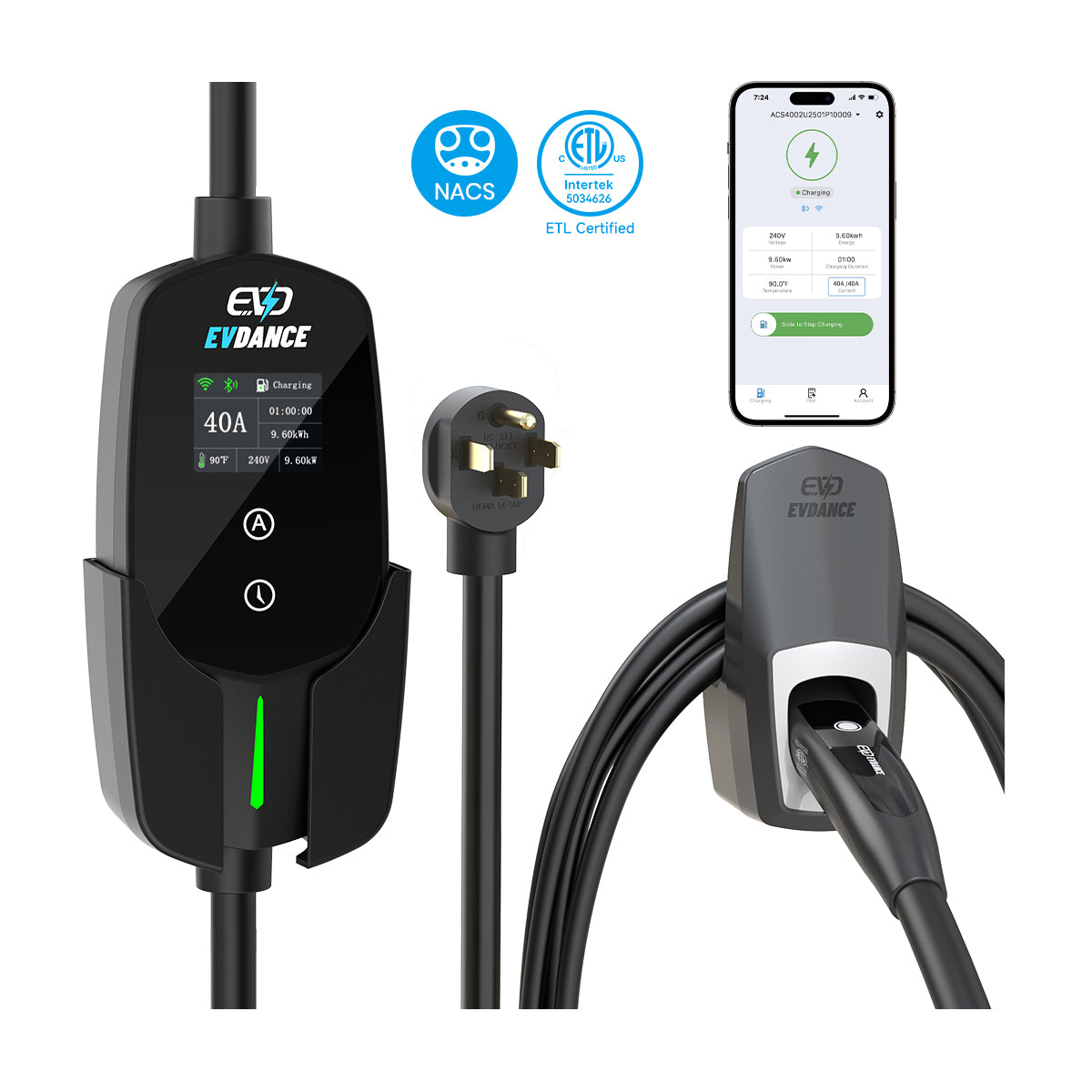
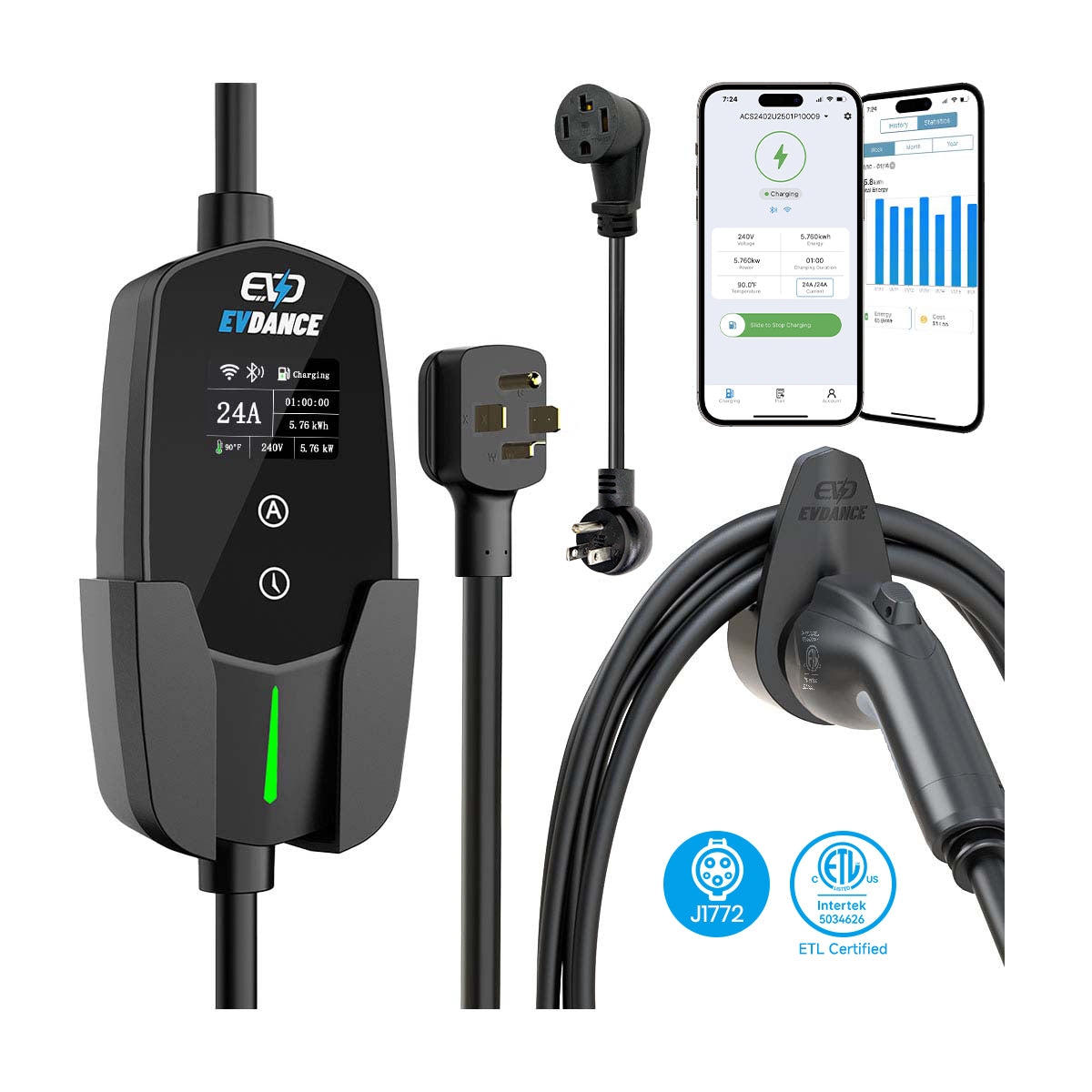
Correct connector type (NACS or J1772) that fully matches your vehicle and charger
-
Current rating equal to or higher than your charger output (e.g., 40A charger → 40A+ cable)
-
Thick internal conductors designed for continuous high current
Using an underrated or generic cable increases resistance, which leads to heat buildup over time—the most common cause of charging-related failures.
Proper Setup: How to Use an EV Extension Cable Safely
Correct setup significantly reduces risk during charging.
Always fully uncoil the extension cable before use. Coiled cables trap heat and can raise internal temperatures quickly under load. Place the cable in a way that avoids sharp bends, tension, or pressure from vehicle tires.
Ensure all connections are fully seated and locked. A loose connection creates resistance, which leads to localized heating at the plug or socket. If your vehicle or charger reports a connection error, stop charging and recheck all contact points.
Never connect multiple extension cables together. Stacking cables compounds resistance and defeats the design assumptions of each individual cable.
Environmental Conditions to Watch Closely
Even with weather-rated products, environment matters.
Most high-quality EV extension cables are designed to handle rain, snow, and dust, but they are not intended for continuous immersion. Avoid placing connectors in puddles, standing water, or areas where melting snow can accumulate.
High ambient temperatures also matter. Charging in direct sunlight on hot days can push cable temperatures higher than expected. In these conditions, reduce charging current if possible and periodically check the cable by touch—warm is normal, hot is not.

Warning Signs You Should Never Ignore
Stop charging immediately if you notice:
-
Excessive heat at connectors or along the cable
-
Discoloration, melting, or deformation of plugs
-
Burning smells or crackling sounds
-
Repeated charging interruptions or vehicle warnings
These symptoms indicate abnormal resistance or internal damage. Continuing to charge under these conditions can damage your vehicle inlet, charger, or electrical supply.
Situations Where Extension Cables Should Be Avoided
There are scenarios where using an EV extension cable is not recommended, even with proper ratings:
-
Permanently installed home charging setups
-
Poor-quality power sources or unstable outlets
-
Environments with frequent flooding or standing water
In these cases, installing a properly positioned wall-mounted charger or upgrading infrastructure is the safer long-term solution.
What IP66 Protection Does—and Does Not—Mean
An IP66 rating means the cable is protected against powerful water jets and dust ingress, making it suitable for outdoor charging in harsh weather. However, IP66 does not mean waterproof under immersion.
Always keep connectors elevated off the ground when possible, and disconnect once charging is complete to reduce prolonged environmental exposure.

Final Thoughts: Safety Is a System, Not a Feature
EV extension cables are neither inherently dangerous nor universally safe. Their safety depends on product quality, proper use, and environmental awareness. When used as intended—with correct ratings, careful setup, and reasonable expectations—they can safely solve many everyday charging challenges.
Understanding the limits of extension cables is just as important as understanding their benefits.
Recommend Reading: NACS vs J1772 Extension Cables: Which One Should You Choose?










Share:
NACS vs J1772 Extension Cables: Which One Should You Choose?
Ev Extension Cable Buying Guide: Length, Standards, And Key Considerations