



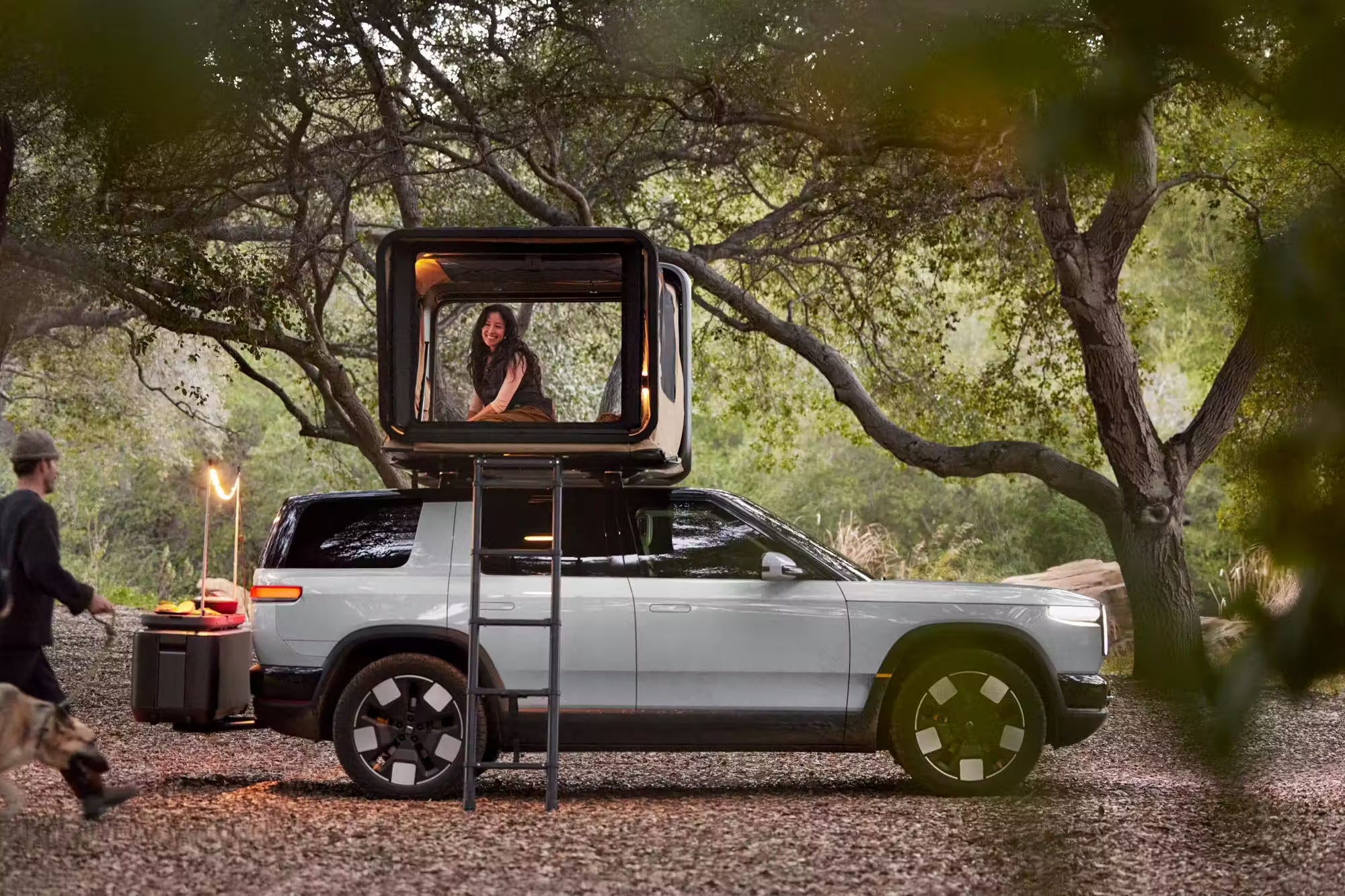
A Defining Launch for Rivian’s Future
Rivian’s upcoming R2 crossover represents a critical step in the company’s transition from niche EV manufacturer to higher-volume competitor. Unlike the premium R1T pickup and R1S SUV, the R2 is positioned as a more affordable, mainstream offering. Its rollout in 2026 will play a decisive role in determining whether Rivian can scale beyond its current production levels.
During its recent fourth-quarter earnings call, Chief Financial Officer Claire McDonough outlined delivery expectations for next year. Rivian anticipates total shipments across all models to reach between 62,000 and 67,000 vehicles in 2026.
For context, combined deliveries of the R1T, R1S, and commercial vans totaled just over 42,000 units last year. Management indicated that output for those models will remain roughly steady. The gap between past performance and the 2026 target suggests the R2 will account for approximately 20,000 to 25,000 deliveries in its first year.

Production Timeline and Ramp-Up Strategy
Manufacturing of the R2 is scheduled to begin in the second quarter of 2026. However, Rivian cautioned that substantial delivery volumes are unlikely before the latter half of the year.
Initially, the launch edition will be built using a single production shift at the company’s facility in Normal, Illinois. A second shift is expected to be added later in the year as demand and operational readiness increase.
This phased approach reflects lessons learned from Rivian’s earlier launches, which were marked by supply chain constraints and slower-than-expected ramp-ups. Executives have emphasized improved preparation for the R2 introduction compared with the company’s 2021 debut models.
Long-Term Capacity and Expansion Plans
Looking beyond 2026, Rivian’s leadership envisions the R2 becoming its primary volume driver. Founder and CEO RJ Scaringe stated that by the end of 2027, the R2 could represent the majority of the company’s total production.
The expanded Normal plant is designed to support up to 215,000 vehicles per year, including as many as 155,000 R2 units once fully utilized. Later in the decade, Rivian intends to supplement that output with production at a new factory currently under development in Georgia.
If demand materializes as expected, these facilities would give Rivian the manufacturing scale necessary to compete more directly with established automakers and high-volume EV producers.
Pricing and Market Position
Rivian has promoted a starting price of $45,000 for the R2, positioning it well below the larger and more expensive R1S. That figure applies to the standard configuration expected after the initial launch.
The first version available to customers will likely command a higher price. Rivian has confirmed that the debut model will feature a dual-motor, all-wheel-drive setup similar to early prototypes. Additional specifications are scheduled to be disclosed on March 12.
By entering the midsize electric crossover segment, the R2 will compete in a market dominated by the Tesla Model Y, currently the best-selling EV in the United States. Rivian’s strategy centers on offering distinctive design, adventure-oriented branding, and advanced technology at a comparatively accessible price point.
Financial Results Show Progress
Rivian reported stronger-than-anticipated financial performance in the fourth quarter. The company generated $1.29 billion in revenue and recorded a $120 million gross profit for the period. Notably, it achieved its first full year of gross profitability, reflecting improvements in production efficiency.
Following the earnings announcement, Rivian’s shares rose approximately 15% in after-hours trading, signaling renewed investor confidence.
Despite these gains, Rivian does not expect to achieve overall profitability in the near term. The company projects a net loss of between $1.8 billion and $2.1 billion in 2026, underscoring the capital-intensive nature of expanding EV manufacturing.
External Pressures and Market Risks
The broader EV market presents additional challenges. The phaseout of certain federal incentives, including the $7,500 tax credit for some vehicles, may affect consumer demand. At the same time, growth in electric vehicle adoption has moderated compared with earlier projections.
Scaringe has previously argued that the market needs more compelling alternatives to established leaders in order to accelerate adoption. Early reviews of the R2 suggest that Rivian has successfully translated the design language of the R1S into a smaller and more affordable format. Whether that translates into sustained sales remains to be seen.

Execution Will Determine the Outcome
For Rivian, the stakes surrounding the R2 launch are considerable. Delivering between 20,000 and 25,000 units in 2026 would represent meaningful growth and validate the company’s move toward higher-volume production.
However, success depends on maintaining build quality, scaling efficiently, and attracting buyers in an increasingly competitive segment. The coming year will provide a clearer indication of whether the R2 can serve as the foundation for Rivian’s next phase of expansion.
Recommend Reading: Rivian R2 First Drive Review: Size, Speed and Strategy
Partager:
How Rivian Gained 6 Miles of Range From a Rear Wiper
How Waymo’s New Robotaxi Hardware Powers Zeekr and Hyundai EVs