





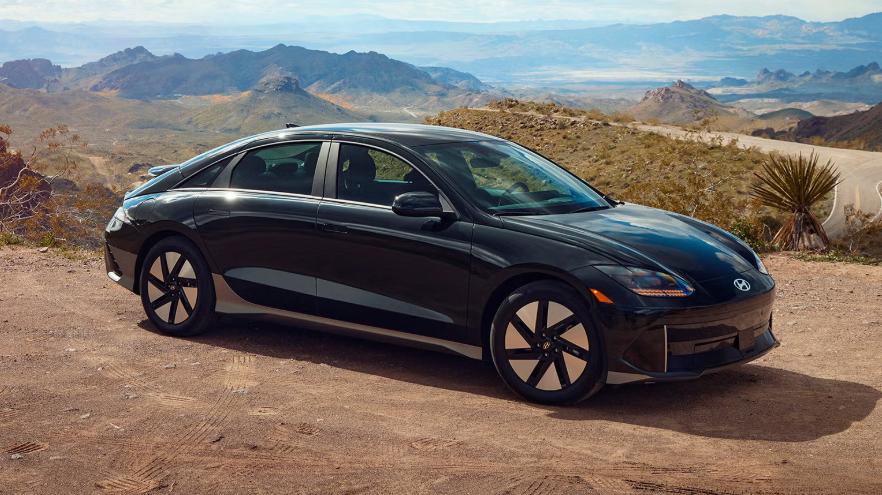
Hyundai Adjusts Its U.S. Electric Vehicle Lineup
Hyundai is preparing to significantly scale back the presence of its Ioniq 6 electric sedan in the United States. According to recent reports, the company intends to stop bringing the 2026 model year version of the vehicle to the American market. While current inventory and the 2025 model will remain available for now, the sedan will largely disappear from the brand’s U.S. offerings in the near future.
The decision does not completely eliminate the model from the market. Hyundai still plans to introduce the high-performance Ioniq 6 N, though the company is expected to produce it in relatively small quantities. As a result, the mainstream versions of the sleek electric sedan will gradually phase out while a niche performance variant remains.

Tariffs and Production Location Create Challenges
Manufacturing location appears to be a major factor influencing Hyundai’s strategy. The Ioniq 6 is built in South Korea, meaning vehicles shipped to the United States may face import tariffs under current trade policies.
Other Hyundai electric models do not face the same issue. The Ioniq 5 and the larger Ioniq 9 are assembled at the company’s Metaplant America facility in Georgia, allowing them to avoid tariff costs that can raise retail prices for imported vehicles.
Because of this difference, Hyundai’s U.S. electric lineup may increasingly emphasize vehicles produced domestically. Producing EVs within the country can help manufacturers stay competitive in a market influenced by both tariffs and federal incentives.
Weak Sales Also Contributed to the Decision
Market demand has also played a role. Although the Ioniq 6 received strong reviews from automotive journalists and electric-vehicle enthusiasts, it never matched the popularity of Hyundai’s crossover models.
During the past year, Hyundai sold roughly 10,000 units of the Ioniq 6 in the United States. That figure represented about a 15 percent decline compared with the previous year.
The situation has continued into the current year. In the first two months, Hyundai delivered only about 573 vehicles of this model in the U.S., far behind the numbers achieved by the Ioniq 5, which exceeded 5,000 sales during the same period.
These figures highlight a broader consumer preference: American buyers tend to favor crossovers and SUVs rather than traditional sedans, even in the electric vehicle segment.
Policy Changes Affect the EV Market
Another important factor shaping sales has been the expiration of the $7,500 federal tax credit for certain electric vehicles last September. When the incentive disappeared for many imported EVs, some consumers accelerated their purchases before the change took effect.
This phenomenon created a temporary spike in demand followed by a noticeable slowdown in the months afterward. Automakers across the industry have since been reassessing which models remain viable under the new conditions.
For Hyundai, the combination of changing incentives, tariff exposure, and modest demand appears to have made the continuation of the Ioniq 6 in its current form less attractive.
A Technically Impressive Electric Sedan
Despite its limited commercial success, the Ioniq 6 has been widely recognized as a technically capable electric vehicle. When it arrived in the United States in 2023, it offered performance figures that placed it among the stronger contenders in its class.
One of its most notable attributes is efficiency and driving range. The model is rated for 342 miles of EPA-estimated range, which remains competitive among electric sedans.
Charging capability is another standout feature. Built on Hyundai’s 800-volt electrical architecture, the car can support extremely rapid charging. Under ideal conditions, its battery can replenish from 10 percent to 80 percent in roughly 18 minutes when connected to a 350-kilowatt DC fast charger.
These technical specifications helped Hyundai position itself as a serious competitor in the global EV market alongside companies such as Tesla and rapidly expanding Chinese manufacturers.
Design and Driving Experience
The Ioniq 6 also stood out for its distinctive appearance. Hyundai described the vehicle as an “Electrified Streamliner,” referencing the aerodynamic profile designed to maximize efficiency.
Its smooth silhouette, curved roofline, and distinctive rear styling with dual spoilers created one of the most recognizable shapes among modern electric cars.
Reviewers frequently praised the vehicle not only for its efficiency but also for its driving dynamics. Automotive publications noted that the sedan delivered a balanced ride and responsive handling, characteristics that helped differentiate it from many other EVs focused primarily on range and technology.
A Broader Pattern of EV Strategy Changes
Hyundai’s move reflects a larger trend unfolding across the American electric vehicle market. Several manufacturers have recently scaled back or canceled certain EV projects as they reevaluate demand and production strategies.
In some cases, automakers are focusing on fewer models or prioritizing vehicles that can be built domestically. In others, companies are shifting toward crossovers and trucks, which generally sell better in the United States.
Within this changing environment, the Ioniq 6 is becoming one of several electric models whose future in the U.S. market is uncertain.

Remaining Opportunities for Buyers
For customers still interested in the sedan, the model will not disappear immediately. Model year 2025 inventory will continue to be sold through Hyundai dealerships until existing stock is depleted.
In addition, the company intends to launch the Ioniq 6 N, a performance-focused version expected to deliver significantly higher power output. However, this variant will likely be produced in limited numbers and could carry a price near $70,000, making it a specialized offering rather than a mass-market vehicle.
Recommend Reading: How Waymo’s New Robotaxi Hardware Powers Zeekr and Hyundai EVs









Share:
Kia Delays EV6 GT Launch in the U.S. Amid Weak Sales
Ford CEO Reflects on Lessons From the F-150 Lightning Program