





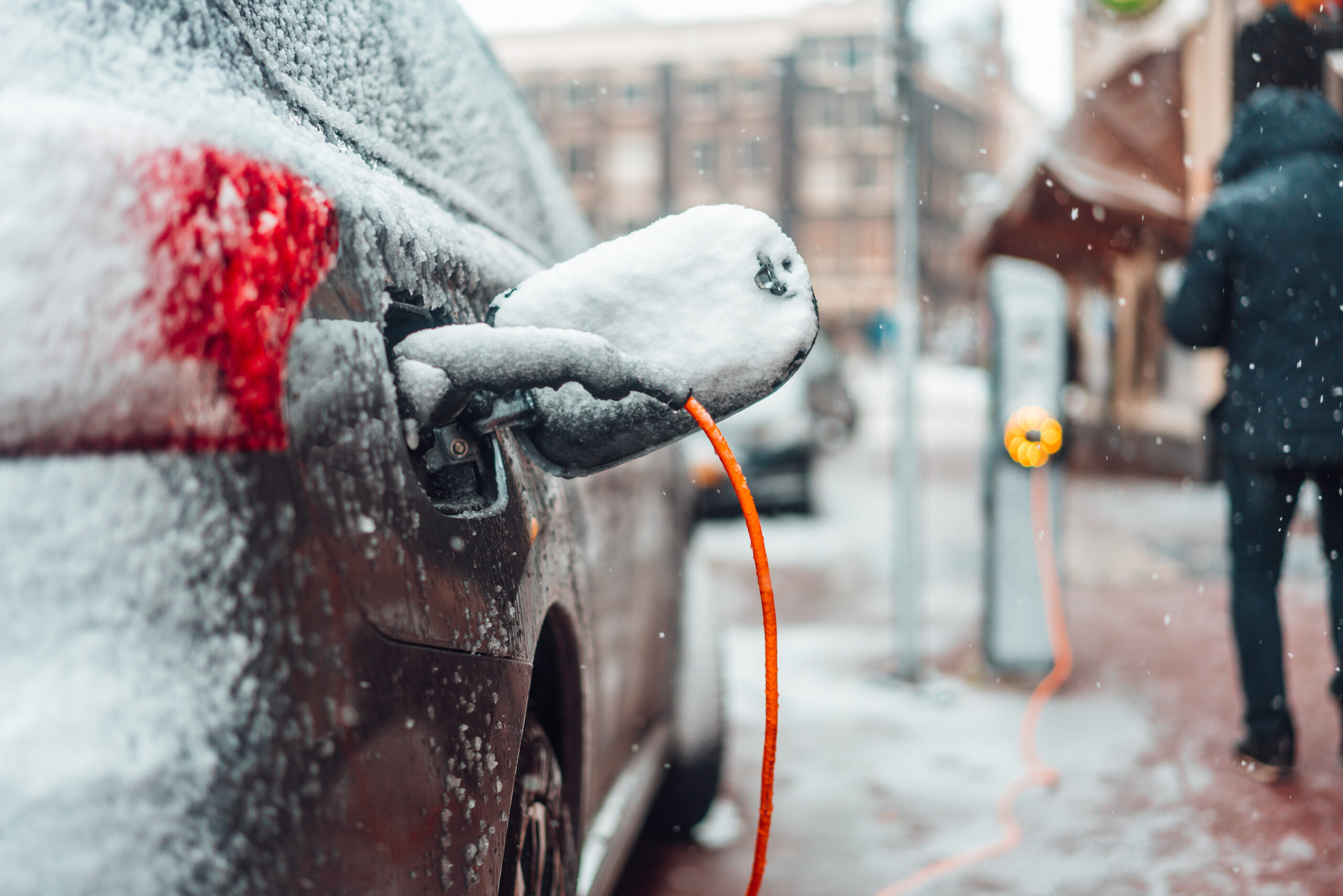
Electric vehicles offer clear advantages year-round, but winter storms introduce challenges that EV drivers must actively plan for. Cold temperatures affect battery chemistry, charging speed, and cabin efficiency in ways that differ from gasoline vehicles. Understanding these differences is key to staying mobile and safe when severe winter weather hits.
This guide breaks down what actually happens to EVs in cold conditions and outlines practical, experience-based steps drivers can take to minimize range loss, reduce charging frustration, and maintain control on icy roads.

Why Cold Weather Impacts EV Performance
Cold weather affects all vehicles, but EVs respond differently due to how energy is stored and used. Lower temperatures slow the chemical reactions inside lithium-ion batteries, reducing available power and limiting how quickly energy can be released or replenished.
Dense cold air also increases aerodynamic drag, while low tire pressure raises rolling resistance. On top of that, heating the cabin requires significant energy, especially in vehicles without highly efficient heat pumps.
Real-world testing shows that EV range loss can begin around 40°F (4°C) and worsen significantly below freezing. At highway speeds in deep winter, total range reductions of 20–30% are not uncommon.

Charging to 100% When Winter Demands It
In warmer months, many EV owners limit daily charging to preserve long-term battery health. Winter storms change that equation.
Charging to 100% before a major weather event is not only acceptable, it is often advisable, especially if travel conditions may delay access to charging later. The key is frequency. Occasional full charges during winter storms are unlikely to cause meaningful degradation when balanced with normal charging habits.
The goal is preparedness, not perfection. Use full charges strategically rather than as a daily routine.
Why Leaving Your EV Plugged In Matters More in Winter
Cold temperatures do not just affect EVs while driving. Battery thermal management systems continue working even when the vehicle is parked, consuming energy to prevent damage from extreme cold.
Leaving your EV plugged in allows these systems to draw power from the grid instead of the battery. This helps preserve usable range and ensures the car is ready when you need it.
Many manufacturers explicitly recommend keeping EVs plugged in during prolonged cold spells, particularly overnight.
Preconditioning the Cabin While Plugged In
One of the most effective winter strategies is preconditioning the cabin while the vehicle is still charging. Using grid power to warm the interior dramatically reduces energy loss once you start driving.
Most modern EVs allow drivers to schedule or remotely activate cabin heating through a mobile app or key fob. This step is especially valuable for short trips, where a cold start would otherwise consume a disproportionate amount of battery energy.
Preconditioning can recover miles of usable range that would otherwise be lost warming the cabin.

Preparing the Battery for Faster Charging
Cold batteries charge slowly, especially at DC fast chargers. Battery preconditioning raises cell temperature to optimal levels, enabling higher charging speeds and shorter stops.
Some EVs trigger this automatically when navigating to a fast charger, while others require manual activation. In winter, this step is critical. Without it, charging sessions can take significantly longer, even at high-powered stations.
Preconditioning improves not only speed but also charging consistency, reducing variability between sessions.
Keeping Sensors and Cameras Clear
Snow, slush, and road salt easily block cameras, radar, and ultrasonic sensors. Driver-assistance systems depend on clean sensors to function correctly, and winter conditions make frequent checks necessary.
Before driving, clear all cameras and sensor surfaces. Many vehicles provide alerts when systems are obstructed, but proactive cleaning prevents unexpected feature loss mid-drive.
Additionally, winter road salt accelerates corrosion. Regular washing helps protect both body panels and undercarriage components.

Using Heated Seats and Steering Wheels Efficiently
Cabin heaters are among the largest energy consumers in winter. Heated seats and steering wheels offer a more efficient alternative by warming occupants directly instead of heating air volume.
Using seat and wheel heaters allows drivers to lower overall cabin temperature while maintaining comfort. This approach can significantly reduce energy consumption and extend driving range.
When combined with preconditioning, it offers one of the most effective efficiency gains in cold weather.
Choosing the Right Driving Mode for Winter Conditions
EV driving modes have tangible benefits in winter. Eco modes typically reduce power output and smooth throttle response, improving efficiency and traction.
Snow modes go further by managing torque delivery, limiting regenerative braking, and enhancing stability on slippery surfaces. These systems help prevent wheelspin and improve driver confidence during snow-covered conditions.
Using the correct mode can make winter driving noticeably safer and more predictable.

EV Traction Is Excellent, But Tires Still Matter Most
EVs often perform impressively in snow due to precise torque control and low center of gravity. Even single-motor models frequently outperform gasoline vehicles in low-traction scenarios.
However, traction control cannot compensate for inadequate tires. Winter-rated or all-weather snow-certified tires provide dramatic improvements in braking, cornering, and overall safety.
No drivetrain advantage replaces proper rubber. For drivers in severe winter regions, dedicated snow tires remain the gold standard.
Winter Driving Requires Preparation, Not Fear
Winter is not a dealbreaker for EV ownership, but it does demand planning. With proper charging habits, preconditioning, tire selection, and driving mode use, EVs can remain reliable and capable even in harsh conditions.
The key difference between smooth winter driving and frustration is preparation. Understand your vehicle, anticipate weather conditions, and adjust routines accordingly. When done right, winter EV ownership is not only manageable but often surprisingly effective.
Recommend Reading: Winter EV Travel: Cold Weather Charging Tips









Share:
EV Extension Cable vs Fixed Charger: When You Really Need One
EVDANCE vs. Cheap EV Extension Cables: Don’t Compromise on Safety