



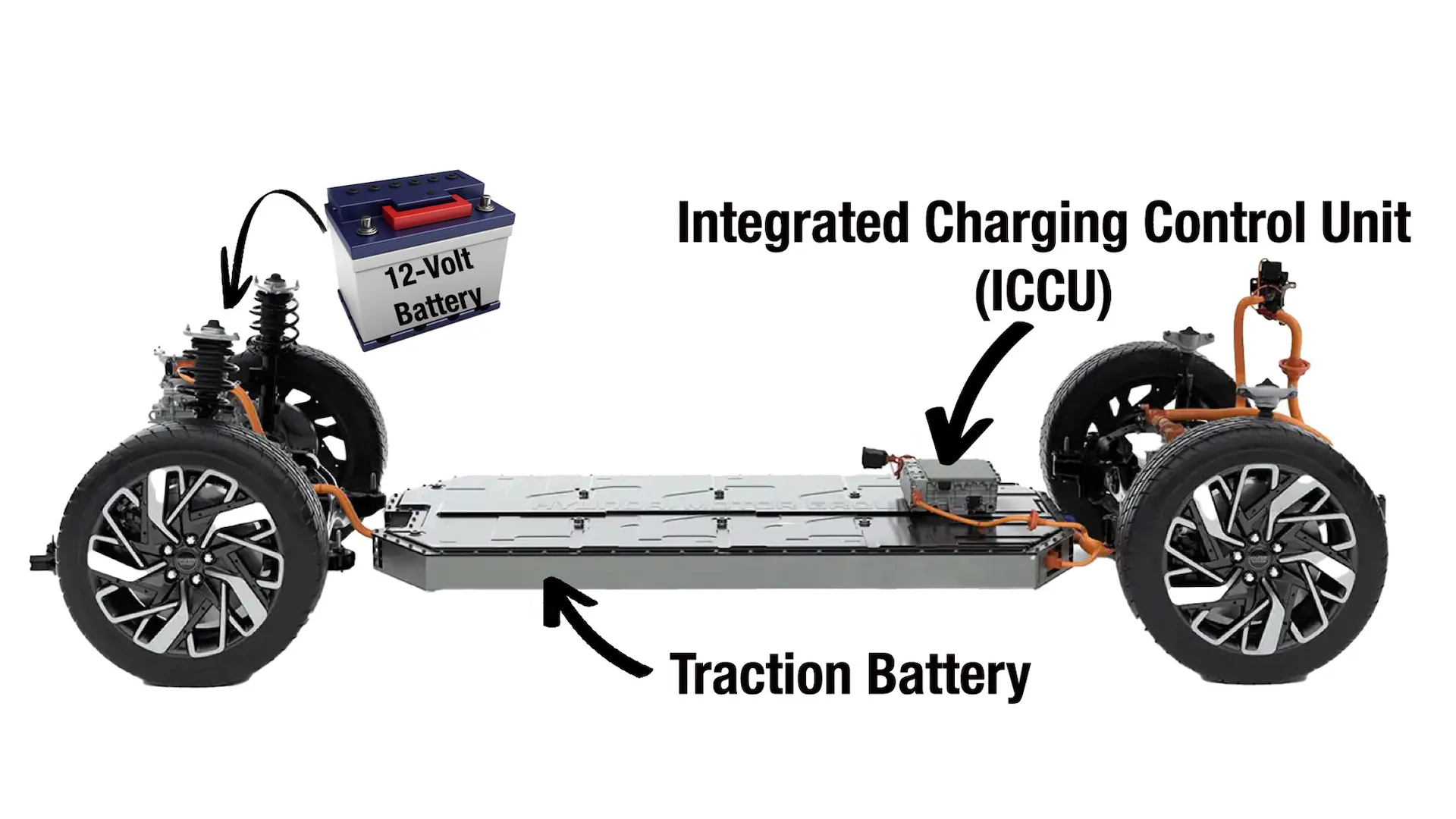
As electric vehicles (EVs) become more advanced and efficient, automakers are rethinking how different components work together to optimize charging, energy use, and overall performance. One of the most important yet often overlooked innovations is the ICCU, or Integrated Charging Control Unit.
This article explains what an ICCU is, how it differs from traditional EV charging components, and why it plays a critical role in the future of EV technology.
What Is an ICCU in an EV?
The Integrated Charging Control Unit (ICCU) is a next-generation component in EV powertrains that combines multiple charging functions into a single, compact system. Specifically, the ICCU typically integrates the following:
-
DC-DC Converter
By merging these systems, the ICCU simplifies the EV’s electrical architecture, reduces weight and wiring, and enables bi-directional charging capabilities.
Traditional Charging Systems vs ICCU
In most EVs today, the onboard charger, DC-DC converter, and charging control logic are housed in separate modules. This means:
-
More space is required in the vehicle
-
Increased manufacturing complexity
-
Higher costs for production and maintenance
-
Slower response in managing power flow between components
The ICCU replaces this fragmented architecture with an all-in-one solution. It handles both AC and DC charging, converts high-voltage electricity to the low-voltage power needed for auxiliary systems, and manages charging protocols.
Key Functions of the ICCU
-
AC Charging Management
Converts AC power from home or public Level 2 chargers into DC power to charge the battery. -
DC Fast Charging Control
Coordinates high-voltage DC power flow directly into the battery from a fast charger, often at rates over 150 kW. -
DC-DC Conversion
Steps down the battery's high voltage (400–800V) to power 12V components like lights, infotainment systems, and safety sensors. -
Bi-Directional Charging (V2L, V2G)
Advanced ICCUs enable energy to flow both to and from the vehicle. This supports features like:-
Vehicle-to-Load (V2L): Powering appliances or tools from your EV battery.
-
Vehicle-to-Grid (V2G): Feeding electricity back into the grid.
-
Why ICCU Technology Is Important
1. Improved Charging Efficiency
ICCU units can reduce energy loss during power conversion. This means:
-
Faster charging times
-
Less heat generation
-
Improved battery life
2. Simplified Vehicle Architecture
By integrating multiple systems, ICCUs reduce:
-
Space and weight requirements
-
Wiring complexity
-
Points of failure
This helps manufacturers produce more compact and cost-effective EV platforms.
3. Bi-Directional Charging Support
ICCU is a core enabler of V2X (vehicle-to-everything) capabilities. As the energy grid becomes more dynamic, the ability to use EVs as mobile energy storage will play a vital role in:
-
Emergency backup power
-
Peak load balancing
-
Renewable energy integration
4. Cost Reduction and Scalability
Using a unified module means lower manufacturing and repair costs, especially important as EVs scale globally. This also helps standardize platforms across multiple vehicle types.
What ICCU Means for the Future of EVs
As more EVs hit the road, the need for faster, smarter, and more flexible charging systems becomes critical. ICCUs are central to that evolution.
In the coming years, expect ICCUs to:
-
Support even higher voltages (e.g., 900V+ systems)
-
Enable seamless wireless charging integration
-
Facilitate widespread V2G adoption, making EVs part of a distributed energy network
Final Thoughts
The Integrated Charging Control Unit (ICCU) is more than just a convenience—it's a cornerstone technology for the future of electric mobility. By combining multiple systems into a single intelligent module, ICCUs improve efficiency, lower costs, and unlock new capabilities like vehicle-to-grid and ultra-fast charging.
For consumers, this means faster, smarter, and more reliable EVs. For the planet, it’s a step closer to a cleaner, more resilient energy system.
Recommended Reading: ICCU Failures in Electric Vehicles: What Owners Need to Know
Share:
Scientists Warn Against Overnight EV Home Charging
ICCU Failures in Electric Vehicles: What Owners Need to Know