



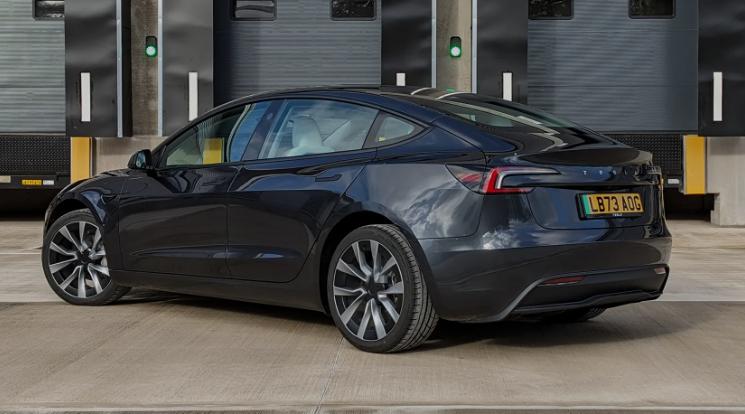
Electric vehicle reliability is often debated, especially when it comes to long-term ownership. A 2021 Tesla Model 3 Long Range with nearly 240,000 miles offers a rare, real-world look at what actually fails—and what holds up—after years of intensive use.

A Hard Life as a High-Mileage Taxi
This particular Model 3 spent much of its life working as a taxi in the United Kingdom, accumulating an extraordinary 238,000 miles in just four years. That level of use would expose weaknesses in almost any vehicle, electric or gas-powered.
According to Consumer Reports, Tesla vehicles produced between 2016 and 2021 have historically ranked lower for reliability, largely due to quality control issues during Tesla’s rapid production ramp-up. However, data also shows notable improvements starting in 2021, making this specific model year especially interesting to evaluate.
Major Components That Never Failed
Despite its heavy-duty usage, the car still retains many of its most critical original parts. The high-voltage battery, rear electric motor, braking system, body panels, and windows are all original, a remarkable achievement at this mileage.
Even more surprising is the battery’s condition. After nearly a quarter-million miles, the battery reportedly maintains 85.5% state of health, meaning the car still delivers more than 85% of its original driving range. For an EV subjected to constant use, this level of degradation is relatively modest.
Interior and Build Quality Over Time
Wear and tear inside the cabin is minimal considering the vehicle’s role as a commercial taxi. Seats, dashboard surfaces, and trim remain in good condition, with the steering wheel being the only component showing noticeable deterioration.
Externally, the bodywork has also aged well, showing no major structural or cosmetic failures. This suggests that while Tesla interiors often receive criticism, durability over high mileage can be better than expected.
Maintenance and Repair Costs Breakdown
Over its lifetime, the Model 3 has never experienced a full breakdown. Most expenses were tied to routine maintenance rather than unexpected failures.
Key replacements included suspension bushings, rear motor mounts, and a pedestrian warning speaker that failed after more than 230,000 miles. The vehicle is currently on its seventh set of tires, which aligns with expectations for a high-mileage taxi.
In total, owners spent approximately $7,566 on maintenance and repairs, including labor and consumables such as tires, filters, and wiper blades.
Energy Costs Versus Gasoline Alternatives
Where the Model 3 truly stands out is operating cost. Over its lifetime, the vehicle consumed 92.6 MWh of electricity, with 28.2 MWh recovered through regenerative braking.
The remaining paid energy totaled 64,422 kWh, translating to an estimated $10,951 in charging costs, or roughly $0.04 per mile.
By comparison, a similarly sized gasoline sedan like a 2021 BMW 330i would have required more than $29,000 in fuel alone over the same distance. Even after factoring in maintenance, the Tesla’s total operating cost remains significantly lower.

What This Means for EV Longevity
This high-mileage example challenges common assumptions about EV durability. While Tesla’s early quality issues are well documented, long-term efficiency, battery resilience, and lower energy costs give electric vehicles a clear advantage in intensive use scenarios.
Brand preferences aside, this Model 3 demonstrates that modern EVs can endure extreme mileage with manageable costs, making them increasingly attractive for high-utilization drivers.
Recommend Reading: 2026 Tesla Model 3 Standard: The Affordable EV Tesla Promised—Almost


Share:
Tesla Robotaxi Introduces Cleaning Fees for Rider Messes
Why Used Electric Vehicle Prices Are Falling So Fast