





As 2025 comes to a close, global automakers are preparing to report their fourth-quarter and full-year sales results. Tesla, however, has taken an unusual step by publishing Wall Street delivery forecasts on its investor relations website ahead of its official release. The data offers a rare look into how analysts view Tesla’s near-term struggles—and its longer-term growth potential.
While short-term expectations remain muted, analysts broadly believe Tesla’s deliveries could almost double by the end of the decade. The question is whether the company has a realistic path to get there.

Analysts Expect a Weak Finish to 2025
According to Tesla’s compilation of sell-side analyst estimates from nearly 20 financial institutions, fourth-quarter 2025 global deliveries are projected to fall about 15% year over year, landing near 422,850 vehicles. That compares with nearly 496,000 units delivered in the same period last year.
Full-year projections tell a similar story. Analysts expect Tesla to deliver approximately 1.64 million vehicles worldwide in 2025, down 8.3% from 2024 and well below its 2023 peak. Despite price cuts, refreshed trims, and promotions such as free Supercharging, Tesla appears headed for another year of declining sales.
Policy Changes and Product Fatigue Weigh on Demand
The downturn does not come as a surprise to industry observers. U.S. electric vehicle incentives were sharply reduced, including the elimination of the $7,500 federal tax credit, while fuel economy rules were revised. These changes slowed EV demand across the market, even before Tesla-specific issues came into play.
Tesla’s lineup has also aged. Aside from incremental updates, the company has not launched a truly new high-volume model in years. Additionally, a surge in third-quarter deliveries—driven by buyers rushing to secure incentives before they expired—pulled demand forward, weakening Q4 results.
Brand perception has also shifted. Analysts note that customer sentiment around CEO Elon Musk has contributed to defections, further complicating Tesla’s sales outlook.
Long-Term Forecasts Show a Return to Growth
Despite near-term pressure, Wall Street expects Tesla’s deliveries to rebound gradually. Analysts project 1.75 million vehicles in 2026, followed by 2.0 million in 2027, 2.35 million in 2028, and over 3 million units in 2029.
That trajectory would mark Tesla’s strongest growth since the early 2020s, although it remains far below earlier ambitions. Tesla once targeted 20 million annual vehicle sales by 2030, a goal that has since disappeared from public guidance.
The forecasts also include wide variance. Standard deviation for 2029 deliveries approaches one million units, reflecting deep disagreement among analysts about how quickly Tesla can scale again.
Robotaxis Are Central to Tesla’s Growth Thesis
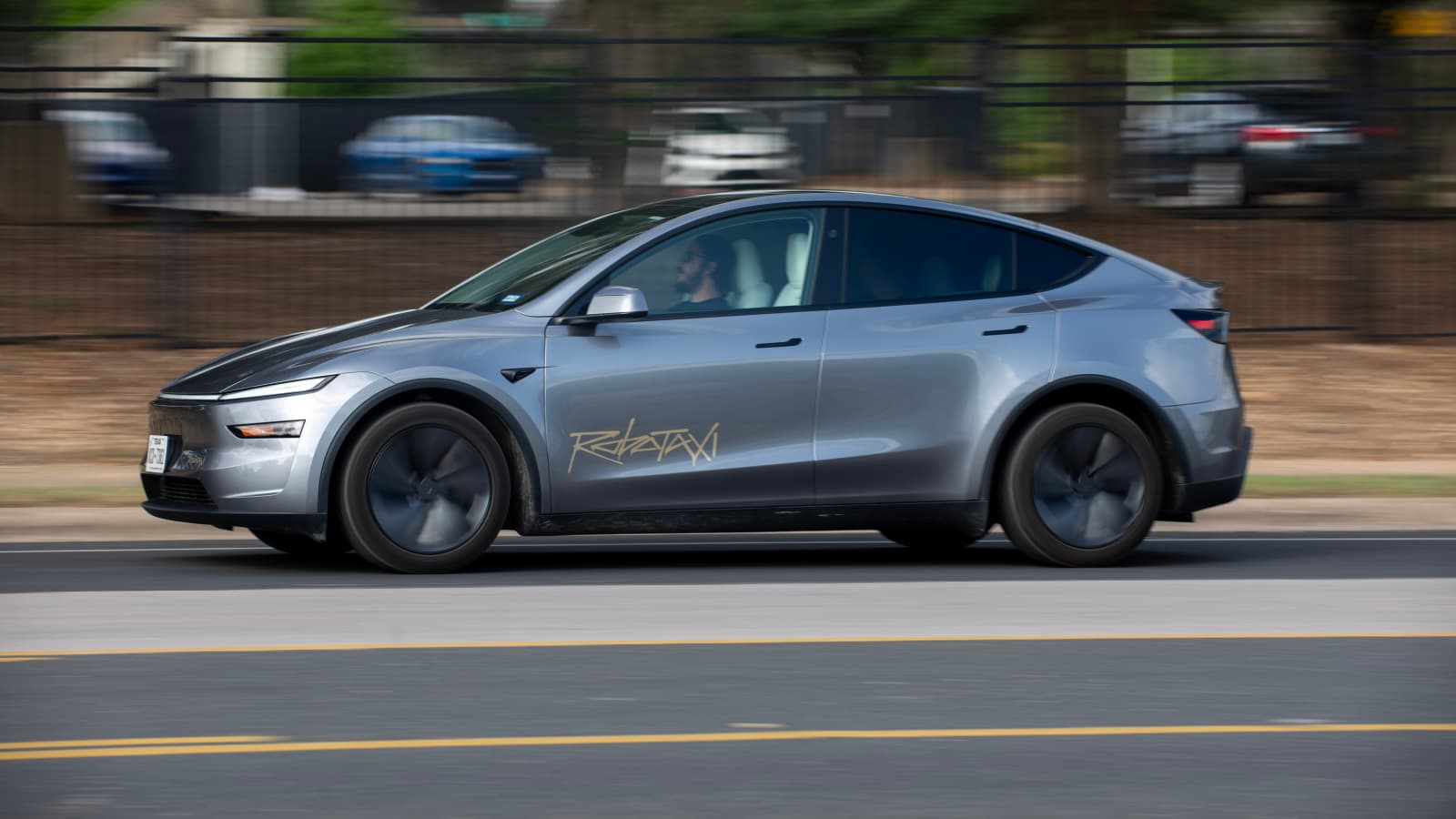
Officially, Tesla’s long-term optimism hinges on autonomy. The company plans to begin production of the Cybercab robotaxi in 2026, a steering-wheel-free vehicle designed specifically for autonomous ride-hailing.
However, progress has been slower than expected. While limited robotaxi services are operating in Austin and the San Francisco Bay Area, deployment remains constrained and still relies on human safety monitors. Independent trackers report far fewer vehicles in operation than Tesla previously promised.
Regulatory barriers add another challenge. Without changes to U.S. safety standards, Tesla would face limits on how many Cybercabs it can deploy annually.
Few New Vehicles on the Horizon
Beyond robotaxis, Tesla’s product roadmap appears thin. The company canceled plans for an affordable $25,000 EV and has focused instead on software, AI, and robotics. Recently launched lower-cost Model 3 and Model Y variants are simplified versions of existing models and have not meaningfully boosted sales.
Future concepts, including Cybertruck-inspired SUVs and vans, remain uncertain following the pickup’s weaker-than-expected performance.

A High-Stakes Bet on Autonomy
For Tesla’s deliveries to accelerate meaningfully again, analysts say the company will need either a breakthrough in autonomous driving or compelling new vehicles that reignite consumer interest. Until then, Wall Street’s confidence in Tesla’s long-term growth rests on technology that has yet to prove itself at scale.
Recommend Reading: Tesla U.S. Sales Expected to Decline in 2025 After EV Tax Credit Ends


Share:
Tesla Cybertruck Slowdown Triggers Major Losses for a Key Battery Supplier
Europe’s EV Market Grew in 2025—But 2026 Will Decide Its Future