



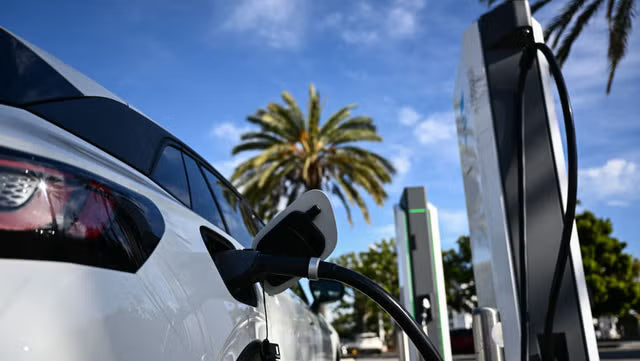
California is preparing a new electric vehicle incentive program designed to keep EV adoption moving, even as federal support continues to shrink. Backed by $200 million in state funding, the proposal focuses narrowly on first-time EV buyers, signaling a strategic shift toward market expansion rather than rewarding repeat adopters.

California EV public charging at Tesla Superchargers


A State-Level Response to Federal Rollbacks

With federal EV incentives significantly reduced, California is stepping in to fill part of the gap. Governor Gavin Newsom’s administration has outlined a proposal that would direct state funds toward lowering the upfront cost of EV ownership, particularly for households that have never owned one before.

Unlike previous rebate programs that relied on delayed tax credits, this initiative would apply incentives directly at the point of sale, making EVs immediately more affordable for buyers.


How the Proposed Incentive Would Work

According to guidance from the California Air Resources Board (CARB), the program would apply to:

  • New EV leases

  • New EV purchases

  • Used EV purchases

To qualify, buyers must be first-time owners of a zero-emission vehicle. Eligible vehicles would include battery-electric vehicles, plug-in hybrids, and hydrogen fuel-cell vehicles that meet state requirements.

A key feature of the proposal is a manufacturer matching requirement. Automakers would be expected to match the state’s contribution dollar-for-dollar, effectively doubling the value of the incentive offered to consumers.


Why First-Time Buyers Are the Priority

California officials argue that targeting first-time buyers delivers the greatest long-term impact. Research consistently shows that once consumers switch to electric vehicles, they rarely return to gasoline or diesel cars.

By limiting eligibility, the state aims to:

  • Introduce new drivers to EV ownership

  • Expand the overall EV market

  • Use limited funds more efficiently

As CARB explained, focusing incentives on new adopters helps accelerate electrification more effectively than subsidizing repeat purchases by experienced EV owners.


Price Caps and Affordability Guardrails

To prevent the program from disproportionately benefiting high-income buyers, California plans to impose vehicle price caps aligned with the former federal EV tax credit rules:

  • $55,000 for cars and crossovers

  • $80,000 for trucks and SUVs

Combined with the first-time buyer restriction, these limits are intended to stretch funding further and keep the program focused on mainstream adoption rather than luxury purchases.


Is $200 Million Enough?

That remains an open question. California has not yet announced a final per-vehicle incentive amount. However, the math highlights the program’s limitations.

If the state attempted to fully replace the former $7,500 federal tax credit, the fund would support fewer than 27,000 vehicles. For context, California recorded more than 408,000 zero-emission vehicle sales in 2025 alone.

This means the program is unlikely to sustain statewide EV sales volumes on its own. Instead, it appears designed as a targeted bridge—supporting new buyers during a transitional period rather than replacing federal incentives outright.

California's Level 3 DC Tesla Super Charging Station


What Happens Next

At this stage, the plan remains a proposal. California lawmakers must still finalize the structure, define incentive amounts, and approve funding before the program can launch.

That said, the framework addresses several weaknesses of past EV incentives. Point-of-sale rebates, price caps, and a focus on first-time buyers all improve accessibility and effectiveness compared to earlier tax-credit-based systems.

If approved, the program could become a model for how states maintain EV momentum in a post-federal-incentive landscape.

Recommend Reading: Tesla Opens Its Largest Solar-Powered Supercharger Site in California

FAQs

1. How much does it cost to install a home EV charger in California?

Installing a Level 2 home EV charger in California typically costs between $500 and $2,500, depending on wiring, electrical panel upgrades, and labor. Hardware alone ranges from $400–$800, while installation fees can add $600–$1,700. In high-cost regions like Los Angeles and the Bay Area, total expenses may be on the higher end.

2. What rebates and incentives are available for EV chargers in California?

California offers some of the nation’s most generous EV charger rebates:

  • Up to $500–$1,500 off home charging equipment in participating regions.
  • Rebates for equipment purchase or installation, plus special time-of-use (TOU) charging rates.
  • Covers 30% of installation costs (up to $1,000) for residential EVSE (Electric Vehicle Supply Equipment).
3. How long does it take to charge an EV at home in California?
  • Level 1 (120V standard outlet)3–5 miles of range per hour, requiring 20–40 hours for a full charge.
  • Adds 20–40 miles per hour, charging most EVs in 6–10 hours overnight.
  • Can deliver an 80% charge in 20–40 minutes, depending on vehicle and station output.
4. What are the main public EV charging networks in California?

California has the largest EV charging network in the U.S., supported by:

  • (exclusive to Tesla, expanding to other EVs via NACS).
  • (CCS and CHAdeMO connectors, located on highways and retail hubs).
  • (urban fast charging, shopping centers).
  • (widely available workplace and commercial chargers).

Apps like PlugShare and ChargeHub help drivers locate stations.

5. How much does EV charging cost in California?
  • Home charging$0.25 per kWh on average. With TOU rates, off-peak prices can be as low as $0.10–$0.15/kWh.
  • Typically $0.20–$0.40 per kWh or billed hourly.
  • Ranges from $0.30–$0.60 per kWh, meaning a full session may cost $10–$30.
6. Can I rely only on home charging in California?

Yes, if your daily commute is within 40–60 miles, home Level 2 charging usually covers all needs. However, long-distance drivers will rely on highway networks like Tesla Supercharger and Electrify America for road trips.

7. How do time-of-use (TOU) electricity rates save money on EV charging?

California utilities such as PG&E, SCE, and SDG&E offer TOU pricing:

  • Highest electricity costs.
  • Lowest costs.
    Smart EV chargers allow scheduled charging, helping EV drivers save 30–50% on electricity bills.
8. Do I need a permit to install an EV charger in California?

Yes. Most cities, including Los Angeles, San Francisco, and San Diego, require a building permit for Level 2 charger installation. Installations must comply with NEC (National Electric Code) and local building codes. An inspection may also be required before use.

9. Does frequent DC fast charging damage EV batteries?

Using DC fast chargers often can increase battery heat, slightly accelerating long-term degradation. However, modern EVs like Tesla, Hyundai, and Lucid include advanced battery thermal management systems. For best results, use home Level 2 charging for daily needs and reserve DC fast charging for road trips.

10. What is the future of EV charging in California?
  • NACS standard adoption: California is leading the switch to Tesla’s NACS connector, set to become the universal standard.
  • Renewable energy integration: Home solar plus storage systems (e.g., Tesla Powerwall) will pair with EV charging to reduce costs.
  • Vehicle-to-Grid (V2G) technology: EVs will eventually feed power back to the grid during peak demand, turning cars into mobile energy assets.

EV News

View all

2026 Nissan Leaf Highway Range Test at 70 MPH: Real-World Results Explained

2026 Nissan Leaf Highway Range Test at 70 MPH: Real-World Results Explained

A real-world 70 mph highway test shows how the 2026 Nissan Leaf performs in cold conditions, comparing EPA ratings, efficiency, and trim-level value to help EV buyers choose wisely.

Read more

Toyota Prepares Its First Three-Row Electric SUV as U.S. EV Push Accelerates

Toyota Prepares Its First Three-Row Electric SUV as U.S. EV Push Accelerates

Toyota is set to debut its first three-row electric SUV, targeting U.S. families with a premium interior, expected 300-plus-mile range, and Kentucky-based production as it accelerates its EV transition.

Read more

California Targets First-Time EV Buyers With New State Rebate Plan

California Targets First-Time EV Buyers With New State Rebate Plan

California plans a $200 million EV incentive program aimed at first-time buyers only. With point-of-sale rebates, price caps, and automaker matching, the proposal targets market growth as federal EV incentives decline.

Read more