





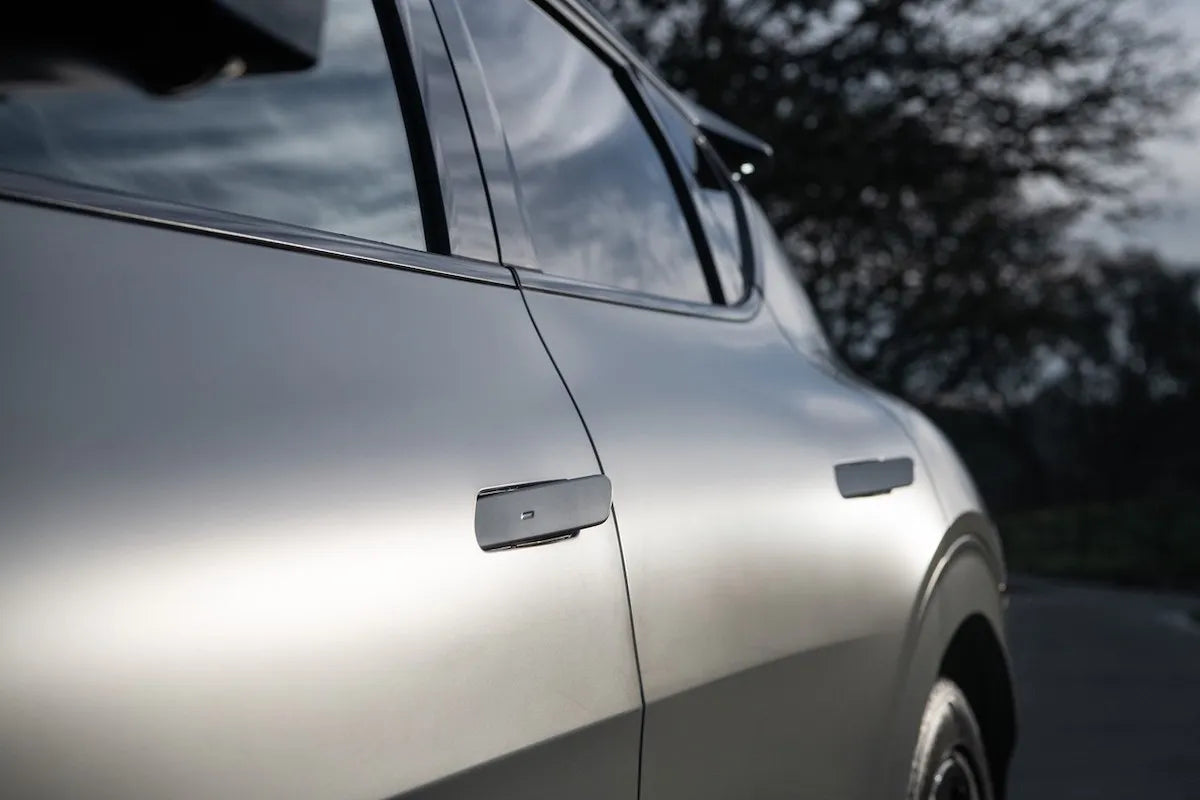
China has taken decisive action against one of the most controversial design trends in modern cars: flush, hidden door handles. Citing mounting safety risks, regulators are forcing automakers to rethink a feature that has become closely associated with electric vehicles.
The policy could have global implications, given China’s size and influence in the automotive industry.

Why China Is Cracking Down on Hidden Door Handles
China’s Ministry of Industry and Information Technology has formally banned fully concealed electronic door handles on new vehicles sold in the country. Automakers have until January 2029 to comply with the new rules, according to reports cited by Bloomberg.
While the regulation applies only to China, it follows years of investigation into safety incidents involving vehicles that use flush-mounted or electronic-only door handles. Regulators concluded that these designs pose unacceptable risks when vehicles lose power or are damaged in a crash.
Given China’s position as the world’s largest car market, the move is expected to influence global vehicle design standards, especially for EVs.
How Flush Door Handles Became Popular
Hidden door handles are not a new invention. Variations appeared as early as the 1940s and 1950s, often used on sports cars to emphasize aerodynamics and clean styling. Iconic models like the Mercedes-Benz 300 SL featured early versions of this design.
In the modern era, Tesla popularized flush door handles with the Model S. The goal was twofold: reduce aerodynamic drag to improve efficiency and give EVs a futuristic appearance. Other automakers quickly followed, particularly as EVs became more mainstream.
To further streamline production, many manufacturers eliminated mechanical linkages and relied on electronic actuators instead.
The Safety Risks Regulators Could No Longer Ignore
The core issue with electronic-only door handles is simple: they can fail when power is lost. In accidents, fires, or battery failures, doors may not unlock or handles may not deploy.
In the United States, more than 140 consumer complaints related to electronic door handles have been filed with safety regulators, many involving Tesla vehicles. Investigations have linked these failures to multiple fatalities, where occupants or first responders were unable to open doors in time.
In China, similar incidents reportedly involved Xiaomi-branded EVs, where power loss prevented emergency crews from accessing the cabin during fires.
These cases pushed regulators to act, concluding that design convenience and aesthetics should not outweigh basic occupant safety.
What the New Chinese Rules Require
Under the new regulations, vehicles sold in China must include:
-
A recessed handle area large enough for a hand to grip
-
Clear mechanical access, even if electronic systems fail
-
Interior signage indicating how to open doors manually
-
Standardized placement to aid first responders
These changes effectively eliminate fully flush, hidden handles that rely solely on electronics.
Bloomberg estimates that redesigning entire model lineups could cost automakers tens of millions of dollars, especially for EV-heavy brands.
Automakers Are Already Adjusting
Some manufacturers had already begun backing away from aggressive flush-handle designs. Tesla has stated it will make mechanical interior releases easier to use, while Volvo has adopted similar revisions.
Other brands have faced recalls related to door handle failures, including Ford and Fisker. Cold-weather usability has also been a problem, with flush handles freezing or becoming difficult to operate for elderly or mobility-limited passengers.
These issues highlight a broader industry realization: aerodynamic gains and visual appeal may not justify real-world usability and safety trade-offs.

Global Impact May Be Inevitable
Although the regulation applies only to China, automakers rarely build market-specific door structures due to cost and complexity. If Europe or the United States adopts similar rules, manufacturers may standardize safer handle designs worldwide.
In the U.S., lawmakers have already introduced the SAFE Exit Act, which would establish federal safety standards for electronic door handles.
As regulators increasingly prioritize emergency access and occupant safety, flush handles may soon become a design relic rather than a defining EV feature.
Recommend Reading: Why Modern EV Door Handles Are Becoming a Growing Safety Concern


Share:
Slate Signals Broader Vehicle Plans Beyond Its Minimalist Electric Pickup
California Targets First-Time EV Buyers With New State Rebate Plan