



Addressing Panic Situations
Tesla is working on a new interior door-release design aimed at making exits quicker and more intuitive during emergencies. According to design chief Franz von Holzhausen, the company plans to merge its electronic door button and the mechanical backup latch into a single lever.
This adjustment is meant to address concerns that Tesla doors can be confusing in a crisis. “In a panic situation, your muscle memory takes over. By combining the two functions, you just pull further on the same lever for the mechanical release,” von Holzhausen explained on Bloomberg’s Hot Pursuit podcast.

Federal Safety Investigation
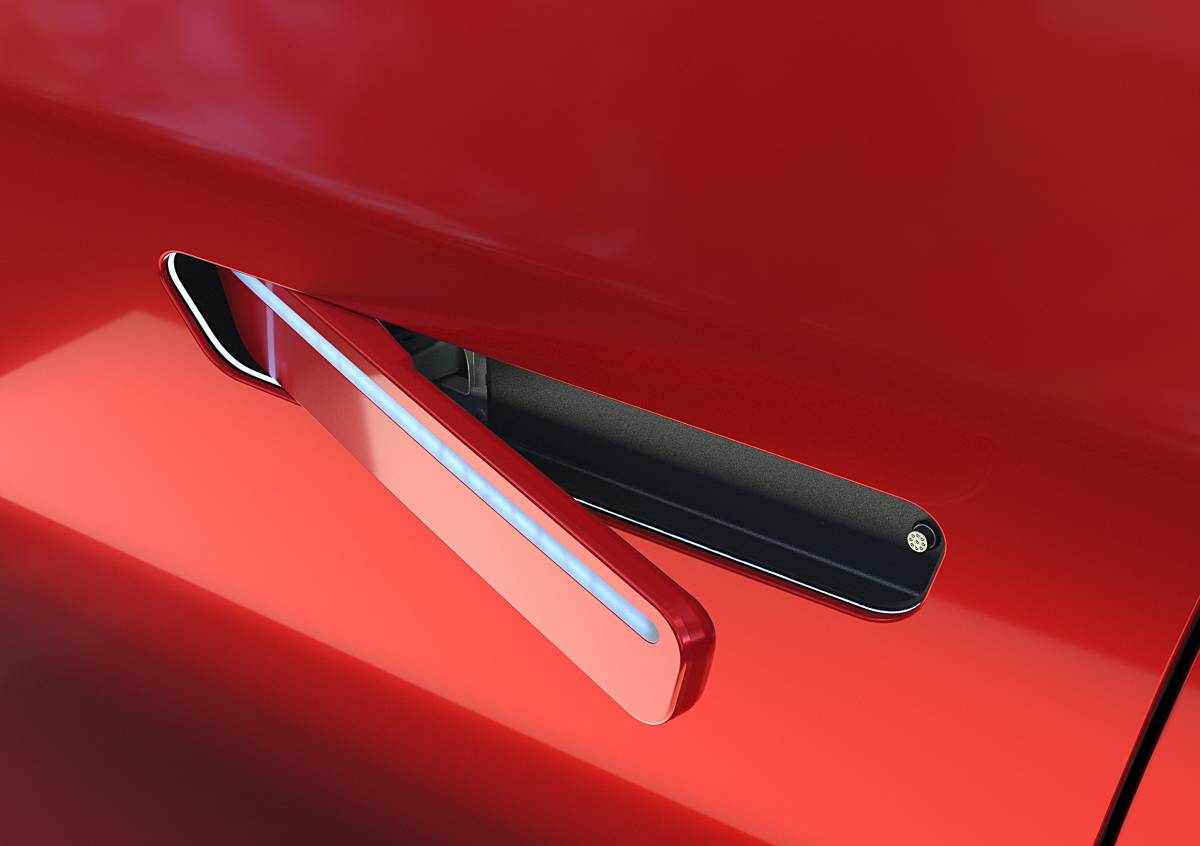
The announcement follows a preliminary investigation by the U.S. National Highway Traffic Safety Administration (NHTSA). The agency is reviewing whether Tesla’s electronic door handles present a safety defect after reports of drivers and passengers being unable to exit during power failures or crashes.
The probe focuses on the 2021 Tesla Model Y, after complaints that exterior handles failed to open vehicles, sometimes leaving children trapped inside. NHTSA noted that these failures often occurred without any warning of a low-voltage battery issue.
Challenges With Current Design
Tesla’s current system uses interior electronic buttons to open doors, with manual backups available in most cases. However, manual releases can be difficult for children to access or operate, especially in rear seats. Bloomberg’s report described incidents where occupants or first responders struggled to locate or use the releases after accidents.
Notably, not all Teslas include mechanical releases for the rear seats, adding to safety concerns.
International Pressure
Tesla’s reliance on electronic systems is not unique, as other automakers have adopted similar flush-mounted electronic handles. However, regulators are increasingly skeptical. The Chinese government is reportedly considering banning flush handles without a mechanical backup, raising additional pressure on Tesla to adapt.
Von Holzhausen confirmed the company is preparing for these changes: “We’re working on it right now, and looking closely at the details of the regulation. We’ll have a really good solution for that.”

What Comes Next
The redesigned integrated lever system could help Tesla align with global safety expectations while addressing criticism from regulators and customers. By simplifying the release mechanism, the automaker aims to provide a more reliable and instinctive escape option during emergencies.
While the NHTSA’s investigation is ongoing, Tesla’s proactive redesign signals a recognition of the stakes involved. Safety advocates argue that simplifying exits is especially critical as vehicles become increasingly dependent on electronic systems. If implemented effectively, Tesla’s new design could serve as a model for balancing futuristic innovation with the practical demands of safety.
Recommend Reading: Porsche Reconsiders Virtual Gear Shifts for EVs After Initial Pushback
Share:
Xpeng Kicks Off European EV Production With Magna Steyr Partnership
The 2026 Polestar 4 Arrives in the U.S. With Korean Production