



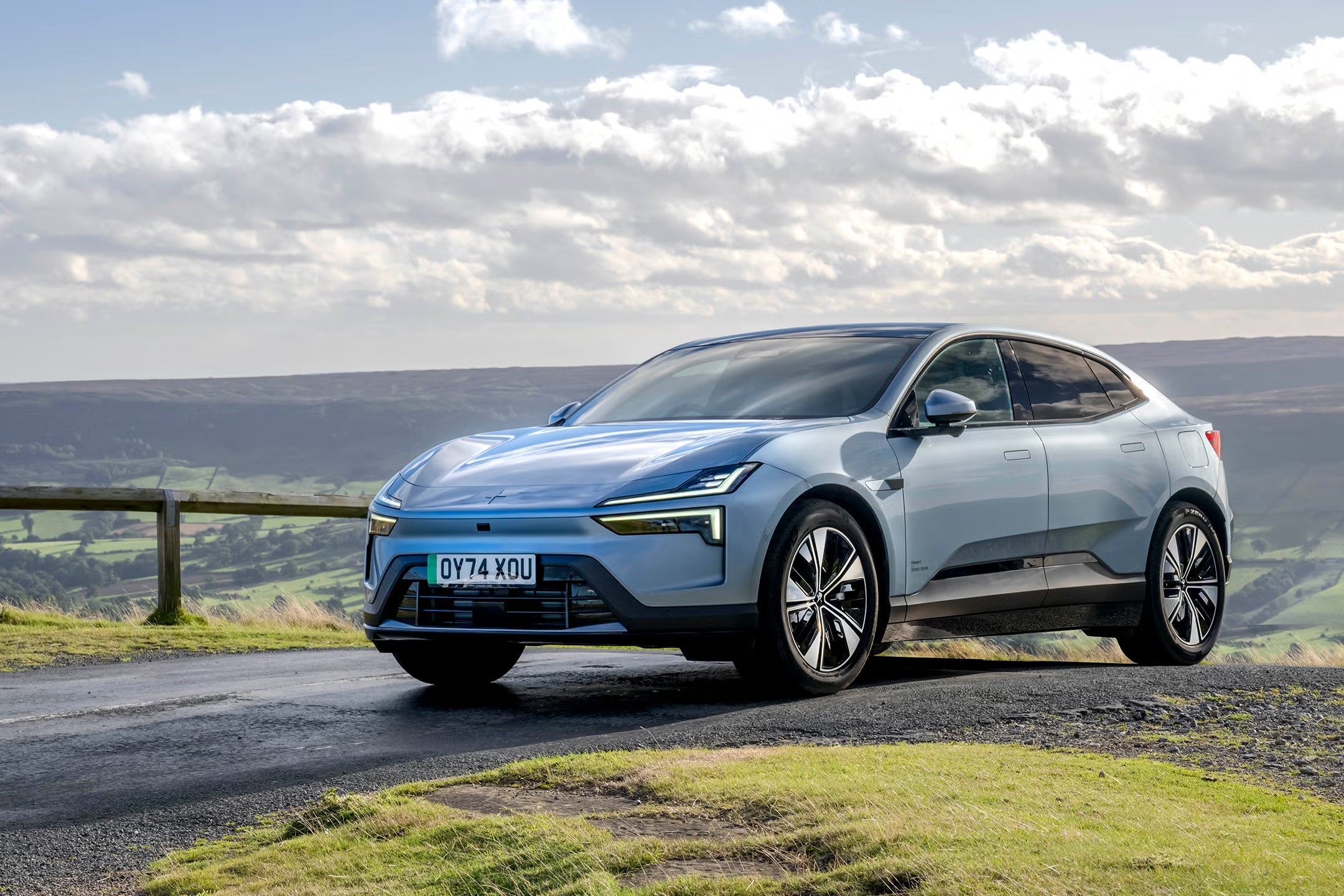
A Swedish EV, Built in South Korea
The 2026 Polestar 4 has officially gone on sale in the United States, and while the model itself looks familiar, there’s one major change: U.S.-spec cars will now be imported from South Korea instead of China. Production has shifted to Renault’s Busan factory, which also serves the Korean domestic market.
This makes the Polestar 4 a truly global car—Swedish-designed, Chinese-owned, and Korean-built. For trivia lovers, it’s one of the few EVs to embody globalization so literally.

What’s New for 2026
Shoppers won’t find dramatic updates compared with the 2025 model. The biggest tweak is that the Pilot Pack, previously a $1,500 option on single-motor trims, is now standard equipment. However, since the cost has been rolled into the MSRP, prices remain the same across the lineup.
Beyond that, powertrains, range, and charging speeds are unchanged. The Polestar 4 still sits between the Polestar 2 sedan and Polestar 3 SUV in the lineup, but with the 2 no longer available in the U.S., the coupe-like crossover has become the entry point into the Polestar brand for American buyers.
Battery, Range, and Charging
Every 2026 Polestar 4 comes equipped with a 100-kWh battery pack.
-
Long Range Single Motor: EPA-estimated 300 miles of range
-
Long Range Dual Motor: EPA-estimated 270 miles of range
Charging performance is competitive:
-
DC fast charging up to 200 kW, enabling rapid top-ups on the go
-
AC Level 2 charging up to 11 kW for overnight refills at home
Trim Levels and Pricing
The lineup begins with the Long Range Single Motor, priced at $57,800 (including shipping). This variant delivers 272 horsepower and 253 lb-ft of torque, good for a 0–60 mph sprint in 6.9 seconds.
Step up to the Long Range Dual Motor at $64,300, and output jumps to 544 hp and 506 lb-ft, cutting the 0–60 time to 3.7 seconds.
Standard and Optional Equipment
Even at the base level, the Polestar 4 is generously equipped. Standard features include:
-
Android Automotive OS infotainment system
-
20-inch wheels & panoramic glass roof
-
Adaptive cruise control & Pilot Assist
-
360-degree camera system & lane change assist
-
Heat pump & power-adjustable front seats
The Plus Pack ($5,500) adds luxury touches such as:
-
Head-up display
-
12-way front seats with ventilation
-
Heated rear seats & steering wheel
-
Reclining rear seats
-
Harman Kardon premium audio
For enthusiasts, the Performance Pack ($4,500, Dual Motor only) sharpens the driving experience with 22-inch wheels, Polestar Engineered suspension, Brembo brakes, summer tires, and signature Swedish gold details.

Why It Matters
With the Polestar 2 sedan now gone from the U.S. lineup, the Polestar 4 has become the most affordable entry into the brand. Positioned below the Polestar 3 luxury SUV, it could become the automaker’s most important model in North America.
Production in Busan, South Korea, begins this summer, with first U.S. deliveries expected in fall 2025. For Polestar, success here will be crucial in cementing its place in the American EV market.
Recommend Reading: Tesla Model Y Comprehensive Guide 2025 | Range, Specs, Sales & Future Outlook
Share:
Tesla Redesigns Door Handles to Improve Emergency Safety
Tesla Model Y May Gain Up to 90 Miles of Extra Range With Panasonic’s Next-Gen Batteries