

A Refresh and a Bigger Upgrade Ahead

The Tesla Model Y, the world’s best-selling EV, received a meaningful update this year with its “Juniper” refresh. The redesign brought sleeker styling, higher efficiency, and better ride comfort thanks to improvements in suspension and chassis tuning. Yet, the most transformative upgrade may not arrive until later this decade. According to Panasonic Energy, Tesla’s key battery supplier, a new high-density cell design could extend the Model Y’s range by nearly 90 miles.

Black upgraded tesla model y driving on the road.


Panasonic’s Bet on Anode-Free Technology

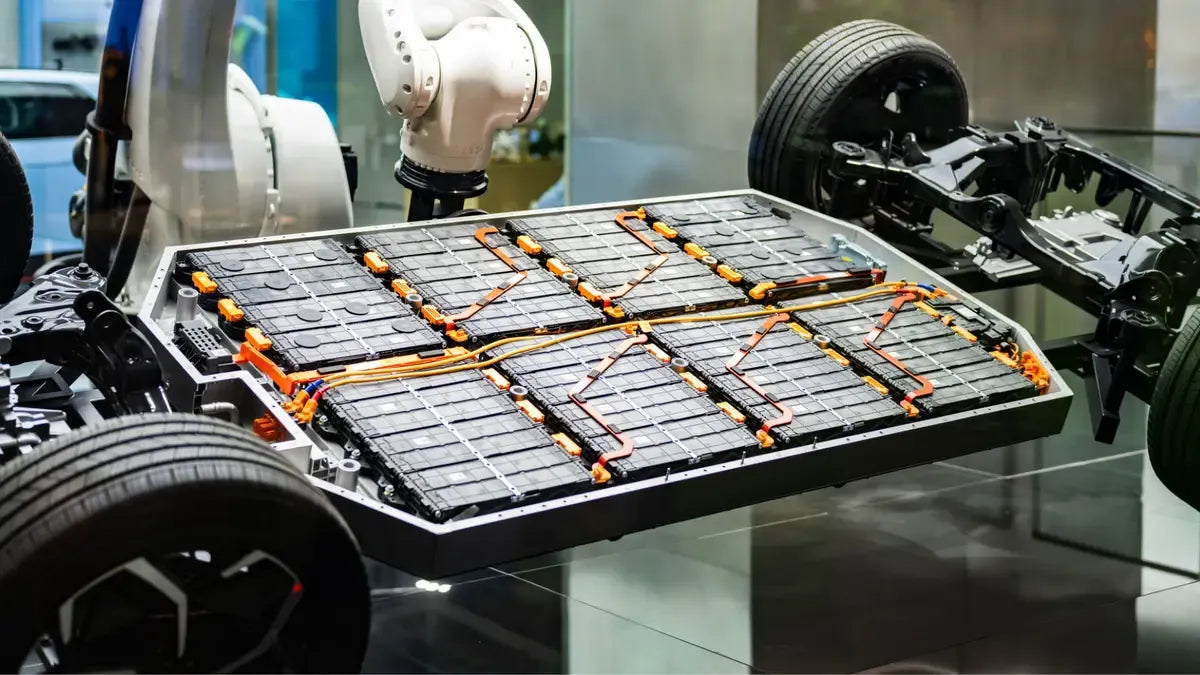
Panasonic confirmed it is developing anode-free batteries with far greater energy density, a technology the company says could deliver “world-leading” performance by late 2027.

In a traditional lithium-ion cell, the anode acts as the storage side during charging and is usually made from graphite. Graphite production is dominated by Chinese supply chains, adding both cost and complexity. Panasonic’s solution is to eliminate graphite altogether, freeing up more space for active cathode materials such as nickel, manganese, and cobalt.

This design could result in batteries that are lighter, smaller, and potentially cheaper while significantly boosting the overall energy capacity.


What It Means for the Model Y

The rear-wheel-drive Tesla Model Y currently delivers about 357 miles of EPA-rated range. Panasonic claims that with anode-free cells, the same vehicle could reach nearly 450 miles per charge—a dramatic jump that would bring it closer to premium long-range competitors.

For comparison, Lucid’s upcoming Gravity SUV and General Motors’ electric trucks, like the GMC Sierra EV, rely on massive 200+ kWh packs to reach similar range figures. If Tesla can achieve nearly the same distance with a smaller, more cost-effective battery pack, it would strengthen its position in the EV market.


Challenges and Industry Competition

While promising, anode-free technology remains largely experimental. So far, no automaker has put these batteries into mass-market vehicles. Panasonic is not alone in this pursuit, however.

  • QuantumScape, a California startup partnered with Volkswagen, has been working on solid-state and anode-free chemistries.

  • Our Next Energy, based in Michigan, previously demonstrated a dual-chemistry pack in a BMW iX prototype capable of 600 miles of range.

Panasonic’s research also aims to reduce reliance on nickel, another costly material with supply chains heavily tied to China. General Motors is moving in a similar direction with plans to introduce lithium-manganese-rich (LMR) batteries for trucks and SUVs by 2028.

Panasonic anode-free battery


Why Timing Matters for Tesla

Tesla may be expanding into AI and robotics, but cars remain its core business. Delivering a Model Y with an extra 90 miles of range could be one of the simplest ways to maintain leadership in a crowded EV market.

The timing is critical. Several rivals are preparing new entries:

As these challengers enter the market, Tesla will need to demonstrate that it still sets the pace. Extending the Model Y’s range with Panasonic’s advanced cells could be the move that keeps it in the lead.

Recommend Reading: Changan’s 930-Mile EV Sets New Benchmark — Is Tesla Losing Its Edge?
FAQs - Tesla Model Y Comprehensive 2025 Edition

What is the Tesla Model Y and why is it so popular in the EV market?

The Tesla Model Y is a fully electric compact SUV launched in 2020 and quickly became Tesla’s best-selling vehicle worldwide. It combines long driving range, advanced Tesla Autopilot and Full Self-Driving (FSD) features, over-the-air software updates, and practical cargo space, making it ideal for families and commuters. Its balance between affordability, performance, and technology explains why it has surpassed sales of the Model 3 in many markets.

What are the key differences between the Tesla Model Y trims (Long Range, Performance, RWD)?
  • Model Y Rear-Wheel Drive (RWD): Entry-level, most affordable, suitable for city driving and shorter commutes.
  • Model Y Long Range (AWD): Dual-motor all-wheel drive, offering up to 330 miles of range, best balance for daily use and long trips.
  • Model Y Performance: Higher acceleration (0–60 mph in 3.5s), sportier handling, slightly shorter range (~303 miles).

Choosing between them depends on budget, driving habits, and whether you value maximum range or sporty performance.

How far can the Tesla Model Y go on a full charge?

As of 2025, the EPA-rated ranges are:

  • Model Y RWD: ~260 miles
  • Model Y Long Range: ~330 miles
  • Model Y Performance: ~303 miles

Real-world range may vary based on driving speed, weather, terrain, and vehicle load.

How does Tesla Model Y charging work at home and on the road?
  • Home Charging: Compatible with NACS (Tesla’s North American Charging Standard) and can also use J1772 adapters. A NEMA 14-50 outlet or Tesla Wall Connector is recommended for faster charging at home.
  • Public Charging: Model Y has seamless access to Tesla Superchargers (Level 3 DC Fast Charging), providing ~200 miles of range in ~15 minutes. In 2025, many CCS1 charging networks are also opening to Tesla via adapters.

Tip: For EV owners in North America, NACS is becoming the dominant charging connector, making Model Y future-proof.

How much does the Tesla Model Y cost in 2025?

Pricing may vary by market and incentives:

  • Model Y RWD: ~$44,000
  • Model Y Long Range: ~$49,000
  • Model Y Performance: ~$53,000+

Tax credits (such as the U.S. Federal EV tax credit) and state-level rebates can significantly reduce the effective cost.

What are the maintenance costs of a Tesla Model Y compared to gas cars?

Tesla Model Y requires lower maintenance than internal combustion engine (ICE) vehicles since it has fewer moving parts (no oil changes, no exhaust system, no fuel filters).

Typical costs include:

  • Tire rotations & replacements
  • Cabin air filter changes
  • Brake fluid inspection
  • Battery & motor cooling system checks

Battery warranty: 8 years or 120,000–150,000 miles (depending on trim).

What safety features does the Tesla Model Y include?

Tesla Model Y has received top safety ratings globally, featuring:

  • Autopilot (standard driver assistance system)
  • Optional Full Self-Driving (FSD) capability for advanced automation
  • Collision avoidance and automatic emergency braking
  • Over-the-air safety updates
  • High structural integrity with low rollover risk due to battery placement
How well is the Tesla Model Y selling in the U.S. and globally?

By 2025, the Tesla Model Y has become the world’s best-selling EV and one of the top-selling cars overall across all fuel types.

  • In 2023, it overtook Toyota Corolla in global sales.
  • In the U.S., Model Y continues to dominate EV sales with a strong market share, supported by expanding Tesla Supercharger access and competitive pricing.
What are the potential drawbacks or things to watch out for with the Tesla Model Y?
  • Build quality issues: Panel gaps and paint inconsistencies reported in early production, though improving.
  • Interior design: Minimalist dashboard not appealing to all drivers.
  • Charging infrastructure (non-Tesla): Although NACS is expanding, some third-party chargers may still require adapters.
  • Price fluctuations: Tesla frequently adjusts pricing, which may impact resale values.
What is the future outlook for the Tesla Model Y?
  • Solid-state or higher-density battery packs expected in future updates for improved range and durability.
  • Wider adoption of NACS charging will make road trips even more convenient across North America.
  • Autonomous driving improvements via AI and Dojo supercomputer may make FSD more capable.
  • Global dominance in EV sales likely to continue as Model Y remains Tesla’s most profitable and scalable model.

EV News

View all

Lexus Revives the LFA Nameplate as a Potential Electric Supercar

Lexus Revives the LFA Nameplate as a Potential Electric Supercar

Lexus is exploring a return of the LFA name as a fully electric supercar, potentially based on Toyota’s GR GT architecture and future solid-state batteries, positioning it as a bold halo EV to redefine Lexus performance in the electric era.

Read more

Skoda Signals an Electric Octavia Wagon With the Vision O Concept

Skoda Signals an Electric Octavia Wagon With the Vision O Concept

Skoda’s Vision O concept offers a detailed preview of a future electric Octavia wagon expected later this decade, highlighting SSP-based architecture, 800-volt charging, expanded interior space, and a design focused on practicality and value.


Read more

Stellantis Expands U.S. Recall Over Brake Pedal Failure Risk in PHEV Models

Stellantis Expands U.S. Recall Over Brake Pedal Failure Risk in PHEV Models

Stellantis has expanded a U.S. recall covering nearly 6,000 Dodge Hornet and Alfa Romeo Tonale PHEVs after discovering a brake pedal arm defect that could collapse during hard braking, increasing accident risk.

Read more