Introduction

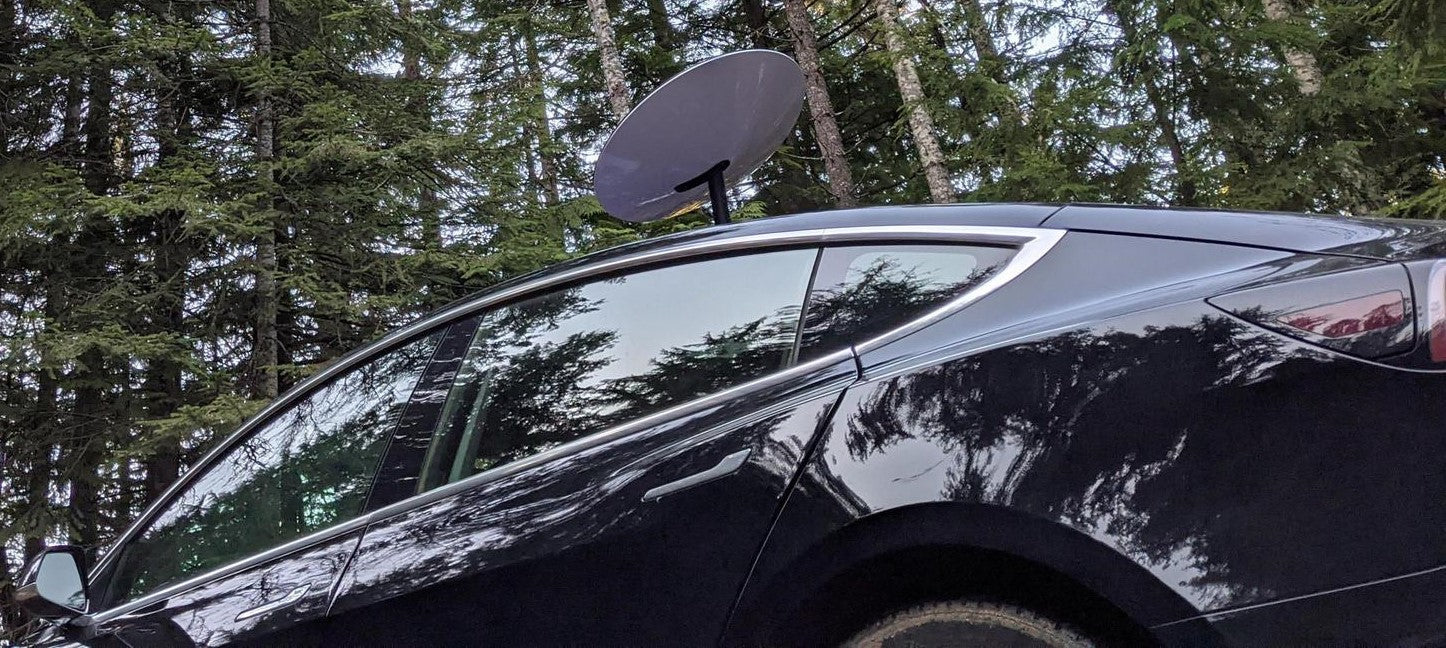
Tesla may be preparing to integrate Starlink satellite internet into its vehicles, according to a recent patent filing. The patent outlines a vehicle roof assembly designed to allow radio signals to pass through, potentially enabling satellite connectivity. With Elon Musk leading both Tesla and SpaceX, the integration of Starlink into Tesla cars has long been speculated.

Tesla Moves Closer to Integrating Starlink Internet in Vehicles


Details of the Patent Filing

The patent describes a roof structure transparent to radio frequencies, which is necessary for signals from satellites to reach onboard systems reliably. While Tesla has not disclosed the full capabilities, the patent suggests potential uses for internet connectivity and satellite communications within vehicles.

Currently, Tesla vehicles already use internet services for functions like streaming and navigation. The new design could expand this connectivity, possibly enabling in-car satellite internet access. Tesla has not provided a timeline for deployment, but patent filings often precede technology rollout, indicating it could appear in upcoming models.


Potential Benefits of Starlink Integration

Adding Starlink to Tesla vehicles could provide high-speed internet access in remote areas, enhancing functionality for applications that rely on a stable connection. Features such as remote climate control, security monitoring, and app-based controls could operate anywhere within satellite coverage.

If Tesla allows vehicles to share the Starlink signal as a mobile hotspot, users could connect multiple devices, turning the car into a mobile office or campsite. For models like the Cybertruck, which include power export capabilities, Starlink integration could complement extended off-grid usage, supporting both work and recreation in areas without cellular coverage.


Implications for Tesla and the EV Industry

Integrating satellite internet would represent a unique innovation in the EV sector. While other automakers have introduced advanced features like higher-voltage architectures or four-wheel steering, in-car satellite connectivity remains largely unexplored.

This integration could also position Tesla vehicles as fully connected, self-sufficient platforms, capable of providing both mobility and continuous internet access in remote locations. Competitors may need to develop similar solutions or partner with Starlink to remain competitive in long-range connectivity and off-grid functionality.


Considerations and Limitations

The use of Starlink internet in vehicles comes with practical considerations. Satellite communication may not offer the lowest latency for applications requiring real-time data exchange, and reliability could vary in dense urban areas. Additionally, always-on connectivity could impact user expectations regarding privacy and availability, as vehicles may remain reachable in locations previously considered offline.

Tesla Moves Closer to Integrating Starlink Internet in Vehicles


Conclusion

The Tesla patent indicates a potential integration of Starlink satellite internet, which could expand vehicle connectivity and functionality in remote areas. While details such as rollout timing and specific capabilities remain unconfirmed, the move would represent a notable advancement for Tesla and potentially set a new standard for connectivity in electric vehicles.

Recommend Reading: Tesla’s Holiday Update Delivers New Features and Smarter In-Car Tools
FAQs - Tesla Cybertruck

What is the Tesla Cybertruck price in the U.S. for 2025?

Tesla Cybertruck pricing starts around $60,990 for the all-wheel-drive model, with higher-performance versions like the Cyberbeast costing over $99,990. Prices may vary depending on configuration, software add-ons like Full Self-Driving (FSD), and available incentives or tax credits.

What is the Tesla Cybertruck range per full charge?

The Tesla Cybertruck offers an estimated 250–340 miles of range, depending on the variant. The dual-motor AWD provides around 300 miles, while the Cyberbeast trim balances performance with ~320 miles. A future range extender option could push total range above 470 miles.

How fast can the Tesla Cybertruck charge with NACS and Supercharger V4?

The Cybertruck supports Tesla’s NACS charging standard, giving access to the Supercharger network. On a Supercharger V4, it can add roughly 128 miles in 15 minutes, depending on battery size and conditions. This makes it competitive with other EV trucks like the Ford F-150 Lightning and Rivian R1T.

What is the towing capacity of the Tesla Cybertruck?

The Cybertruck has a towing capacity of up to 11,000 pounds, rivaling traditional trucks such as the Ford F-150 and Chevrolet Silverado. It is designed for heavy-duty hauling, camping gear, boats, and trailers, making it a top choice for EV owners needing utility.

Does the Tesla Cybertruck come with bulletproof stainless-steel exoskeleton?

Yes. The Cybertruck uses Ultra-Hard 30X cold-rolled stainless steel for its exoskeleton, designed to resist dents, corrosion, and even small-caliber bullet impacts. Combined with armored glass windows, it enhances durability for off-road and extreme-use scenarios.

What interior features does the Tesla Cybertruck have?

The Cybertruck interior includes a 17-inch touchscreen with Tesla OS, yoke-style steering, seating for up to 6 passengers, and a 120V/240V onboard power outlet for tools and appliances. Tesla emphasizes minimalist design, with premium materials and smart storage solutions.

How does Tesla Cybertruck compare to Ford F-150 Lightning and Rivian R1T?

The Cybertruck offers higher towing capacity, longer range options, and access to Tesla’s Supercharger network, giving it an edge in charging convenience. The F-150 Lightning offers brand familiarity and broader service support, while Rivian emphasizes off-road adventure features.

Is the Tesla Cybertruck equipped with Full Self-Driving (FSD)?

Yes, the Cybertruck supports Tesla’s optional Full Self-Driving package, which includes Navigate on Autopilot, Auto Lane Change, Smart Summon, and Autopark. While Tesla FSD is not yet fully autonomous (Level 5), it continues to improve with over-the-air software updates.

Can the Tesla Cybertruck be used for off-road adventures?

Yes. The Cybertruck features adaptive air suspension with up to 16 inches of ground clearance, four-wheel steering for tight maneuvers, and a water-resistant exoskeleton. These features make it highly capable for off-road camping, overlanding, and rugged terrains.

When will Tesla Cybertruck deliveries expand beyond the U.S.?

Initial deliveries began in late 2023 in the U.S. Expansion to Canada, Europe, and other international markets is expected gradually, depending on regulatory approvals and production scaling at Tesla’s Giga Texas facility.

EV News

View all

A Complete Guide to EV Charging Adapters for North American Drivers

A Complete Guide to EV Charging Adapters for North American Drivers

This guide explains which EV charging adapters North American drivers need, including CCS1, J1772, NACS, and CHAdeMO connectors, plus safety-certified options, warranty advice, and where to buy them.

Read more

Rivian Expands Hands-Free Driving and Adds Key Software Upgrades

Rivian Expands Hands-Free Driving and Adds Key Software Upgrades

Rivian’s 2025.46 software update brings Universal Hands-Free across over 3.5 million miles of roads, adds customizable Autonomy Drive Styles, improves off-road quad-motor features, and introduces a new digital key system for Gen 2 R1 vehicles.

Read more

Tesla Moves Closer to Integrating Starlink Internet in Vehicles

Tesla Moves Closer to Integrating Starlink Internet in Vehicles

Tesla’s recent patent suggests possible integration of Starlink satellite internet, offering high-speed connectivity, remote monitoring, and mobile hotspot capability for electric vehicles, enhancing off-grid and connected use.

Read more