



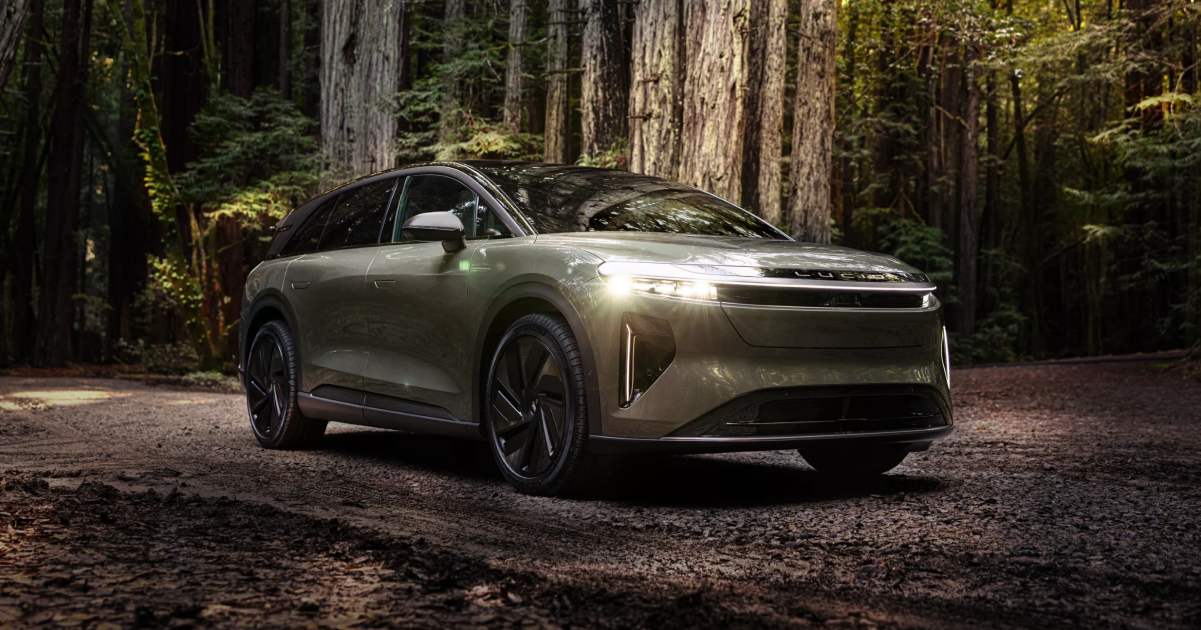
High-Power Family SUVs Enter a New Era
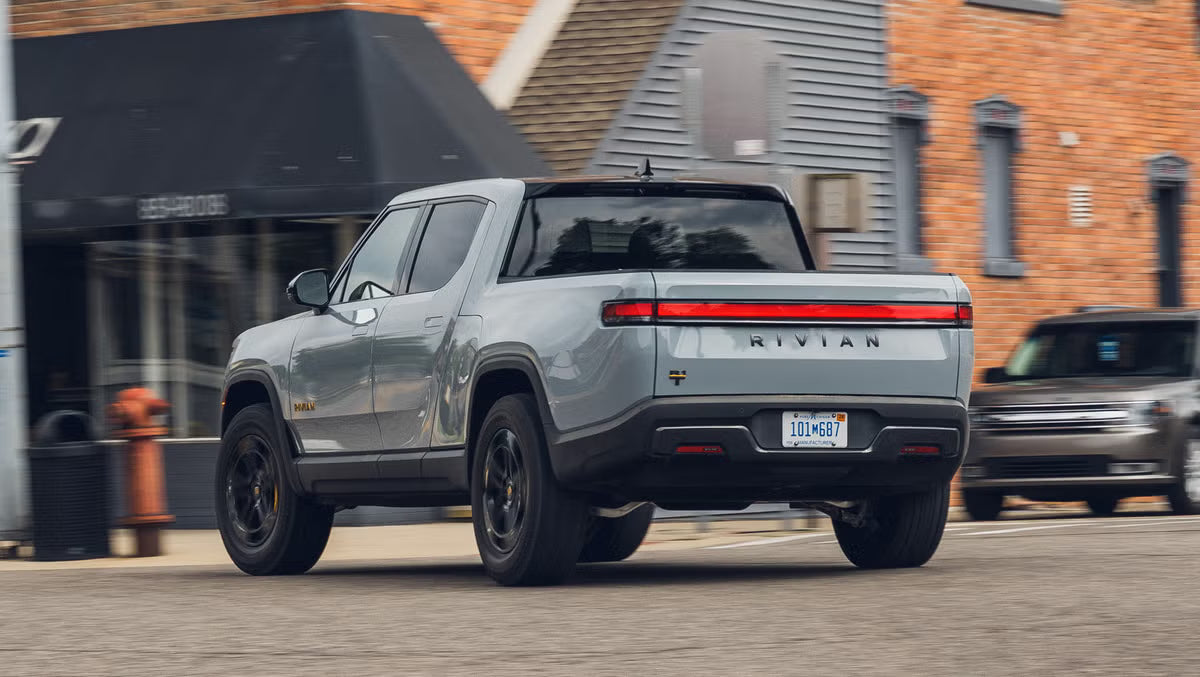
The American EV market has reached an unusual moment: families can now purchase three-row SUVs with acceleration once reserved for high-end supercars. In the $110,000–$120,000 price range, buyers can choose electric SUVs that deliver extraordinary power while retaining everyday practicality. Two of the most talked-about options are the 2026 Lucid Gravity Grand Touring and the 2025 Rivian R1S Tri-Motor—both recently tested in Edmunds’ well-known U-Drags evaluation.

Power Output and Technical Setup
Lucid’s flagship Gravity Grand Touring features a dual-motor system producing 828 horsepower and 909 lb-ft of torque. Rivian’s updated R1S Tri-Motor counters with three drive units delivering 850 hp and a massive 1,103 lb-ft of torque.
While the Rivian holds a torque advantage on paper, the real-world results from Edmunds’ testing reveal a more nuanced story. Both SUVs weigh well over 6,000 pounds, yet each achieves sports-car-level acceleration.
How the U-Drags Test Works
The U-Drags format is designed to showcase more than straight-line speed. Two vehicles launch down a quarter-mile stretch, brake hard, execute a tight U-turn, and accelerate back to the start/finish point. After the first run, drivers swap vehicles and lanes to ensure fairness.
This structure exposes a vehicle’s strengths in acceleration, braking stability, and cornering agility, making it an ideal test bed for comparing large electric SUVs.
Race One: Lucid Closes the Gap and Pulls Ahead
At the start of the first run, the Rivian R1S launched harder using its Launch Control, jumping ahead of the Gravity. But as both vehicles approached the quarter-mile mark, the Lucid’s power delivery and mid-range efficiency allowed it to gradually regain ground.
The U-turn marked the decisive moment. With the Gravity set to Sprint Mode and Launch Mode active, its more composed chassis allowed it to carry far greater speed through the turn. On the return sprint, the Rivian quickly hit its 112-mph speed limiter, while the Lucid pushed all the way to 130 mph, finishing well ahead.
Race Two: Earlier Overtake, Same Result
The second race followed a similar script, but the Lucid Gravity gained the advantage earlier. It overtook the Rivian sooner after launch and maintained its lead throughout the course. By the end of the second run, the Gravity had clearly established itself as the quicker real-world performer.
By the Numbers: Straight-Line Metrics vs. Track Results
Measured strictly by standard performance metrics, the Rivian holds narrow advantages:
-
0–60 mph: R1S at 3.0 seconds, Gravity at 3.5 seconds
-
Quarter mile: R1S at 11.3 seconds, Gravity at 11.4 seconds
However, the full 3,900-foot U-Drags course tells a different story. The Lucid Gravity finished in 33.2 seconds, beating the R1S Tri-Motor’s 34.5-second result by more than a full second.
This highlights how sustained speed, chassis balance, and high-speed stability matter just as much as off-the-line acceleration.

Practical Differences Beyond Performance
While both vehicles seat seven and function as family SUVs, they cater to different audiences:
-
The Lucid Gravity leans toward a more car-like driving experience with refined dynamics.
-
The Rivian R1S maintains its image as an adventure-ready SUV, built for versatility and off-road capability.
It is also important to note that the tested Gravity Grand Touring represents Lucid’s most powerful version currently available. Meanwhile, Rivian offers an even stronger Quad-Motor R1S, giving performance-focused buyers additional options.
Recommend Reading: Chevy Bolt vs. Nissan Leaf: Battle of America’s Cheapest EVs

Share:
Tesla’s Three-Row Model Y L Highlights Growing Competitive Pressure in China
Why Rivian Sees Opportunity After the Federal EV Tax Credit Ends