

Federal Review Concludes Without Action

A recent decision by the National Highway Traffic Safety Administration (NHTSA) has brought clarity to concerns surrounding one-pedal driving in electric vehicles. After examining a formal complaint, the agency determined that the feature does not present a safety defect, effectively closing the case without requiring corrective measures.

This outcome means that more than 2 million vehicles produced since 2013 will not be subject to recall on this basis. The ruling removes regulatory pressure that could have forced design changes across multiple EV models.

Tesla Cybertruck Dual Motor AWD Base Model Explained


Understanding the Technology Behind It

One-pedal driving is a defining characteristic of many electric vehicles. Instead of relying heavily on traditional braking systems, the vehicle slows down when the driver lifts off the accelerator. This process uses regenerative braking, which converts kinetic energy into electricity and feeds it back into the battery.

The system reduces reliance on friction brakes and can bring the car to a full stop in many scenarios. While efficient, it requires drivers to adapt, especially those accustomed to conventional internal combustion engine vehicles.


Origin of the Investigation

The review was triggered by a petition filed in March 2023, raising concerns about possible driver confusion. Specifically, the complaint focused on pedal misapplication, a situation where a driver unintentionally presses the accelerator instead of the brake.

This issue has been debated for years, often linked to claims of unintended acceleration. Critics suggested that one-pedal driving might contribute to such incidents by changing how drivers interact with vehicle controls.


Findings Based on Vehicle Data

After analyzing reported incidents, regulators found limited evidence supporting the claim that the feature creates a systemic risk. Only a small number of crashes were associated with the concern, and data logs indicated that the vehicles behaved as expected in those cases.

According to the agency’s findings, when acceleration occurred, it was consistent with the driver pressing the pedal. In other words, the systems functioned properly, responding directly to user input rather than acting independently.

Tesla Model Y Remains America’s Best-Selling EV Despite Market Shifts


Not a Tesla-Only Feature

Although the investigation involved Tesla, federal officials emphasized that one-pedal driving is widely adopted across the EV industry. Many manufacturers offer similar functionality, often allowing drivers to enable or disable it depending on preference.

By highlighting its broader use, regulators reinforced the idea that the feature is not unique to any single brand, nor inherently problematic when implemented correctly.


No New Requirements Imposed

With the petition denied, NHTSA will not introduce additional rules related to the feature. Proposed measures—such as requiring drivers to press a brake pedal to bring the vehicle to a complete stop—will not move forward.

This decision preserves current design approaches, leaving automakers free to continue offering one-pedal driving as an optional system.


Broader Implications for the Industry

While the outcome removes one regulatory concern, it does not mean all scrutiny has ended. Tesla still faces multiple ongoing investigations covering other areas, including control systems and mechanical components.

However, in this specific case, the ruling is significant for the broader EV market. One-pedal driving has become a widely appreciated feature for its convenience and efficiency. By confirming that it does not constitute a safety defect, regulators have effectively supported its continued use.

For consumers, the decision underscores the importance of understanding how different driving modes function. For manufacturers, it reinforces that innovation in vehicle control systems can continue—provided that safety performance remains consistent with driver input.

Recommend Reading: Tesla Profits Slide as the Company Doubles Down on AI and Robotics
FAQs - Tesla Model Y Comprehensive 2025 Edition

What is the Tesla Model Y and why is it so popular in the EV market?

The Tesla Model Y is a fully electric compact SUV launched in 2020 and quickly became Tesla’s best-selling vehicle worldwide. It combines long driving range, advanced Tesla Autopilot and Full Self-Driving (FSD) features, over-the-air software updates, and practical cargo space, making it ideal for families and commuters. Its balance between affordability, performance, and technology explains why it has surpassed sales of the Model 3 in many markets.

What are the key differences between the Tesla Model Y trims (Long Range, Performance, RWD)?
  • Model Y Rear-Wheel Drive (RWD): Entry-level, most affordable, suitable for city driving and shorter commutes.
  • Model Y Long Range (AWD): Dual-motor all-wheel drive, offering up to 330 miles of range, best balance for daily use and long trips.
  • Model Y Performance: Higher acceleration (0–60 mph in 3.5s), sportier handling, slightly shorter range (~303 miles).

Choosing between them depends on budget, driving habits, and whether you value maximum range or sporty performance.

How far can the Tesla Model Y go on a full charge?

As of 2025, the EPA-rated ranges are:

  • Model Y RWD: ~260 miles
  • Model Y Long Range: ~330 miles
  • Model Y Performance: ~303 miles

Real-world range may vary based on driving speed, weather, terrain, and vehicle load.

How does Tesla Model Y charging work at home and on the road?
  • Home Charging: Compatible with NACS (Tesla’s North American Charging Standard) and can also use J1772 adapters. A NEMA 14-50 outlet or Tesla Wall Connector is recommended for faster charging at home.
  • Public Charging: Model Y has seamless access to Tesla Superchargers (Level 3 DC Fast Charging), providing ~200 miles of range in ~15 minutes. In 2025, many CCS1 charging networks are also opening to Tesla via adapters.

Tip: For EV owners in North America, NACS is becoming the dominant charging connector, making Model Y future-proof.

How much does the Tesla Model Y cost in 2025?

Pricing may vary by market and incentives:

  • Model Y RWD: ~$44,000
  • Model Y Long Range: ~$49,000
  • Model Y Performance: ~$53,000+

Tax credits (such as the U.S. Federal EV tax credit) and state-level rebates can significantly reduce the effective cost.

What are the maintenance costs of a Tesla Model Y compared to gas cars?

Tesla Model Y requires lower maintenance than internal combustion engine (ICE) vehicles since it has fewer moving parts (no oil changes, no exhaust system, no fuel filters).

Typical costs include:

  • Tire rotations & replacements
  • Cabin air filter changes
  • Brake fluid inspection
  • Battery & motor cooling system checks

Battery warranty: 8 years or 120,000–150,000 miles (depending on trim).

What safety features does the Tesla Model Y include?

Tesla Model Y has received top safety ratings globally, featuring:

  • Autopilot (standard driver assistance system)
  • Optional Full Self-Driving (FSD) capability for advanced automation
  • Collision avoidance and automatic emergency braking
  • Over-the-air safety updates
  • High structural integrity with low rollover risk due to battery placement
How well is the Tesla Model Y selling in the U.S. and globally?

By 2025, the Tesla Model Y has become the world’s best-selling EV and one of the top-selling cars overall across all fuel types.

  • In 2023, it overtook Toyota Corolla in global sales.
  • In the U.S., Model Y continues to dominate EV sales with a strong market share, supported by expanding Tesla Supercharger access and competitive pricing.
What are the potential drawbacks or things to watch out for with the Tesla Model Y?
  • Build quality issues: Panel gaps and paint inconsistencies reported in early production, though improving.
  • Interior design: Minimalist dashboard not appealing to all drivers.
  • Charging infrastructure (non-Tesla): Although NACS is expanding, some third-party chargers may still require adapters.
  • Price fluctuations: Tesla frequently adjusts pricing, which may impact resale values.
What is the future outlook for the Tesla Model Y?
  • Solid-state or higher-density battery packs expected in future updates for improved range and durability.
  • Wider adoption of NACS charging will make road trips even more convenient across North America.
  • Autonomous driving improvements via AI and Dojo supercomputer may make FSD more capable.
  • Global dominance in EV sales likely to continue as Model Y remains Tesla’s most profitable and scalable model.

EV News

View all

Electrify America Simplifies EV Charging Payments

Electrify America Simplifies EV Charging Payments

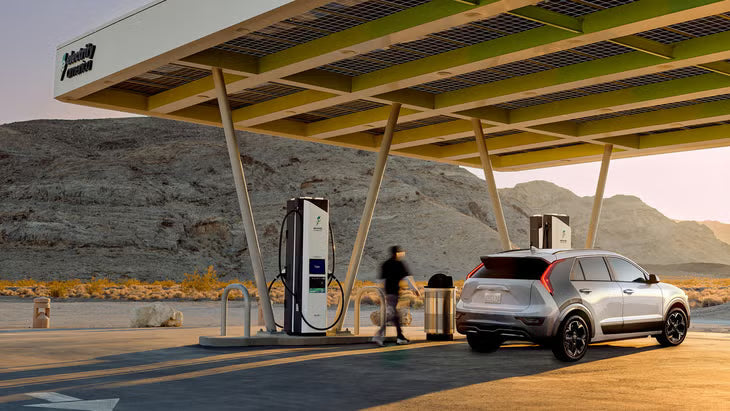
Electrify America will soon bill charging sessions directly to payment cards instead of requiring prepaid account balances. The move simplifies charging and reduces refund hassles for EV drivers.

Read moreabout Electrify America Simplifies EV Charging Payments

Foxtron Cavira EV Crossover Challenges Model Y

Foxconn Reveals New Tesla Model Y Rival

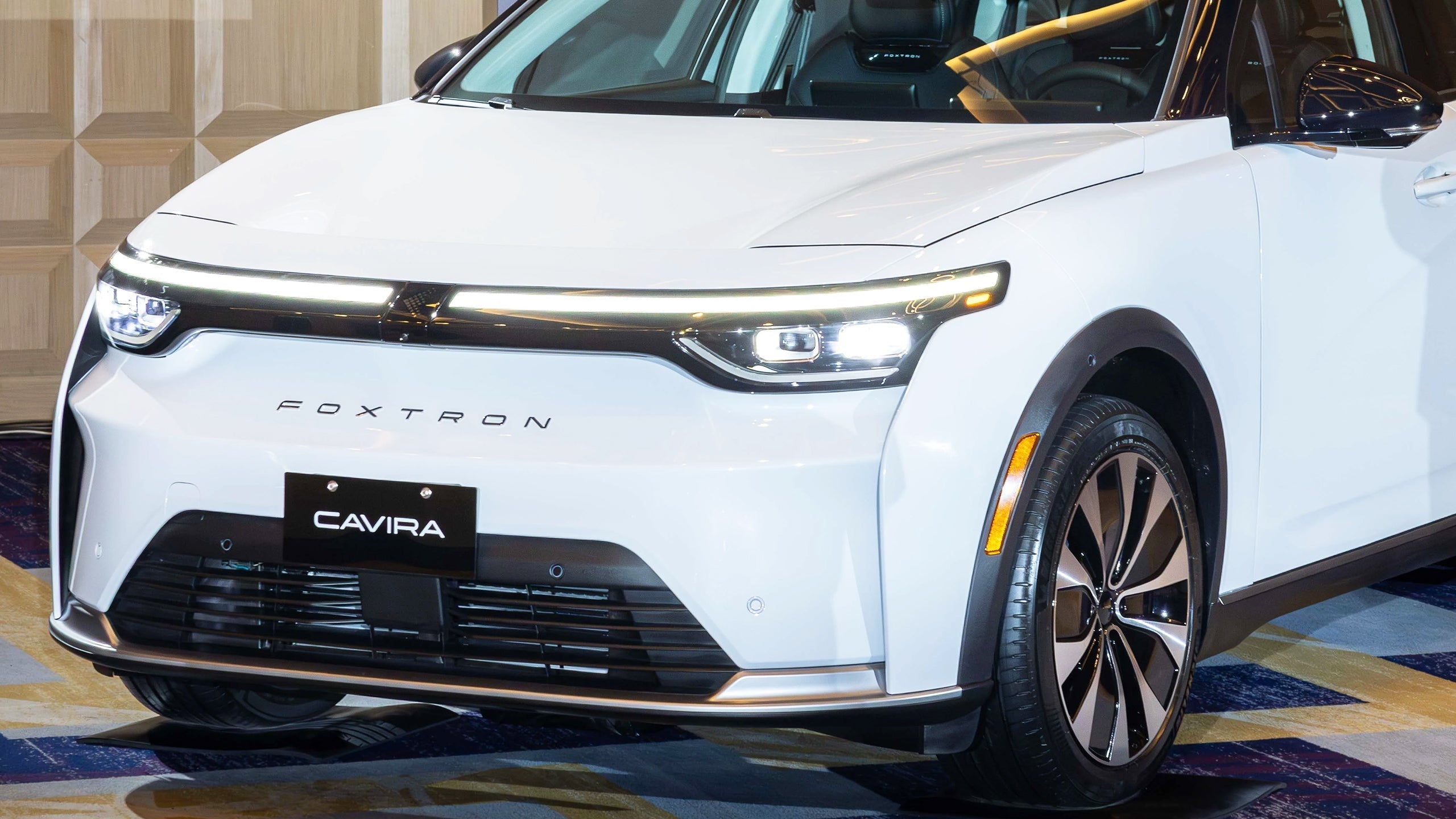
Foxconn's Foxtron Cavira enters the midsize EV crossover market with up to 468 horsepower, a 359-mile WLTC range estimate, fast charging, and advanced technology features.

Read moreabout Foxconn Reveals New Tesla Model Y Rival

Geely Xingyuan Gains More Features and Longer Range

Geely Xingyuan Gains More Features and Longer Range

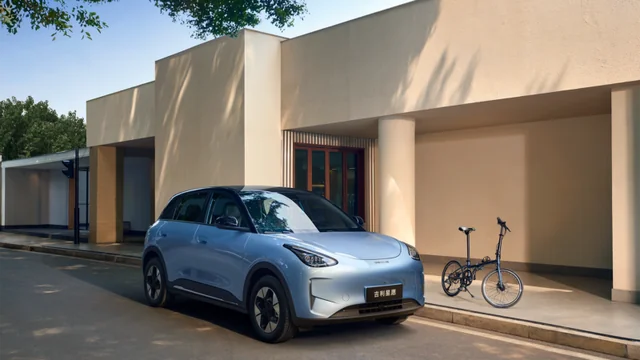
China's best-selling EV receives a major update featuring intelligent driving functions, improved charging speeds, a new 47-kWh battery, and enhanced infotainment technology.

Read moreabout Geely Xingyuan Gains More Features and Longer Range