





From Two Sites to a National Network
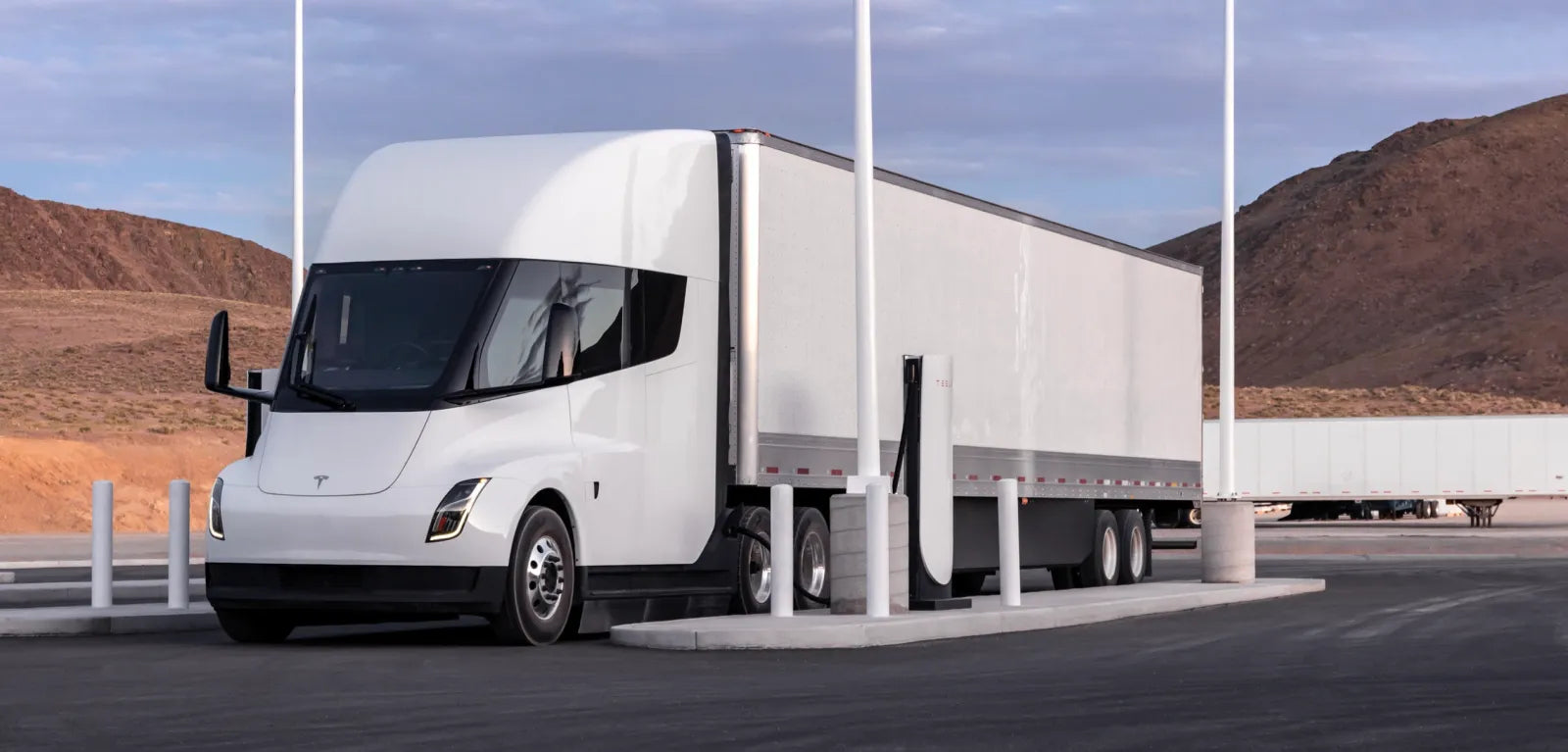
Tesla’s heavy-duty charging infrastructure is set for a significant expansion. At present, only two Megacharger stations serve the Tesla Semi—one near Stockton, California, and another outside Reno, Nevada. That limited footprint is about to grow.
The company has identified 64 additional Megacharger locations as “coming soon,” signaling the beginning of a broader rollout designed to support commercial trucking operations. While Tesla has not published a precise construction schedule, recent disclosures provide clues about the timeline and geographic priorities.

Rollout Timeline and Regional Focus
In its fourth-quarter shareholder update, Tesla included a map outlining 37 sites expected to open in 2026. Earlier, in April 2025, Semi program executive Dan Priestly stated that the company aimed to have 46 Megachargers operational by early 2027. The newly listed locations suggest that the buildout plan may now extend beyond that earlier target.
A majority of the upcoming installations will be concentrated in two key states. California is slated for 18 sites, while Texas will receive 17, together accounting for more than half of the planned network. Additional hubs are mapped for Washington state, Georgia, Florida, and Chicago, where four stations are in development.
The objective is not simply to scatter chargers across the map but to form connected freight corridors. According to Jason Gies, who works in Tesla’s Semi business development division, the sites are being positioned to create continuous routes rather than isolated outposts. In a LinkedIn post, he described Chicago as an emerging anchor point and noted that southeastern routes are beginning to link together.
Semi Production Finally Nears Launch
The charging expansion aligns with long-delayed production plans for the Tesla Semi. Originally targeted for introduction in 2019, the electric Class 8 truck is now scheduled to enter production in 2026. Tesla has updated the vehicle’s specifications and confirmed higher charging capability as part of the refresh.
In December, the company released video footage showing a Semi drawing more than 1.2 megawatts during a live charging session—specifically 1,206 kilowatts. That level of power output significantly exceeds the rates available to passenger EVs and is central to minimizing downtime for commercial fleets.
Tesla plans to offer two configurations. The Standard Range version is rated for up to 325 miles when fully loaded, while the Long Range variant is projected to travel as far as 500 miles. Although official battery capacities have not been disclosed, industry estimates place them near 550 kWh and 875 kWh, respectively. Both versions are expected to reach 60% charge in roughly 30 minutes, a key benchmark for long-haul efficiency.
Building Freight Corridors
The placement strategy for Megachargers reflects freight traffic patterns. California and Texas serve as major logistics hubs, making them logical starting points. Chicago’s multiple planned sites indicate an effort to secure a central Midwestern anchor that connects coastal routes.
Rather than focusing solely on urban centers, Tesla appears to be targeting highway corridors capable of sustaining long-distance trucking operations. The emerging map suggests a backbone stretching across the United States, designed to enable predictable routing for fleet operators considering electrification.
European Expansion on the Horizon
Tesla’s ambitions extend beyond North America. Company representatives have indicated that a European charging network for the Semi is under consideration. David Forer, a senior project developer for charging infrastructure, referenced Megacharger plans in Europe while discussing a related job posting.
In a recent interview shared on X, CEO Elon Musk confirmed that a European version of the Semi is planned and could arrive “hopefully next year.” While detailed deployment schedules have not been announced, the introduction of the truck would necessitate at least an initial charging footprint. Observers expect a modest launch—potentially one or two sites—before any large-scale expansion.

Outlook for Heavy-Duty Electrification
The success of Tesla’s electric truck will depend not only on vehicle performance but also on infrastructure reliability. Freight operators require consistent, high-power charging along predictable routes. By mapping dozens of future sites and prioritizing major logistics regions, Tesla is laying groundwork for a broader commercial rollout.
If construction proceeds as outlined, the Megacharger network could evolve from a pair of pilot stations into a nationwide system within the next few years. That expansion would mark a critical step in testing whether battery-electric trucks can compete in long-haul freight on both performance and practicality.
Recommend Reading: Tesla Adds Detailed Supercharger Maps to Improve Charging Navigation


Share:
Why Europe’s EV Battery Ambitions Face China Reality
How Volkswagen Reached 2 Million EV Sales Worldwide