





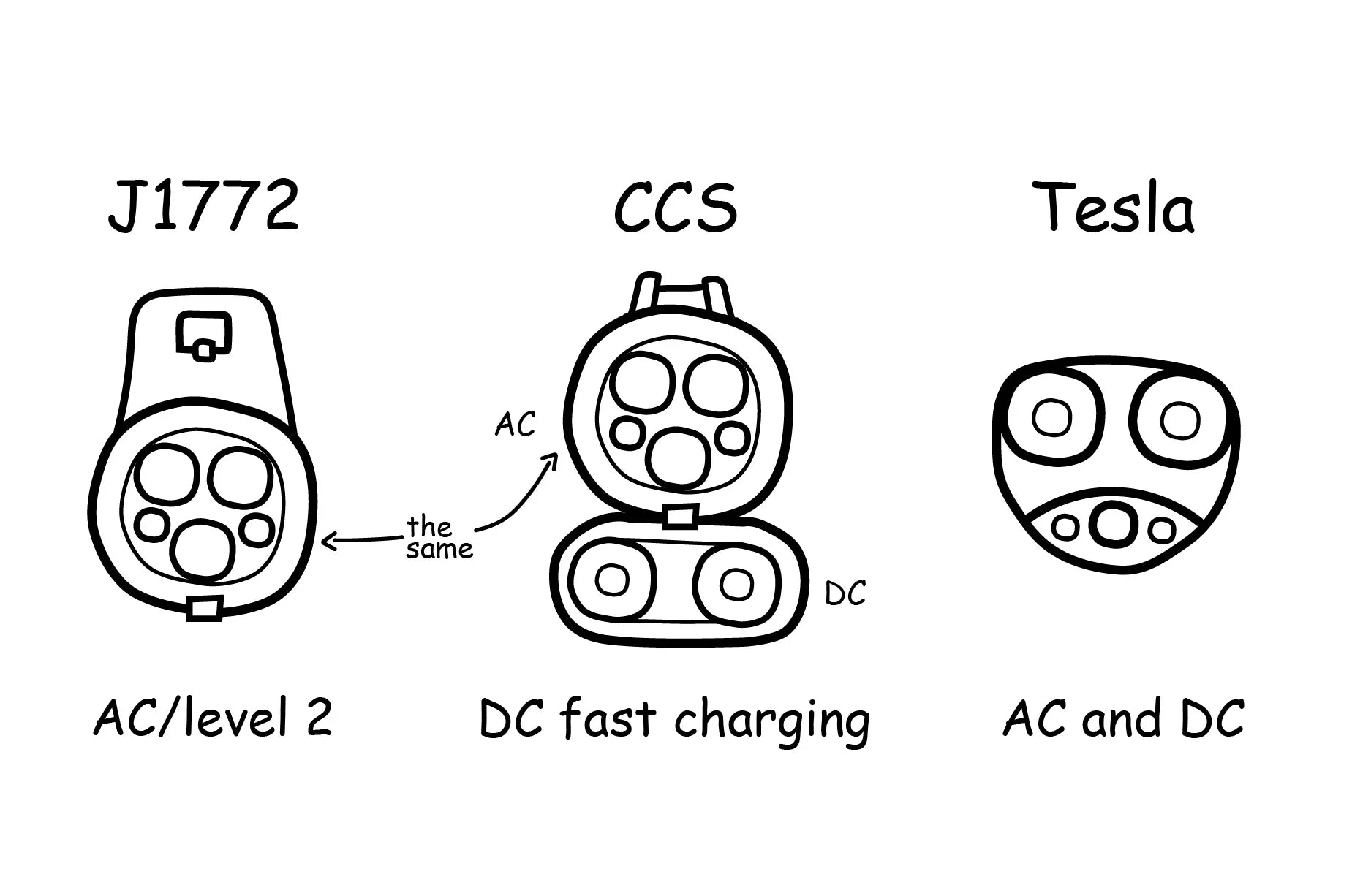
As electric vehicles (EVs) become more popular, so does the need for flexible charging solutions. Extension cables are one of the simplest ways to gain charging flexibility, allowing you to reach outlets or chargers that are just out of range. But not all EV extension cables are the same. Two of the main types in North America are NACS (North American Charging Standard) and J1772. Choosing the right cable depends on your vehicle, charging habits, and future-proofing needs.

Understanding J1772 Extension Cables
J1772 is the long-established standard for most non-Tesla EVs in North America. Almost every plug-in hybrid (PHEV) and battery electric vehicle (BEV) outside Tesla uses this connector. Its reliability and widespread adoption have made it a go-to option for EV owners for over a decade.
-
Compatible vehicles: Nissan Leaf, Chevrolet Bolt, Ford Mustang Mach-E (non-Tesla), Hyundai Ioniq 5 (with adapter), and most older EVs.
-
Power capacity: Typically up to 40A, depending on cable quality.
-
Use case: Ideal if your EV always uses J1772 chargers and you don’t plan to switch vehicles frequently.
While J1772 is tried and true, it’s gradually being overtaken in the U.S. market by Tesla’s new NACS standard, which brings several advantages in convenience and future compatibility.
Why NACS Is Becoming the New Standard
NACS, formerly known as the Tesla connector, is rapidly gaining traction as a North American standard. Tesla opened up the connector to other automakers, and several new EVs are now designed to use it directly or via simple adapters. NACS is compact, efficient, and supports both AC and DC charging, making it a versatile choice for the next generation of EVs.
-
Compatible vehicles: Tesla Model Y, Model 3, Model X, Model S, and an increasing number of non-Tesla EVs like the Rivian R1T/R1S and upcoming Lucid Air models (with NACS adapters).
-
Power capacity: Up to 48A for AC home charging, supporting 11.5 kW, and up to 250 kW+ for DC fast charging at compatible stations.
-
Future-proofing: With Tesla opening the NACS standard, automakers are beginning to adopt it, meaning NACS-compatible cables are likely to remain useful for years to come.
The growing adoption of NACS is significant for EV owners who want one cable to cover both current and future EVs. Unlike J1772, which may require adapters for Tesla vehicles, NACS cables increasingly support adapters to connect to older J1772 chargers, creating a flexible charging ecosystem.

Key Differences Between J1772 and NACS Extension Cables
| Feature | J1772 | NACS |
|---|---|---|
| Compatibility | Most legacy EVs | Tesla vehicles + growing adoption by new EVs |
| Connector Size | Larger, traditional | Compact, streamlined |
| AC Power | Up to ~40A | Up to 48A |
| DC Charging | Not supported | Supported via Tesla Superchargers & NACS-enabled DC stations |
| Future-Proof | Limited | High, growing market adoption |
Bottom line: If you primarily drive a legacy EV, J1772 remains sufficient. However, if you are driving a Tesla, or want a cable that will remain compatible with the new generation of EVs, NACS is the better long-term choice.
Practical Tips for Using Extension Cables Safely
Regardless of the connector type, safety is key when using EV extension cables:
-
Check the amp rating: Never exceed the cable’s rated current. Overloading can damage the cable or charger.
-
Avoid long-term exposure to weather: Even IP66-rated cables should not stay submerged or exposed to heavy rain for prolonged periods.
-
Use proper adapters: Only use manufacturer-approved adapters when connecting between NACS and J1772 to avoid electrical faults.
-
Cable management: Coil your cable loosely when storing to prevent bending or internal wire damage.

Choosing the Right Extension Cable
-
For legacy EV owners: J1772 extension cables are widely available, affordable, and compatible with your vehicle today.
-
For Tesla and future-proof buyers: NACS extension cables offer better long-term value, broader compatibility with upcoming vehicles, and easier access to both AC and DC charging stations.
-
For households with mixed EVs: Investing in a NACS cable with adapters provides maximum flexibility for multiple vehicle types.
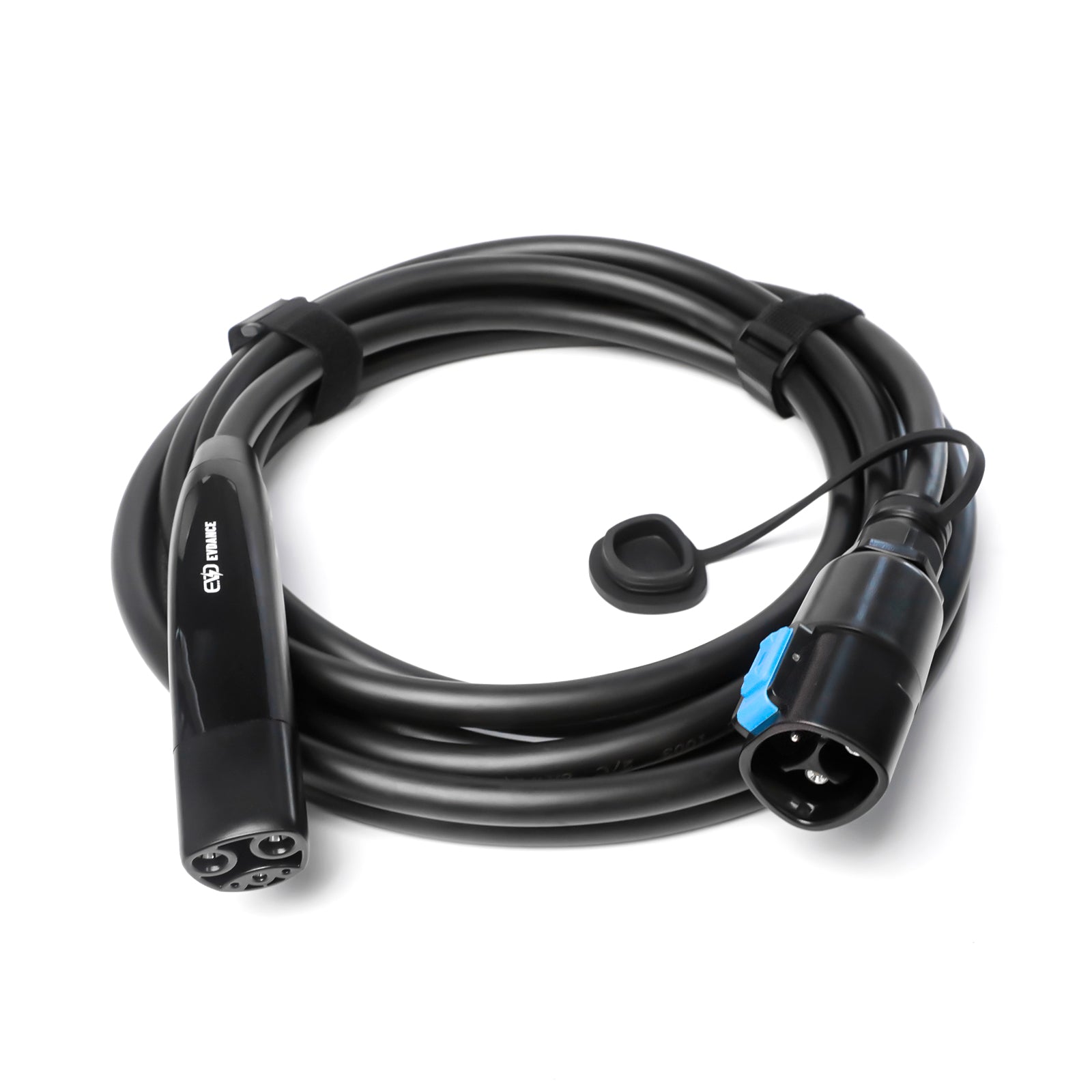
In short: NACS is quickly emerging as the North American EV charging standard. Choosing a high-quality NACS extension cable today ensures that your investment will remain relevant for years, while providing the flexibility, power, and convenience that modern EV owners expect.
Recommend Reading: How IP66 Waterproofing Keeps Your EV Extension Cable Safe Outdoors










Share:
How IP66 Waterproofing Keeps Your EV Extension Cable Safe Outdoors
How to Safely Use Your EV Extension Cable?
1 Kommentar
I need a approximately 5 foot J1772 to J1772 extension cable for my Equalnoz EV. Can you provide me a way to order and price. Thanks, Rick