



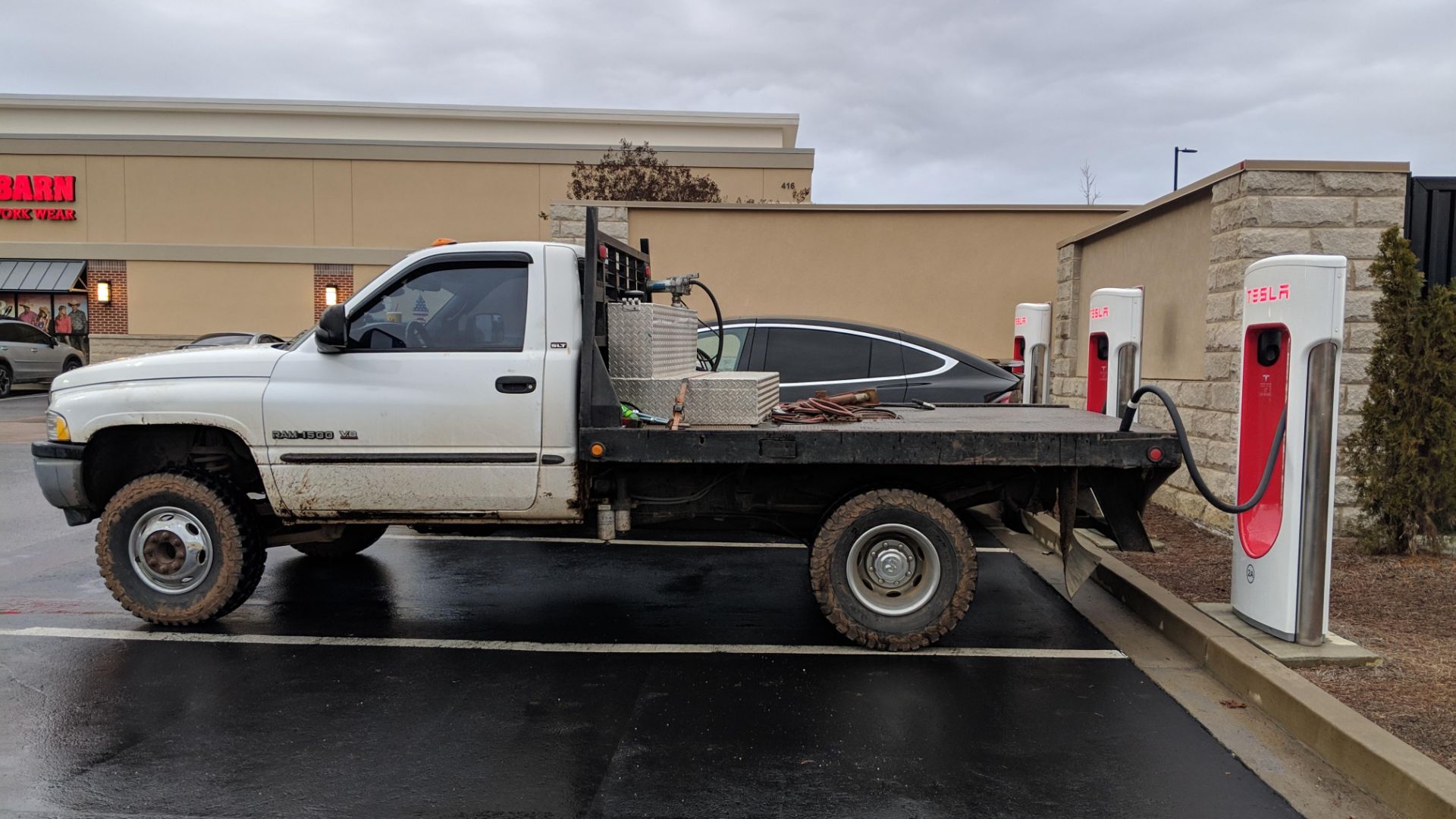
The Challenge of Roadtrip Charging
Taking an EV on a roadtrip can be exciting—but it also comes with unique charging challenges. Unlike traditional gas vehicles, EVs require planning to ensure access to Level 2 or DC fast chargers along the route. Even when charging stations are available, the reality is that charging access isn’t always straightforward.
Public chargers, especially Level 2 stations at hotels, shopping centers, or Airbnbs, can often be blocked, poorly located, or difficult to reach. For example, on a weekend getaway, you might arrive at a popular charging hub only to find an internal combustion engine (ICE) car occupying the spot, or the station positioned inconveniently relative to the parking layout.
This is where an EV extension cable becomes invaluable. It provides the flexibility to bridge distance gaps, allowing your car to charge safely without requiring a perfect parking alignment.

Hotel and Airbnb Charging Dilemmas
Hotels and Airbnbs increasingly advertise EV charging as an amenity. Yet in practice, chargers are often positioned in tight or awkward spots, such as at the far end of a parking lot or behind another vehicle. This can be frustrating when you’re tired after a long drive and just want to plug in quickly.
Extension cables let you connect your car to a charger without moving it into an inconvenient position. Whether your EV is parked a few spaces away from the charger or slightly angled, a certified extension cable can ensure you still get a full charge. This simple solution can save time, reduce stress, and make overnight charging seamless.

Public Charging Stations Blocked by Gas Cars
When traveling, especially in urban areas or smaller towns, EV drivers often encounter ICE vehicles parked in EV spots. Even stations with multiple chargers can be partially blocked, forcing drivers to either wait or hunt for another location.
A high-quality extension cable allows you to reach chargers from an adjacent spot, avoiding unnecessary delays. Instead of circling the parking lot or rescheduling your trip, the cable provides instant flexibility, making charging as convenient as possible while keeping your EV ready for the next leg of your journey.

Multi-Vehicle Trips
Traveling with family or friends can create additional challenges. If multiple EVs are on the same trip and only a limited number of chargers are available, coordination becomes essential. One vehicle might need to park first, leaving the second to figure out how to access the charger.
Using an extension cable, vehicles can share a single charging point more efficiently. For example, one car can park in the primary spot while the other remains nearby, connected via the cable. This setup reduces friction and ensures everyone keeps moving without excessive downtime.
Safety and Reliability
When using an EV extension cable, it’s important to choose a product that meets all safety standards, such as UL or ETL certification, and is rated for the amperage of your charger. Properly designed cables do not reduce charging speed or compromise safety—they simply extend reach while maintaining electrical integrity.
Modern extension cables like the EVDANCE 50A NACS Extension Cable are designed specifically for Level 2 chargers, offering durability, flexibility, and peace of mind during travel. They aren’t meant for pushing limits, but they ensure your EV can charge wherever it needs to—without unnecessary stress or risk.
Making EV Travel Practical
An extension cable transforms the experience of EV travel. No longer are charging logistics dictated by parking convenience, other vehicles, or awkward layouts. Instead, you gain freedom to charge where your car actually ends up, whether at a hotel, Airbnb, or a public charging station.
For roadtrippers, this can mean spending less time circling for a spot, avoiding delays, and maximizing the usable range. It also makes trips with family or friends smoother, especially when multiple EVs need to share limited charging infrastructure.

Conclusion
EV travel doesn’t have to be complicated. By adding a high-quality extension cable to your gear, you can overcome common charging hurdles, from blocked public chargers to inconvenient Airbnb layouts. The cable offers practical, flexible, and safe charging solutions, turning the uncertainty of EV travel into a predictable, stress-free part of the journey.
P.S. Currently, our extension cable is designed for Level 2 chargers only and cannot be used with DC fast chargers. A new version is in development and should be available soon.
Recommend Reading: Why EV Extension Cables Exist (And When You Actually Need One)

Aktie:
Why EV Extension Cables Exist (And When You Actually Need One)
Maximizing Charging Efficiency in Multi-Car Households