



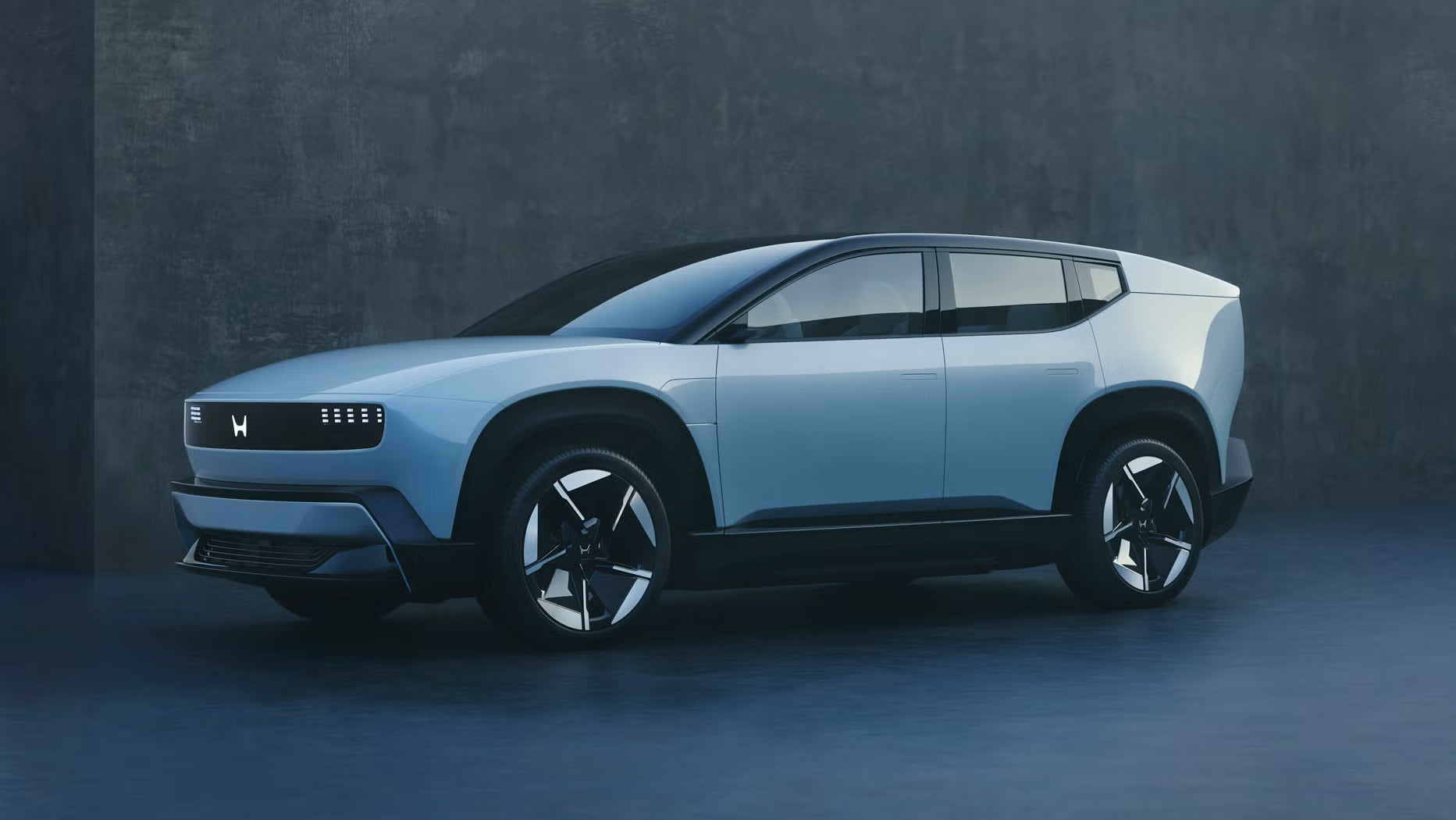
A Turning Point in Honda’s Electrification Plans
Honda’s path toward electric mobility has entered another period of uncertainty after the company abandoned several key electric vehicle programs that were intended to shape its next generation of models. The decision has renewed criticism from industry observers who have watched the automaker repeatedly revise its EV strategy over the past decade.
Only a few years ago, senior executives described electrification as a core element of Honda’s long-term vision. Toshihiro Mibe, the company’s chief executive, previously emphasized that reaching carbon neutrality and expanding electric vehicle production would be essential priorities for the brand’s future.
However, multiple projects that were expected to accelerate Honda’s transition into the EV market have now been shelved, raising questions about how quickly the company can catch up with competitors that already offer extensive electric lineups.

Early Partnerships and Changing Plans
In the early 2020s, Honda placed significant emphasis on collaboration to accelerate EV development. One major initiative involved a partnership with General Motors, which was designed to produce a range of electric vehicles, including more affordable models aimed at mass-market buyers.
At the time, the alliance was presented as a long-term effort to jointly develop new electric platforms and compete in a rapidly evolving global auto market. Yet the partnership’s original ambitions gradually faded, and the broader plan for lower-cost electric vehicles was eventually abandoned.
Following that shift, Honda introduced another strategy centered on a new generation of vehicles known as the “0 Series.” These models were supposed to represent a fresh start for the company’s EV efforts, featuring a dedicated platform and advanced digital capabilities.
The initiative was expected to produce three electric models built in the United States by the end of 2026. Instead, the program has now been canceled before reaching the market.
A Pattern of Limited EV Launches
Honda’s struggles in the electric vehicle sector are not entirely new. Over the past decade, the company has released only a handful of battery-powered vehicles developed independently.
Several of these projects followed a similar trajectory: relatively limited production volumes, availability restricted to specific regions, and specifications that lagged behind competing EVs at the time of launch.
Earlier examples include the Fit EV and the Clarity Electric, both of which offered roughly 80 miles of driving range. These models were primarily sold in states such as California to comply with local zero-emission regulations rather than as part of a broader global strategy.
Honda later introduced the Honda e, a compact electric car aimed at the European market. Although praised for its design, the vehicle struggled to achieve strong sales and remained on the market for only a few years.
More recently, the Acura ZDX entered the market as an electric SUV, though the model was largely based on technology from General Motors. Its production run was also brief, as it was intended to be replaced by a future model based on the now-canceled 0 Series platform.
The Challenge of Software-Defined Vehicles
One of the most ambitious aspects of Honda’s recent EV plans was the attempt to transition toward software-defined vehicles, a concept that is becoming increasingly important in the automotive industry.
Modern EV manufacturers are focusing not only on battery technology but also on software platforms that control everything from driver-assistance systems to in-car entertainment and digital services. Companies with strong software capabilities are often able to update features remotely and improve vehicle functionality over time.
Honda’s canceled 0 Series was designed with this trend in mind. The platform was expected to include advanced digital architecture and new AI-based technologies integrated into the vehicle’s systems.
However, building such a platform from scratch requires extensive investment and expertise. Automakers that currently lead the EV market have spent years refining their software ecosystems and development processes.
Honda itself acknowledged that rapid changes in the industry—particularly the rise of new EV manufacturers with faster product development cycles—have intensified competition.
Growing Pressure From Global Competitors
The global electric vehicle market has become increasingly crowded. Traditional automakers are expanding their EV portfolios, while newer companies continue to gain market share with aggressive product strategies.
Manufacturers such as Hyundai, General Motors, and Toyota have each pursued their own electrification strategies, introducing multiple electric or hybrid models while continuing to develop new technologies.
At the same time, companies like Tesla and BYD have significantly expanded their global presence, demonstrating how quickly EV-focused businesses can grow when product development and software innovation move quickly.
Against this backdrop, Honda faces pressure to accelerate its transition or risk losing ground in key markets.
Hybrid Vehicles as a Transitional Strategy
While Honda’s battery-electric strategy remains uncertain, the company continues to emphasize hybrid vehicles as a key component of its current lineup.
Hybrid systems combine internal combustion engines with electric motors, improving fuel efficiency without requiring full reliance on battery charging infrastructure. Honda was one of the early adopters of this technology, launching the Insight hybrid more than two decades ago.
However, some analysts argue that Honda’s hybrid offerings are still limited compared with competitors. Several vehicle categories—including larger SUVs and minivans—remain available only with traditional gasoline engines.
Other automakers have already introduced hybrid options in these segments, expanding their electrified product portfolios while maintaining flexibility during the broader transition to fully electric vehicles.
Financial and Strategic Implications
The cancellation of major EV programs could carry significant financial consequences for Honda. Reports suggest that restructuring efforts and project cancellations may involve costs totaling up to $15.7 billion, including adjustments related to operations in China and the termination of several vehicle programs.
For a company attempting to navigate a rapidly changing automotive landscape, such expenses highlight the risks associated with shifting strategies.
At the same time, the EV market itself continues to evolve. Government policies, charging infrastructure development, and consumer demand are all shaping the pace of electrification in different regions.

The Road Ahead for Honda
Honda’s leadership maintains that the company remains committed to reducing emissions and eventually achieving carbon neutrality. Yet recent developments have raised doubts among industry observers about how quickly the automaker can establish a competitive position in the EV sector.
The coming years will likely determine whether Honda can successfully reposition itself within an industry that is undergoing one of the most significant technological transitions in its history.
As electric vehicles become more common worldwide, automakers that adapt quickly may gain a lasting advantage. For Honda, the challenge now is to translate long-term goals into concrete products that can compete in an increasingly crowded market.
Recommend Reading: Why Honda’s EV Sales Fell and What It Means for GM

Aktie:
Rivian R2 Base Model: Range Trails Tesla Model Y at Similar Price
Lucid Reveals Cosmos and Earth Electric SUVs Targeting Model Y