Electric vehicles are reshaping more than just the cars Americans drive. The infrastructure behind them is evolving just as quickly, especially in dense urban areas where grid capacity, space, and peak electricity costs are constant challenges.

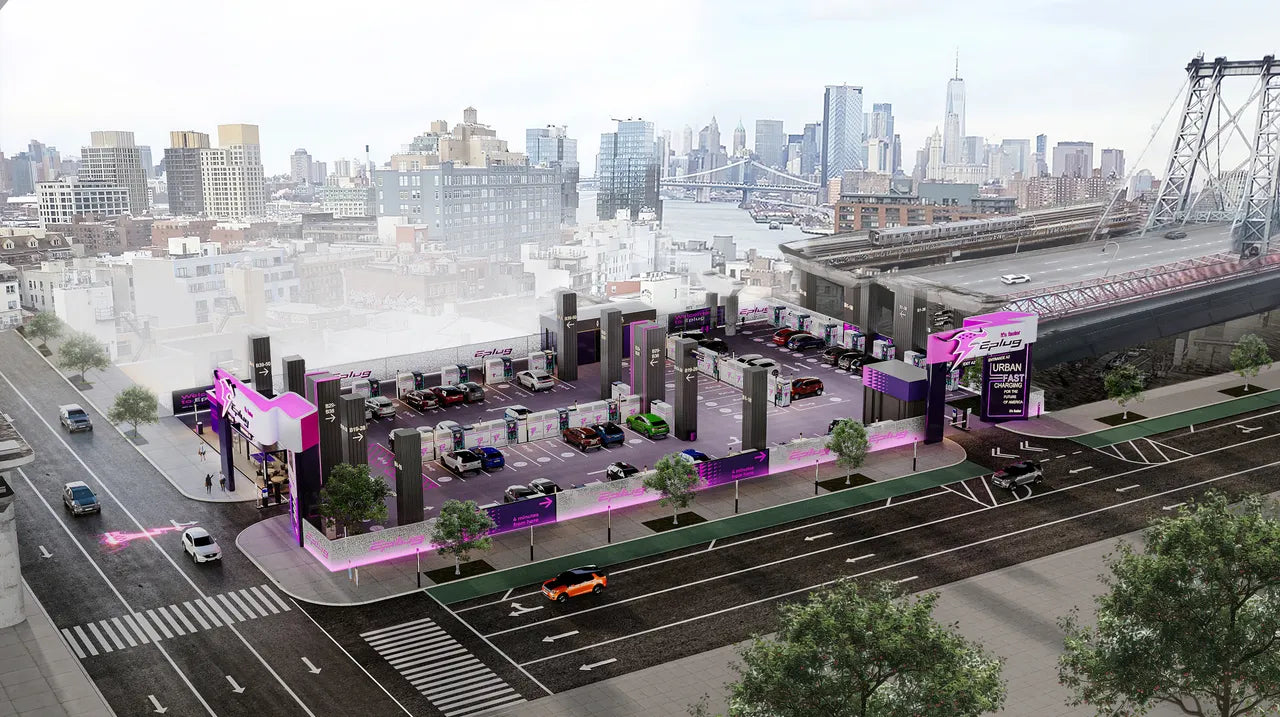
A new charging project in New York City highlights how the next phase of EV infrastructure may look. German charging technology company XCharge, working with New York-based contractor Energy Plus, has announced plans to open what it says will be the largest battery-powered EV charging hub on the U.S. East Coast.

The site is scheduled to begin operations in the second quarter of this year in Williamsburg, Brooklyn.

New York Plans East Coast’s Largest Battery-Powered EV Charging Hub


A High-Power Charging Site Built for Urban Demand

The Brooklyn charging hub will feature 44 fast chargers serving 88 parking spaces, making it one of the largest urban EV charging sites in the country. Each charger is capable of delivering up to 300 kilowatts, exceeding the peak output of most Tesla Superchargers and approaching the fastest public chargers currently available in the U.S.

While high charging speeds matter, XCharge says power output alone is not what makes this project notable. The real innovation lies in how electricity is stored and delivered.

Instead of relying solely on real-time grid power, the entire site is designed around on-site battery storage.


How Battery-Backed Charging Changes the Equation

Traditional fast-charging stations draw electricity directly from the local grid when a driver plugs in. In cities like New York, that often means pulling power during peak demand hours, when electricity is most expensive and grid capacity is stretched thin.

The Brooklyn hub takes a different approach. Electricity is pulled from the grid during off-peak hours, stored in large lithium-ion batteries, and then released to vehicles when charging demand is high. This system allows the site to function with less strain on the local grid while maintaining high charging speeds.

According to XCharge, each charging unit—called GridLink—combines the charger and a dedicated energy storage system into a single package.


Distributed Storage at Every Charging Stall

Unlike centralized battery systems, the Brooklyn hub uses a distributed microgrid-style design. Each GridLink unit includes two fast-charging cables, an information display, and a built-in stationary battery.

In total, the 44 GridLink units will provide 9.46 megawatt-hours of stored energy, with each unit containing 215 kilowatt-hours of battery capacity. That amount of stored power could theoretically charge more than 120 EVs from empty to full, assuming an average battery size of 75 kWh.

This modular design improves reliability and scalability while reducing the complexity of installing massive grid upgrades in dense neighborhoods.


Potential Relief From High Urban Charging Costs

Public fast charging in major cities is often expensive, especially during peak hours. In the New York metro area, prices of $0.55 to $0.65 per kilowatt-hour are not uncommon, making large EV charging sessions costly.

By storing electricity when rates are lower, battery-backed charging hubs can reduce exposure to peak pricing and demand charges. While XCharge has not disclosed pricing details for the Brooklyn site, the company suggests that this model could help keep costs more stable for drivers.

That could be especially attractive to rideshare and commercial drivers, many of whom have transitioned to EVs due to New York City’s Taxi and Limousine Commission electrification requirements.


Grid Support Beyond EV Charging

The GridLink units also support bidirectional power flow, allowing stored electricity to be sent back to the grid during emergencies or periods of extreme demand. This capability turns the charging hub into a form of distributed energy storage, similar to utility-scale battery projects being deployed nationwide.

As electricity demand rises from sources like AI data centers and building electrification, these systems could play a growing role in grid stabilization.

BMW EVs Gain Access to Tesla Superchargers Ahead of Schedule


Preparing Infrastructure for the Next EV Wave

EV adoption in the U.S. has been uneven amid shifting incentives and policy changes. Still, projects like this suggest that charging infrastructure continues to advance ahead of demand, positioning cities to handle future growth more efficiently.

Even if EV sales fluctuate in the short term, investments in smarter, battery-backed charging hubs may ensure that urban charging is ready when adoption accelerates again.

Recommend Reading: Costco Members Can Save Thousands on New Cadillac and Volvo EVs
Hinterlassen Sie einen Kommentar

Bitte beachte, dass Kommentare vor der Veröffentlichung freigegeben werden müssen.

Diese Website ist durch hCaptcha geschützt und es gelten die allgemeinen Geschäftsbedingungen und Datenschutzbestimmungen von hCaptcha.

FAQs – DC-Schnellladen der Stufe 3

Was ist DC-Schnellladen der Stufe 3 für Elektrofahrzeuge?

Beim Laden der Stufe 3, auch als DC-Schnellladen (DCFC) bekannt, wird Gleichstrom mit hoher Leistung (typischerweise 50 kW bis 350 kW) bereitgestellt, um die Batterie eines Elektrofahrzeugs schnell aufzuladen. Im Gegensatz zum Laden der Stufen 1 und 2 wird beim DC-Schnellladen das Bordladegerät umgangen, wodurch eine deutlich schnellere Energieübertragung ermöglicht wird.

Wie schnell ist das DC-Schnellladen der Stufe 3 im Vergleich zum Laden der Stufe 2?

Ladegeräte der Stufe 2 (240 V Wechselstrom) erhöhen die Reichweite normalerweise um 20–30 Meilen pro Stunde, während Gleichstrom-Schnellladegeräte der Stufe 3 die Reichweite in 20–40 Minuten um 100–300 Meilen erhöhen können, je nach Batteriekapazität des Elektrofahrzeugs und Ladeleistung.

Schädigt Schnellladen der Stufe 3 die Batterien von Elektrofahrzeugen?

Häufiges DC-Schnellladen kann aufgrund höherer Wärmeentwicklung und schnellerer Ladezyklen die Batterieleistung mit der Zeit beschleunigen. Moderne Elektrofahrzeuge verfügen jedoch über Batterie-Wärmemanagementsysteme , die die Auswirkungen minimieren. Gelegentliches Schnellladen ist sicher und bequem für Roadtrips.

Welche Steckertypen werden für das DC-Schnellladen der Stufe 3 verwendet?

Die wichtigsten Schnellladeanschlüsse für Elektrofahrzeuge in Nordamerika sind:

  • CCS (Combined Charging System) – von den meisten Automobilherstellern weithin übernommen
  • CHAdeMO – wird hauptsächlich von älteren Nissan LEAF-Modellen verwendet
  • NACS (Tesla-Stecker) – wird jetzt von mehreren Marken übernommen (Ford, GM, Rivian usw.)
Wie hoch ist die maximale Leistungsabgabe von DC-Schnellladestationen der Stufe 3?

Die meisten öffentlichen Gleichstrom-Schnellladegeräte haben eine Leistung von 50 bis 150 kW , während Ultraschnellladegeräte 250 bis 350 kW erreichen können. Tesla Supercharger V3 liefern bis zu 250 kW , und kommende Ladegeräte der nächsten Generation könnten für schwere Elektrofahrzeuge über 500 kW leisten.

Wie viel kostet das DC-Schnellladen der Stufe 3?

Die Preise variieren je nach Netz und Standort. Die Kosten basieren in der Regel auf einer Gebühr pro kWh , pro Minute oder einer Pauschalgebühr. In den USA liegen die Tarife typischerweise zwischen 0,25 und 0,60 US-Dollar pro kWh . Dies ist zwar teurer als beim Laden zu Hause, aber im Vergleich zu den Benzinkosten wettbewerbsfähig.

Wo finde ich in den USA Gleichstrom-Schnellladestationen der Stufe 3?

Gleichstrom-Schnellladegeräte finden sich häufig entlang von Autobahnen, Raststätten, Einkaufszentren und Ladestationen für Elektrofahrzeuge wie Tesla Supercharger, Electrify America, EVgo und ChargePoint. Apps wie PlugShare und ChargeHub helfen Fahrern bei der Suche nach Schnellladestationen.

Können alle Elektrofahrzeuge die Gleichstrom-Schnellladefunktion der Stufe 3 nutzen?

Nicht alle Elektrofahrzeuge sind kompatibel. Einige Plug-in-Hybrid-Elektrofahrzeuge (PHEVs) und ältere Modelle verfügen nicht über die Fähigkeit zum DC-Schnellladen. Die maximale Ladegeschwindigkeit hängt auch von der Ladekapazität des Fahrzeugs ab, die zwischen 50 und 270 kW liegen kann.

Wie wirkt sich das Wetter auf die Ladegeschwindigkeit von DC Level 3 aus?

Extreme Kälte oder Hitze beeinträchtigen die Temperaturregelung der Batterie und verlangsamen die Schnellladegeschwindigkeit. Elektrofahrzeuge konditionieren die Batterie häufig vor der Ankunft an einer Schnellladestation, um die Ladeeffizienz bei winterlichen oder sommerlichen Bedingungen zu optimieren.

Wie sieht die Zukunft der DC-Schnellladetechnologie der Stufe 3 aus?

Die Zukunft umfasst ultraschnelle Ladegeräte (500 kW+), die flächendeckende Einführung von NACS-Anschlüssen und die Vehicle-to-Grid-Integration (V2G) . Mit dem Ausbau der EV-Infrastruktur wird das Laden der Stufe 3 für Langstreckenfahrten und schwere Elektro-Lkw noch wichtiger.

EV-Neuigkeiten

Alle anzeigen

This New Battery-Powered DC Fast Charger Can Be Installed in Hours

This New Battery-Powered DC Fast Charger Can Be Installed in Hours

ElectricFish unveils its 400squared DC fast charger at CES 2026. Battery-backed and dual-port capable, it can be installed in hours, bypassing expensive grid upgrades and supporting rapid EV infrastructure growth.

Weiterlesen

Americans Worry More About EV Range Than Cost, Survey Shows

Americans Worry More About EV Range Than Cost, Survey Shows

A Deloitte survey finds that U.S. buyers worry more about EV range and charging time than cost. Loss of the federal tax credit slowed adoption, but interest remains, especially for affordable, long-range models.

Weiterlesen

Tesla’s Cybercab Could Get Regulatory Boost From Congress

Tesla’s Cybercab Could Get Regulatory Boost From Congress

Tesla’s Cybercab aims to be a $30,000 fully autonomous ride-hailing vehicle. Congressional approval could raise production limits, but software, charging infrastructure, and branding challenges still remain.

Weiterlesen