


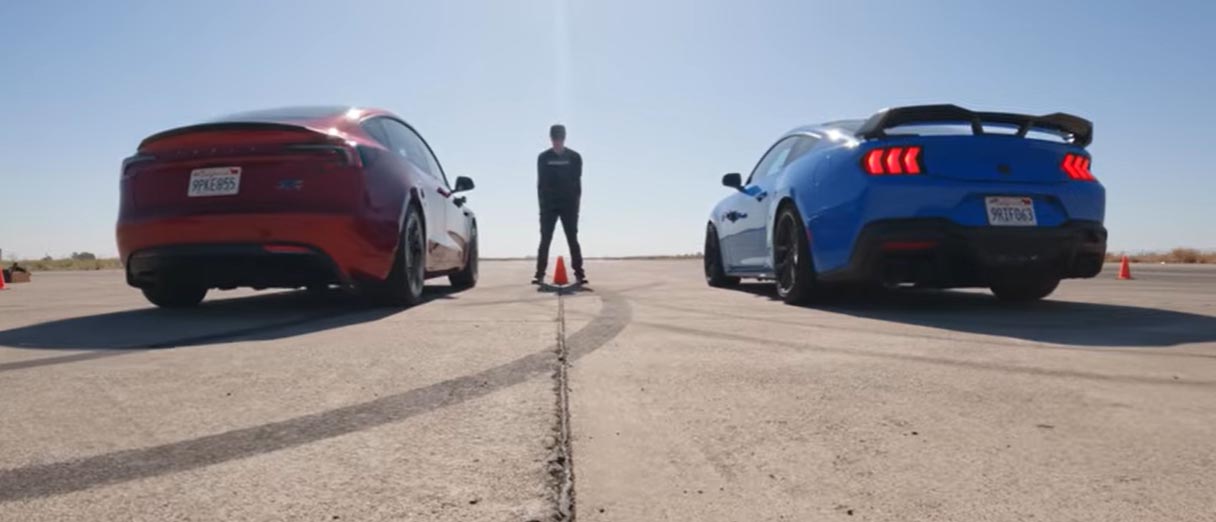
The electric Tesla Model 3 Performance has long been celebrated for combining everyday usability with sports car thrills. But when matched against the track-focused Ford Mustang Dark Horse, the results are surprisingly competitive.

Comparing the Contenders
The Tesla Model 3 Performance is a four-door electric sedan that balances family-friendly practicality with blistering acceleration. It offers instant torque, advanced traction control, and a top speed exceeding 162 mph, making it one of the fastest vehicles in its segment. Pricing starts around $60,000, making it relatively affordable compared to high-performance gas sedans.
The Ford Mustang Dark Horse, by contrast, is a two-door pony car engineered for the track. Its base price is similar to the Model 3 Performance at $60,000, but adding a supercharger kit can push the price up to $90,000. This upgrade improves horsepower and track readiness, giving the Mustang serious punch in straight-line and cornering performance.
Acceleration and Handling
On paper, the Tesla Model 3 Performance has the edge in straight-line acceleration thanks to its instant electric torque. It can reach 60 mph in just 3.1 seconds, often outpacing traditional gas-powered sports sedans.
The Ford Mustang Dark Horse, however, is tuned for balanced handling on the track. With a lighter chassis, upgraded suspension, and performance tires, it can maintain higher cornering speeds and deliver a more connected driving experience in tight turns.
When tested in a real-world scenario, the two cars were shockingly close in lap times, despite the Tesla’s electric advantage. This demonstrates how modern electric sedans can compete with specialized track cars under the right conditions.
Usability vs. Track Focus
The Tesla Model 3 Performance is more versatile for everyday driving. With four doors, a spacious trunk, and advanced driver-assistance features, it excels as a daily driver and weekend track toy. It also offers over 300 miles of range, meaning long drives don’t require frequent charging stops.
The Mustang Dark Horse, while thrilling on the track, sacrifices some everyday convenience. It has limited rear seating and less cargo space, and the high-performance setup can make it less comfortable for daily commuting. Its strengths are best realized on a racetrack, where the suspension, brakes, and steering are fully utilized.
Price and Value Considerations
Even with the supercharger upgrade, the Mustang Dark Horse can reach $90,000, making it significantly more expensive than a fully loaded Tesla Model 3 Performance. Considering fuel costs, maintenance, and EV incentives, the Tesla offers strong value for performance enthusiasts.
On the other hand, the Mustang’s appeal lies in mechanical engagement and track specialization, which some drivers may prioritize over raw cost savings. It’s a trade-off between practical electric performance and analog driving thrills.

Verdict
The Tesla Model 3 Performance demonstrates that an electric sports sedan can rival even dedicated track cars like the Mustang Dark Horse. While the Ford may hold an edge in cornering and track-specific handling, the Tesla offers versatility, daily usability, and instant acceleration that few gas-powered cars can match.
For many buyers, the decision may come down to whether they prioritize track performance or all-around capability. In either case, the close competition shows how far electric vehicles have come in performance and desirability.
Recommend Reading: Lucid Gravity vs. Rivian R1S: A Clear Winner in Real-World Performance

Aktie:
Toyota Highlights EVs’ Potential to Support the Power Grid
Rivian Owners Modify Rear Doors to Ensure Safety in Emergencies