



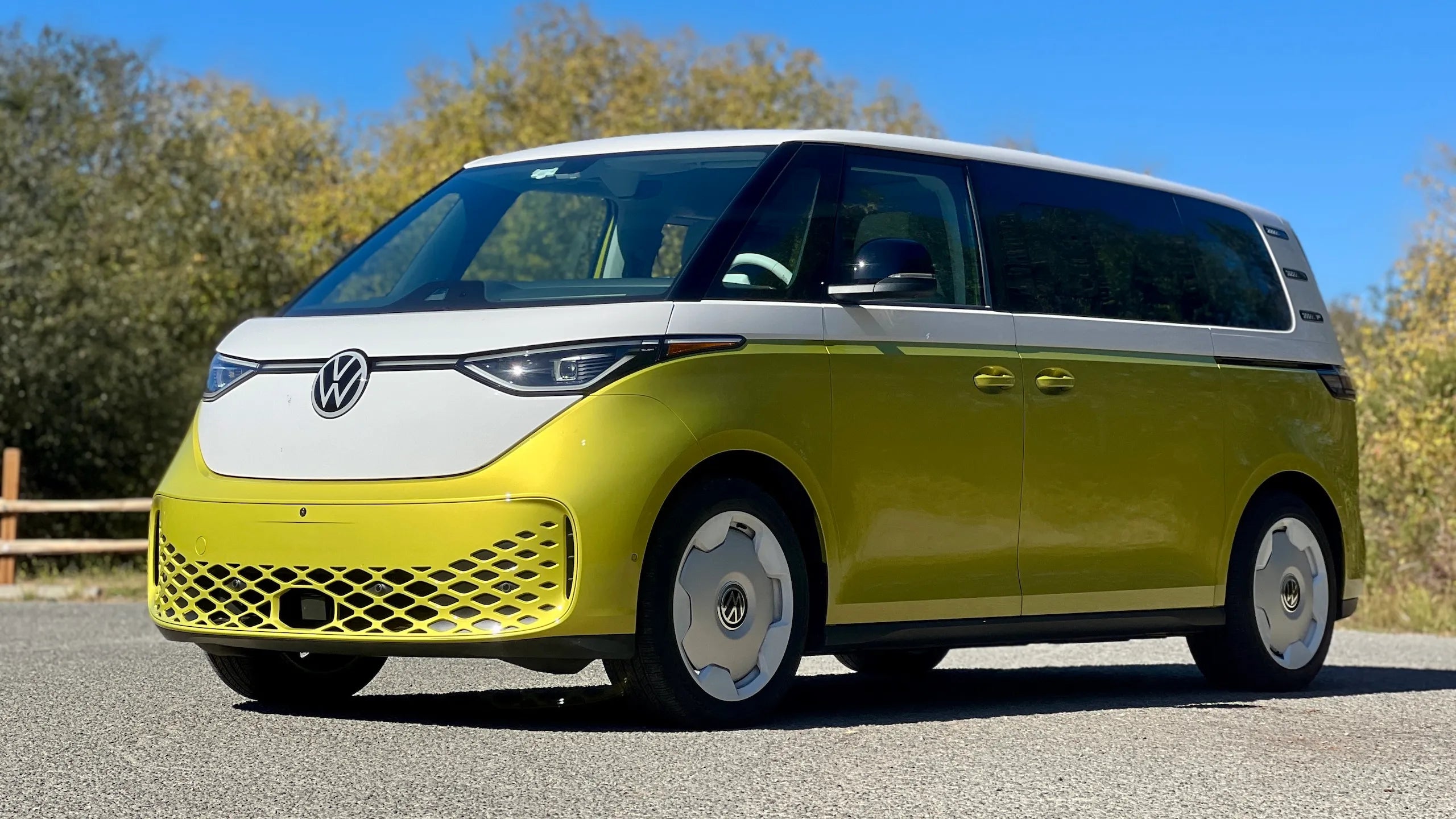
ID. Buzz Steps Away From the U.S. Market
Volkswagen has decided not to offer the ID. Buzz in the United States for the 2026 model year, making the retro-styled electric van the latest victim of a cooling EV market. The decision was first reported by Carscoops and later confirmed by a Volkswagen spokesperson.
While the move does not represent a full cancellation, it signals a pause as VW reassesses demand, pricing, and broader market conditions. The announcement comes at a time when several automakers are scaling back or delaying electric vehicle programs in response to slower-than-expected sales.

A Long Road From Concept to Reality
Expectations for the ID. Buzz have been high for years. Volkswagen first teased a modern electric bus concept back in 2017, but the idea stretches even further back. Over the past two decades, VW showcased multiple bus-inspired concepts, including the 2001 Microbus Concept, the 2011 electric Bulli, and the 2016 Budd-e plug-in van.
These concepts fueled enthusiasm for a practical, adventure-ready electric van. That journey ultimately led to the 2025 production ID. Buzz, which finally arrived in the U.S. in late 2024.
Pricing, Range, and Early Challenges
Once on sale, the ID. Buzz struggled to gain traction. Built in Germany, the van was hit with unexpected tariffs after President Donald Trump began his second term, pushing costs higher.
The base model started at $61,545 and offered an estimated 234 miles of range, while the more desirable all-wheel-drive version with a two-tone paint scheme approached $70,000 and delivered around 231 miles of range. For many buyers, that pricing proved difficult to justify.
Sales momentum was further disrupted by two recalls and stop-sale orders, limiting availability during its critical launch window.
A Charming EV With Missed Opportunities
In real-world testing, the ID. Buzz earned praise for its design, comfort, and character, but it also revealed shortcomings. As Volkswagen’s flagship electric van, it lacked features many buyers expected, such as a camping mode or an always-on power outlet in the cargo area.
For a vehicle marketed toward road trips and outdoor lifestyles, these omissions made the Buzz feel less complete than its concept predecessors suggested.
Policy Shifts and Market Reality
Policy changes also played a role. When the federal EV tax credit expired earlier than expected in September, consumer demand weakened almost immediately. That shift disproportionately affected higher-priced EVs, including the ID. Buzz.
As the EV market matures, automakers are increasingly forced to prioritize models that are either highly competitive on cost and range or financially supported through internal subsidies.
Not Canceled, But on Hold
Volkswagen emphasized that the ID. Buzz remains strategically important. In a memo sent to dealers, the company described the van as a halo product and confirmed that it is not moving forward with MY26 U.S. production, while focusing on selling existing MY25 inventory.
VW stated that this pause allows it to better prepare for a potential MY27 return, depending on market conditions.

A Broader EV Industry Retrenchment
The ID. Buzz pause is part of a wider industry trend. In recent months, several automakers have delayed or canceled EVs, including the Ford F-150 Lightning, Acura ZDX, and Nissan Ariya.
As EV demand recalibrates, further lineup changes appear likely. The ID. Buzz’s absence in 2026 may not be the last surprise in a rapidly shifting market.
Recommend Reading: Volkswagen Raises ID.Buzz Lease Bonus and Monthly Cost Drops
Aktie:
A Complete Guide to EV Charging Adapters for North American Drivers
U.S. EV Sales Expected to Level Off in 2025 After Years of Growth