


A Major Step Toward Next-Generation EV Batteries
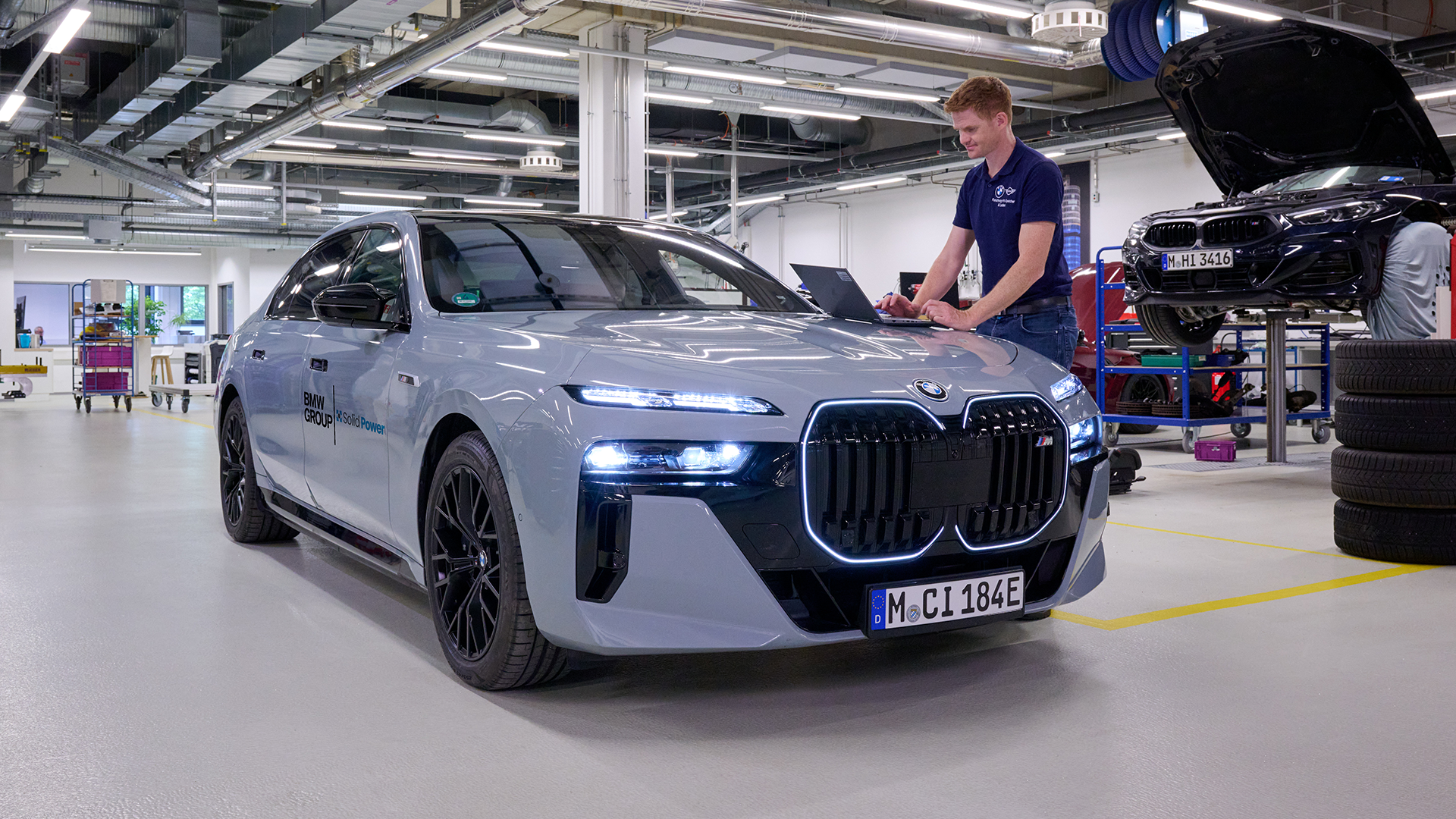
The race to develop solid-state batteries (SSBs) — the next big leap in EV technology — is heating up. BMW has announced a new partnership with Samsung SDI, joining forces with its existing collaborator Solid Power to advance research and validation of all-solid-state battery (ASSB) cells.
This move strengthens BMW’s commitment to bringing solid-state batteries from prototype to production, a milestone that could dramatically boost driving range, safety, and charging speed for future electric vehicles.

How the Partnership Works
Under the new collaboration, Samsung SDI will co-develop and test BMW’s ASSB cells using materials provided by Solid Power, a Colorado-based startup specializing in sulfide-based solid electrolytes.
Solid Power will continue supplying its proprietary electrolyte — the key ingredient that replaces the flammable liquid found in traditional lithium-ion batteries. Samsung SDI, leveraging its global manufacturing expertise, will integrate this material into separators and assemble the battery cells for evaluation.
“Our solid electrolyte technology is designed for stability and conductivity,” said John Van Scoter, CEO of Solid Power. “By working closely with global leaders like BMW and Samsung SDI, we aim to bring all-solid-state battery technology closer to commercial reality.”
What Makes Solid-State Batteries So Promising
Solid-state batteries replace the liquid electrolyte in standard lithium-ion packs with a solid material — often made from sulfides, ceramics, or polymers.
The benefits are substantial:
-
Higher energy density, meaning more range per charge.
-
Faster charging times, with less heat buildup.
-
Improved safety, since solid electrolytes are non-flammable.
-
Longer cycle life, reducing degradation over time.
Solid Power claims its silicon-anode SSBs with sulfide electrolytes can reach 390 Wh/kg, already above the typical 200–300 Wh/kg found in most lithium-ion cells. With a lithium-metal anode, energy density could climb to 440 Wh/kg — and potentially as high as 560 Wh/kg in future “conversion-type” designs.
Samsung SDI Brings Scale and Manufacturing Expertise
As one of the world’s top 10 battery manufacturers, Samsung SDI ranked eighth globally in battery usage during the first nine months of 2025, according to SNE Research.
Its participation gives BMW and Solid Power a significant edge: existing lithium-ion production lines can be adapted for SSB manufacturing, reducing development costs and speeding up commercialization.
For now, BMW says the project is limited to “evaluation vehicles” — next-generation prototypes used to test the new cells under real-world conditions. Whether this collaboration expands into full-scale production remains to be seen.
Challenges Ahead for Solid-State Technology
Despite their promise, solid-state batteries still face major hurdles. The main challenges include scaling production, ensuring long-term stability, and maintaining cost efficiency.
Solid Power itself has acknowledged that its most energy-dense “conversion-type” cathodes are still in early development stages, as detailed in recent SEC filings.
Yet BMW remains optimistic. The automaker aims to showcase a solid-state concept vehicle before 2030, signaling strong confidence that the technology is on track for commercial viability within the decade.

BMW Joins a Growing List of Global Contenders
BMW isn’t alone in the race. Across the auto industry, several major manufacturers are investing heavily in solid-state R&D:
-
Mercedes-Benz and Stellantis are partnering with Factorial Energy.
-
Volkswagen continues its collaboration with QuantumScape.
-
Chinese giants BYD, CATL, and WeLion New Energy are also developing their own SSB solutions.
With Samsung SDI now onboard, BMW is positioning itself as a serious contender in the global solid-state battery competition — one that could redefine the future of EV performance and efficiency.
In short: BMW’s alliance with Samsung SDI marks a crucial milestone in the company’s push toward solid-state commercialization, bringing the next generation of EV batteries one step closer to reality.
Recommend Reading: Nissan Targets 2028 Launch for Solid-State Batteries That Could Double EV Range
Partager:
Rivian R2: $45,000 Electric SUV That Can Power Your Home
2026 BMW i4 Delivers More Power, Extended Range, and Smarter Tech