



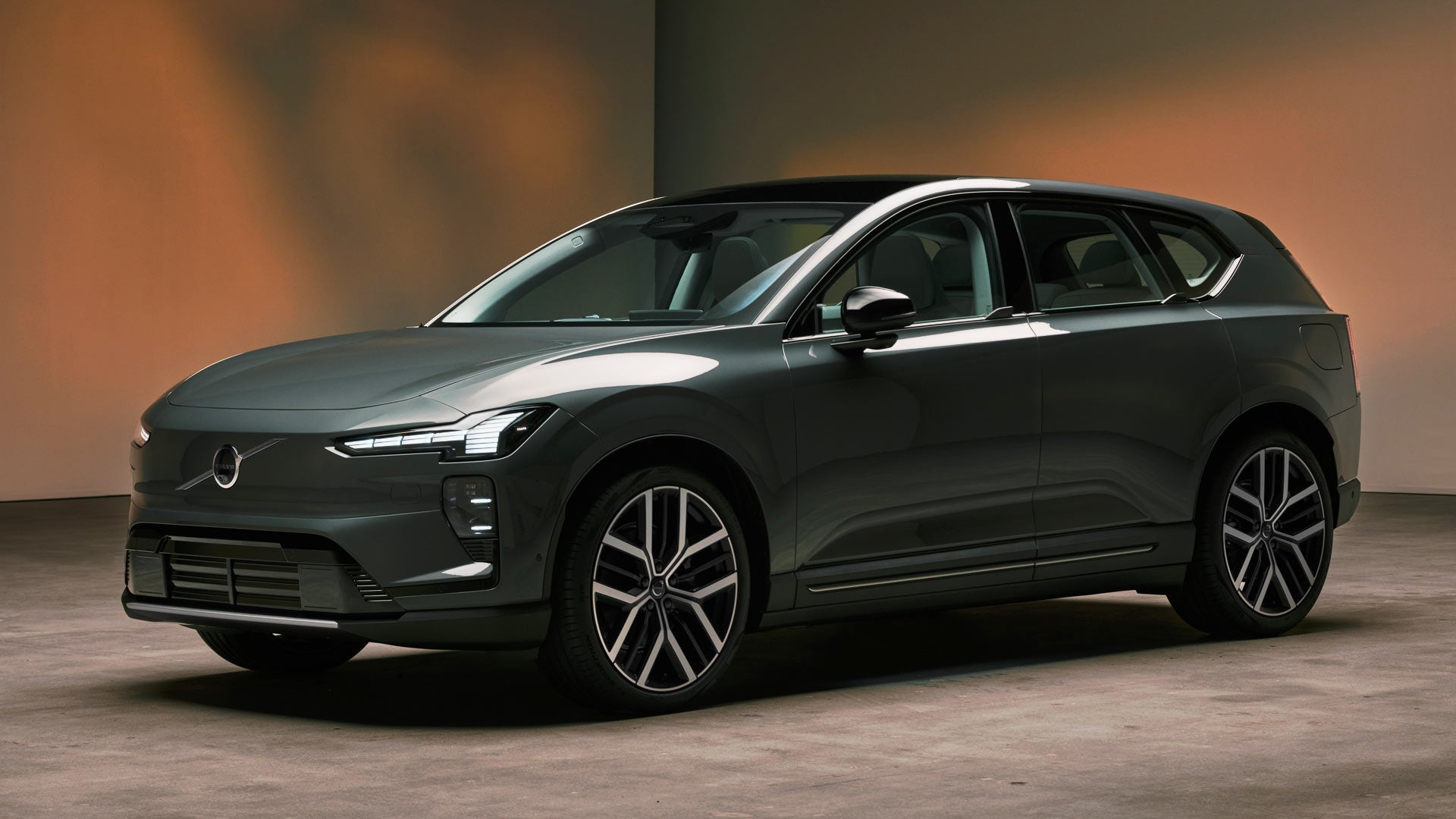
Why Current Volvo EVs Sit Higher Than Expected
Volvo’s latest electric models have drawn attention for their proportions. The new ES90, for example, does not fit neatly into the categories of sedan, fastback, or crossover. Its slightly elevated stance is not purely a styling decision. Much of it stems from the engineering foundation beneath the body.
The ES90 rides on SPA2, an architecture originally adapted from combustion-engine underpinnings. While heavily reworked for electric propulsion, it still carries structural constraints that affect cabin layout and ride height. The same basic structure supports the EX90 SUV and the Polestar 3, both of which are taller vehicles where packaging compromises are less noticeable.
In lower cars, however, those limitations become more obvious. Because the battery pack sits beneath the floor, rear passengers often experience a raised seating position with knees angled upward. This phenomenon has appeared in several EVs derived from gasoline platforms, creating interiors that feel less natural than purpose-built electric designs.

The Shift to SPA3: A Dedicated Electric Architecture
Volvo’s upcoming SPA3 platform is designed exclusively for battery-powered vehicles. According to the company’s chief technology officer, Anders Bell, earlier models were constrained by a uniform battery layout stretching evenly across the vehicle’s length. That approach forced the rear seating area to sit above the battery modules, increasing overall height.
With SPA3, engineers can alter the battery structure in targeted areas. By removing or reshaping cells beneath the rear footwells, they create space for passengers’ feet to drop lower. This allows seats to be positioned closer to the floor and reduces the roofline without sacrificing comfort.
Bell noted that a flat, uninterrupted battery across the chassis often results in vehicles that appear taller than intended. The new strategy aims to break that pattern, enabling more varied body styles. In addition, downward-oriented battery connections free up extra interior volume, further improving packaging flexibility.
The ability to modify the pack in this way is not yet widespread across the industry. Even among EV-only platforms, most manufacturers maintain a consistent battery slab to simplify production. Volvo’s approach suggests a greater emphasis on design diversity.
What This Means for Lower, Sleeker Models
The first vehicle to adopt SPA3 will be the EX60, an electric counterpart to the XC60. Early impressions indicate improved efficiency and extended range compared with Volvo’s current lineup. However, the EX60 remains a crossover—reflecting ongoing global demand for higher-riding vehicles.
Yet SPA3 was not conceived solely for SUVs. Bell has indicated that the new base can support significantly lower rooflines and more streamlined silhouettes. That flexibility reopens the possibility of a true electric wagon—something Volvo has not offered since discontinuing the V90, which was produced from 2016 to 2025.
For decades, Volvo’s identity has been closely associated with long-roof models. The absence of a battery-powered successor has left a noticeable gap in the brand’s portfolio. While no official confirmation of an electric wagon exists, the technical barriers that once prevented such a model appear to be easing.
The Competitive Landscape for Electric Wagons
The market for battery-powered wagons remains relatively small. A handful of manufacturers continue to serve the niche. BMW offers the i5 Touring, and reports suggest a wagon variant of its next-generation i3 may follow. Porsche markets a long-roof version of the Taycan, though cargo space is not class-leading. Audi’s European lineup includes an A6 E-Tron Avant, and Zeekr is preparing the 7GT, expected to deliver exceptionally rapid charging performance.
Despite these options, the segment lacks a dominant player. Volvo, historically synonymous with practical estate cars, could reassert its influence if it chooses to apply SPA3 to a low-profile body style.

Strategic Direction and Market Realities
Volvo’s future product decisions will likely balance engineering capability with consumer demand. Crossovers and SUVs continue to represent the bulk of global EV sales. Launching the EX60 first aligns with that reality.
Still, the company’s leadership has emphasized that the new architecture permits a broad spectrum of vehicle types—from tall family vehicles to low, aerodynamic designs. Whether the Swedish automaker ultimately invests in a fully electric wagon will depend on how it weighs heritage against market trends.
What is clear is that SPA3 removes a key technical constraint. By decoupling cabin height from battery thickness, Volvo gains the freedom to revisit body styles that were previously impractical in electric form. For enthusiasts who associate the brand with squared-off estates, that development may signal the beginning of a long-awaited return.
Recommend Reading: Volvo CEO Says the U.S. Is Built for EVs—and the Logic Is Hard to Ignore
Partager:
Scout Terra and Traveler: Specs, Range, Price and Launch Details
What GM’s Upcoming EV Architecture Will Change by 2028