



A Strategic Shift Beyond Ultium
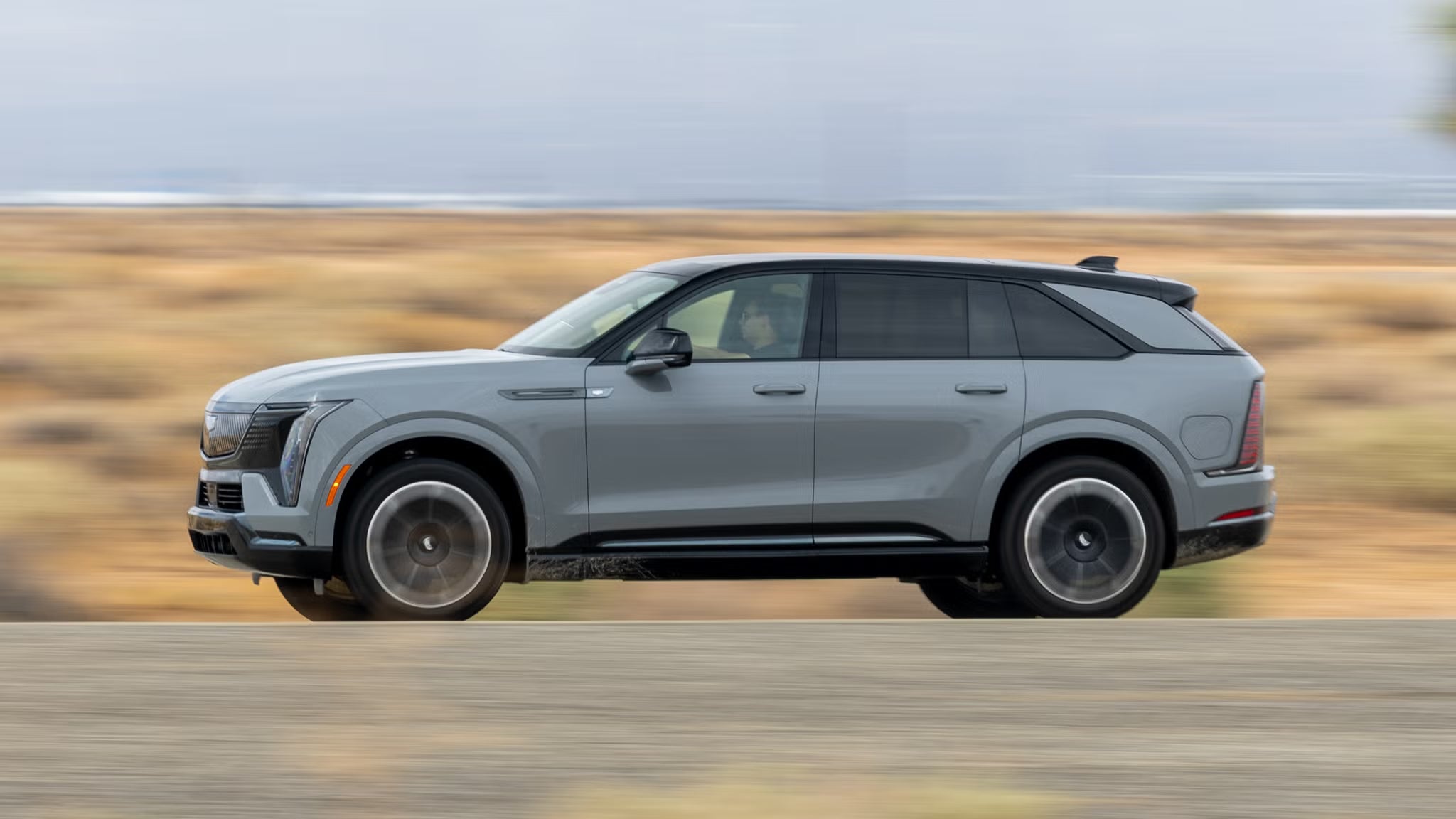
General Motors already fields one of the most extensive electric portfolios in the U.S., ranging from compact crossovers to heavy-duty pickups. Yet the company is preparing a significant overhaul of its EV strategy, with early elements expected to appear on the 2028 Cadillac Escalade IQ.
Rather than refining its existing approach, GM is restructuring both hardware and software foundations. Executives have indicated that future electric models will no longer rely on a single adaptable toolkit. Instead, the company is exploring multiple dedicated architectures tailored to specific vehicle sizes and purposes.
In the previous generation—commonly associated with the “Ultium” branding—GM deployed a flexible battery-and-motor system across several underlying structures. While adaptable, this method proved challenging when applied to very different body styles. According to Alexander Doss, GM’s Vehicle Dynamics Performance Integration Engineer, attempting to stretch one core system across diverse segments introduced compromises in layout and mass distribution.

Rethinking Physical Packaging
One of the primary criticisms of GM’s current EV lineup has centered on interior space efficiency and overall packaging. Large dashboards, high beltlines, and limited front storage areas have drawn comparison with competitors that prioritize compact layouts and front trunks.
Doss acknowledged that “packaging and mass” are now critical priorities. Future models are expected to benefit from re-engineered battery placement and lighter structural integration. Trucks and SUVs—previously built on the BT1 platform but sharing core electric components—may see more tailored solutions rather than relying on a broadly shared system.
The objective is straightforward: optimize each vehicle category instead of forcing uniform hardware across incompatible dimensions. That could mean distinct architectures for compact cars, midsize SUVs, and full-size trucks.
Transition to Centralized Computing
Beyond mechanical updates, GM is pursuing a substantial electrical redesign. The automaker intends to replace the traditional network of independent electronic control units with a centralized computing structure.
Historically, vehicles accumulated standalone modules as new features were introduced—each responsible for a narrow task. Over time, this led to increasingly complex wiring harnesses and added cost. GM’s new concept uses a high-speed Ethernet backbone connecting a powerful central processor to simplified zonal controllers distributed around the vehicle.
Each zone will manage local components, reducing cable length and streamlining data flow. This setup supports faster communication between systems and facilitates over-the-air software deployment. In practical terms, vehicles will function more like continuously updated digital platforms rather than static hardware products.
GM’s leadership views this shift as essential for a software-defined vehicle (SDV) future. Fewer modules, less copper wiring, and improved computational efficiency also contribute to manufacturing cost reductions.
Next-Generation Battery Chemistry
Battery technology will also evolve. GM has partnered with LG to develop prismatic cells using a lithium manganese-rich (LMR) chemistry. Compared with traditional nickel-manganese-cobalt formulations, this approach increases manganese content while reducing nickel usage.
The company expects these cells to improve driving range—particularly for large vehicles such as trucks and SUVs, where efficiency challenges are more pronounced. Although LMR batteries have historically raised durability concerns, GM states that its latest development aims to deliver longevity and performance comparable to earlier NMC packs, even in extreme temperatures.
Specific range figures have not yet been disclosed, but executives describe the new chemistry as a key enabler for heavier models.
Super Cruise Expands to Eyes-Off Capability
The 2028 Escalade IQ will serve as the launch vehicle for the next phase of GM’s advanced driver assistance system. Current versions of Super Cruise allow hands-free driving on mapped highways, though drivers must remain attentive.
The upcoming iteration introduces forward-facing lidar mounted above the windshield, paired with more powerful onboard computing. With these enhancements, GM plans to enable supervised “eyes-off” driving under defined conditions. At launch, activation will be restricted to certain highways and environments, with gradual expansion anticipated over time.
GM has suggested that occupants could engage in activities such as watching media while the system manages driving duties. However, operational boundaries and regulatory frameworks remain under development.
Visual indicators inside the cabin will signal when the advanced mode is active, reinforcing transparency between the vehicle and its occupants.
Constant Connectivity as Core Infrastructure
Another foundational element of GM’s next EV wave is persistent internet connectivity. Vehicles built on the new architecture are designed to remain continuously online, supporting rapid remote commands, seamless updates, and real-time data exchange.
The company describes this always-connected status as essential to delivering near-instant system responsiveness. It also supports advanced driving functions that depend on cloud communication and high-resolution mapping.

Looking Ahead
GM’s upcoming transformation extends beyond incremental upgrades. By revising structural platforms, computing architecture, battery chemistry, and automated driving capabilities, the company is repositioning its electric program for the latter part of the decade.
The 2028 Escalade IQ will act as the first public demonstration of these changes, but the broader shift signals a company-wide reset. If successful, GM’s next-generation EVs may offer improved efficiency, more adaptable packaging, and a deeper integration of software-driven features than today’s lineup.
Recommend Reading: Testing GM Super Cruise in Heavy Rain Reveals Its Real-World Limits
Partager:
Can Volvo’s New EV Platform Deliver a True Electric Wagon?
How Many Rivian R2 SUVs Will Be Delivered in 2026?