





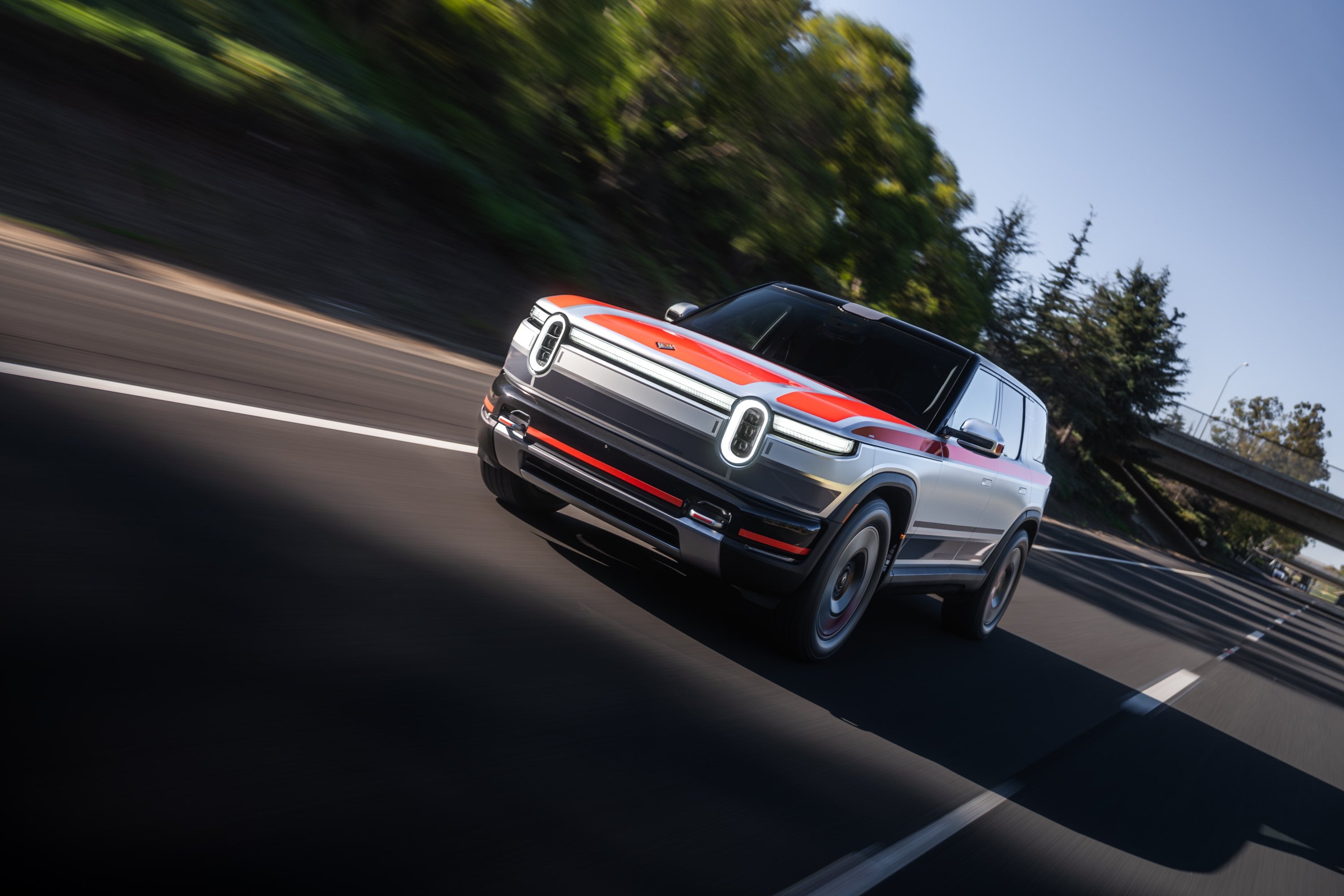
R2 Becomes Central to Rivian’s Growth Plan
Rivian’s upcoming R2 crossover represents a pivotal chapter for the electric vehicle manufacturer. Unlike the premium-priced R1T pickup and R1S SUV, the R2 is positioned as a more accessible model aimed at a broader audience. Its reception—and the company’s ability to manufacture it efficiently—will heavily influence Rivian’s near-term trajectory.
During the company’s fourth-quarter earnings discussion, Chief Financial Officer Claire McDonough outlined delivery projections for 2026. Rivian expects total shipments across all models to reach 62,000 to 67,000 units next year. By comparison, deliveries of the R1T, R1S, and commercial vans in the prior year totaled just over 42,000 vehicles, and those volumes are projected to remain roughly stable.
The implication is clear: incremental growth will largely depend on the R2.

Estimated First-Year Volume: 20,000–25,000 Units
If Rivian’s legacy models maintain output near last year’s level, the difference between that figure and the new total target suggests R2 deliveries of approximately 20,000 to 25,000 units in 2026.
For customers holding reservations, that estimate provides a rough sense of timing. Production is scheduled to begin in the second quarter, though executives cautioned that meaningful shipment numbers are unlikely before the latter half of the year.
Initially, manufacturing of the launch edition will operate on a single shift at Rivian’s facility in Normal, Illinois. A second shift is planned later in the year to support higher output as supply chains stabilize and assembly processes mature.
Scaling Up: Capacity and Long-Term Ambitions
Looking beyond the first year, Rivian’s leadership sees the R2 becoming the company’s primary volume driver. Founder and CEO RJ Scaringe recently indicated that by the end of 2027, the R2 could account for the majority of the brand’s overall production.
The Normal plant has undergone expansion and is now capable of producing up to 215,000 vehicles annually, including as many as 155,000 R2s once fully ramped. Further ahead, Rivian plans to build R2 and future models at a second factory currently under development in Georgia, signaling confidence in longer-term demand.
However, reaching those targets will require disciplined execution. Rivian’s early production history with the R1T and R1S was marked by delays and supply constraints. Management maintains that lessons learned from that rollout have improved readiness for the R2’s introduction.
Pricing Strategy and Market Positioning
Rivian has promoted a starting price of $45,000 for the R2, roughly half the average transaction cost of the larger R1S. That figure, though, applies to the standard configuration expected after launch. The debut version will likely carry a higher price tag.
More specifics about the initial trim are scheduled to be revealed on March 12. Rivian has indicated that the first variant will feature a dual-motor, all-wheel-drive setup similar to the prototype recently shown to media outlets.
The R2 enters a competitive compact electric SUV segment dominated by the Tesla Model Y, which remains the top-selling EV in the United States. Rivian is betting that a combination of distinctive design, off-road capability, and advanced software features will differentiate its offering.
Financial Performance and Ongoing Challenges
Rivian reported stronger-than-anticipated financial results for the fourth quarter, posting $1.29 billion in revenue and a $120 million gross profit. Notably, the company achieved its first full year of gross profitability—a milestone that excludes certain operating expenses but reflects progress in manufacturing efficiency.
Following the earnings announcement, Rivian’s stock price climbed 15% in after-hours trading, indicating renewed investor confidence.
Despite these improvements, Rivian expects continued net losses. Current guidance forecasts a $1.8 billion to $2.1 billion loss in 2026, underscoring the capital-intensive nature of scaling EV production.
Market Conditions Add Uncertainty
The R2’s launch arrives at a complicated moment for the U.S. electric vehicle market. The expiration of the $7,500 federal EV tax credit for some models and softer overall demand growth present additional hurdles.
Scaringe has previously argued that the EV segment needs more compelling alternatives to established leaders in order to accelerate adoption. He also stated that the company is better equipped operationally than it was during its 2021 debut.
Early driving impressions from several outlets suggest the R2 successfully translates Rivian’s premium design language into a smaller, more affordable package. Still, translating positive reviews into sustained sales will depend on smooth production scaling and consistent quality.

A Defining Year Ahead
In 2026, Rivian’s performance will hinge on whether it can deliver between 20,000 and 25,000 R2 crossovers while maintaining steady output of its existing models. Achieving that balance would mark a significant expansion for the company and validate its push into the mass-market segment.
Failure to execute efficiently, however, could slow momentum at a time when competition in the electric SUV space is intensifying. The coming year will reveal whether the R2 can fulfill its role as Rivian’s growth engine.
Recommend Reading: How Rivian Used R1 Feedback to Develop the New R2 SUV










Share:
What GM’s Upcoming EV Architecture Will Change by 2028
How Long Can a Tesla Model 3 Stay Warm at -35°F?