




A Breakthrough Announcement Draws Global Attention
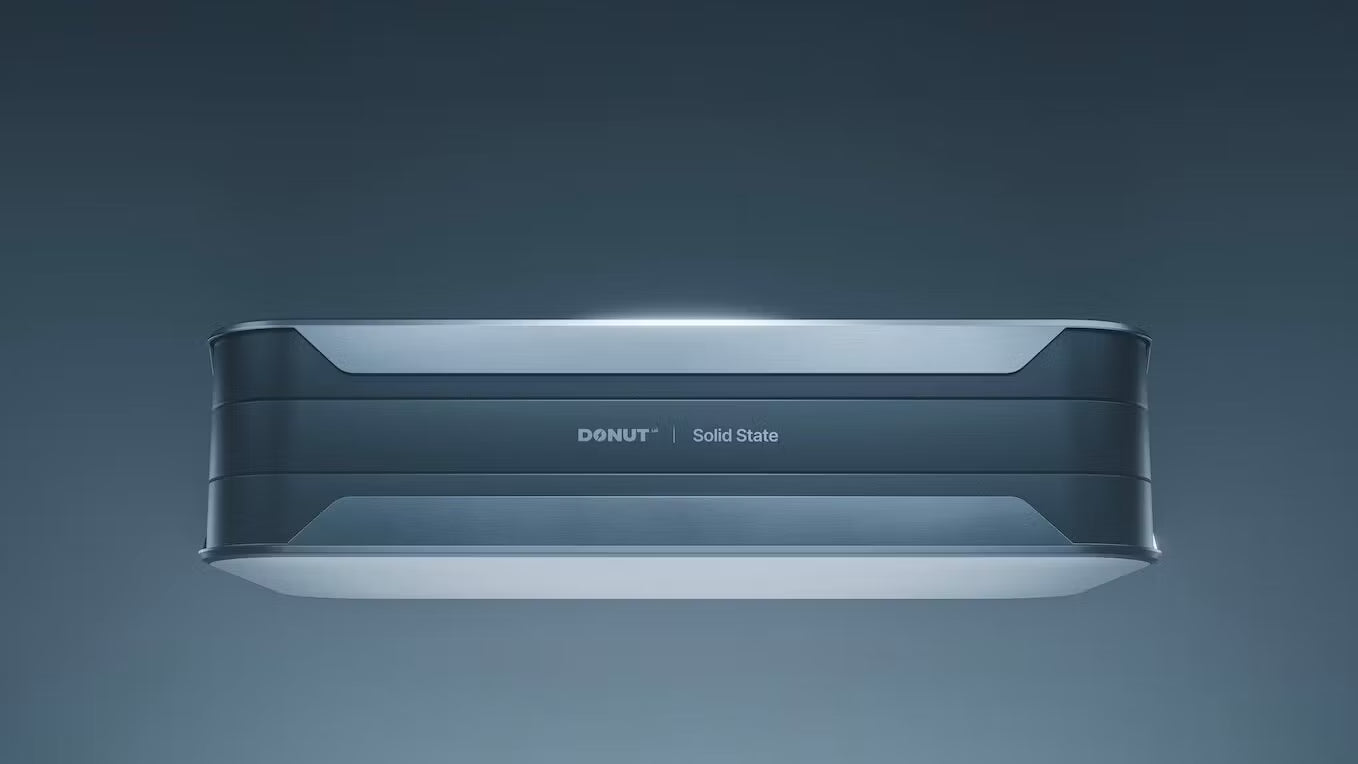
At this year’s Consumer Electronics Show, Verge Motorcycles and Finnish battery startup Donut Lab captured headlines by claiming a world first: a production-ready electric vehicle powered by an all-solid-state battery. The technology, if real, would represent a major leap beyond conventional lithium-ion packs, promising dramatic gains in safety, charging speed, and energy density.
The announcement centered on the Verge TS Pro electric motorcycle, which the companies said would begin customer deliveries in the first quarter of this year. That timeline placed a firm expectation on early adopters and industry watchers alike. However, just weeks later, questions began to emerge about whether those promises could be kept.

Delivery Timelines Quietly Move Further Out
According to Verge Motorcycles’ own website, new orders are now scheduled for delivery in the fourth quarter of the year, not Q1 as initially suggested. That change sparked speculation that the solid-state project had already hit delays.
Verge CEO Tuomo Lehtimäki pushed back on the idea of a blanket delay, clarifying that the revised timeline applies only to new orders, not early reservations. Bikes ordered last year are still expected to reach customers by late March, while recent U.S. orders are placed further back in the queue.
Still, conflicting public statements have added confusion. A Finnish business outlet quoted Lehtimäki as saying that some orders now extend into 2027, with only limited regional exceptions such as Finland and Estonia. While the CEO later reiterated that initial deliveries would begin as planned, the mixed messaging has raised doubts about production readiness.
Bold Battery Claims Meet Industry Skepticism
At the center of the controversy is Donut Lab’s solid-state battery itself. The company has claimed an energy density of 400 Wh/kg, nearly double that of most commercial lithium-ion cells today. It also says the battery can fully charge in five minutes, withstand 100,000 charge cycles, and remain completely fireproof.
Such specifications would represent a fundamental breakthrough not just for motorcycles, but for the entire EV industry. However, battery experts and major manufacturers have expressed strong skepticism, with some Chinese battery leaders openly disputing the feasibility of Donut Lab’s claims using current materials science.
To date, no independent validation, third-party testing, or public demonstrations have been released to substantiate the performance figures.
Certification May Be the Real Bottleneck
One factor that could explain the shifting timelines is certification. Verge has confirmed that it is still navigating regulatory approval processes in both Europe and the United States.
In the EU, electric motorcycles must pass Whole Vehicle Type Approval, a comprehensive process covering safety, design, and compliance. In the U.S., manufacturers must meet Federal Motor Vehicle Safety Standards, Environmental Protection Agency requirements, and various state-level regulations.
These approval processes can take months—or even more than a year, particularly for vehicles using unconventional technologies. Until certification is complete, large-scale customer deliveries cannot legally begin.
Limited Production Adds Another Constraint
Adding to the uncertainty, reports suggest that annual production may be limited to around 350 motorcycles this year. That low volume reinforces the idea that Verge’s solid-state model is still closer to a pilot program than mass production.
Without media test rides, third-party reviews, or confirmed customer deliveries, the technology remains largely theoretical despite the ambitious claims.

A Promising Idea Still Awaiting Proof
Solid-state batteries are widely viewed as the future of electric mobility, but most major automakers expect commercialization closer to the end of the decade. Verge and Donut Lab may be aiming to leapfrog that timeline—but until real-world bikes reach real customers, the project remains unproven.
For now, the world’s first solid-state battery EV exists more as a promise than a product.
Recommend Reading: Production-Ready Solid-State Battery Promises Ultra-Fast Charging









Share:
Ford Explores Potential EV Partnership With Geely as Global Alliances Accelerate
CATL and Changan Plan First Sodium-Ion EV Launch by 2026