





Sharp Drop in Honda’s Electric Vehicle Momentum
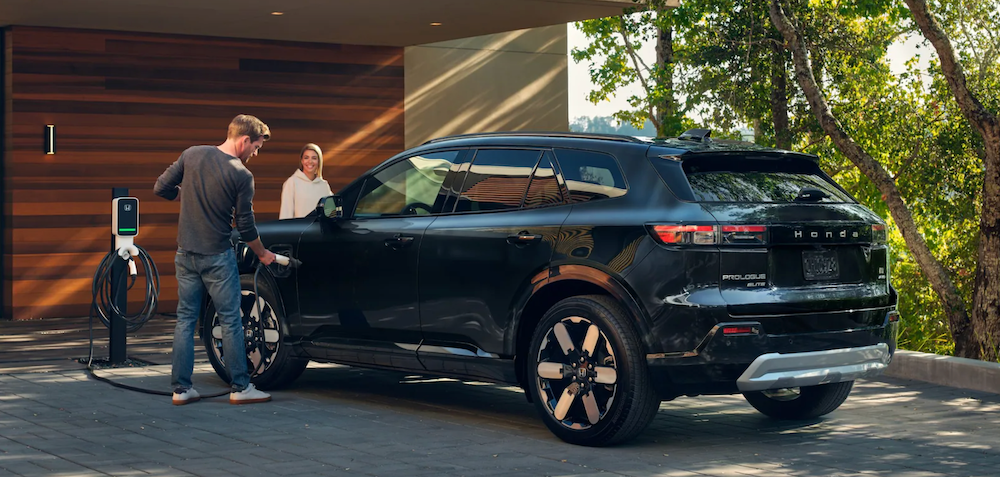
Honda’s push into battery-powered vehicles has hit a difficult stretch, with recent sales figures revealing a steep slowdown. During the most recent fiscal third quarter, the company recorded a dramatic decline in demand for its U.S.-market electric crossovers. The downturn has forced management to reconsider its broader electrification roadmap.
The most visible setback involves the Honda Prologue, which experienced an 86% quarter-over-quarter sales decline, falling to 2,641 units between October and December. This reversal came despite stronger annual performance earlier in the year. In total, Honda delivered 39,194 Prologue vehicles in the United States last year, marking an 18.7% increase over 2024. However, the late-year contraction overshadowed earlier gains.
The luxury-branded Acura ZDX, meanwhile, has already been discontinued after just one model cycle. Cumulative sales reached only 19,411 units, a figure that ultimately proved insufficient to justify continued production.

Partnership With GM Adds Financial Complexity
Both the Prologue and ZDX were built using technology supplied by General Motors, sharing underpinnings with GM’s own electric offerings. Manufacturing also took place at GM-operated facilities, including plants in Tennessee and Mexico.
Because Honda scaled back production volumes after sales slowed, it now faces financial obligations tied to reduced output. Industry reporting indicates the company will compensate GM for lower-than-expected manufacturing commitments. While exact figures have not been publicly detailed, the arrangement underscores the risks of platform-sharing agreements when market demand shifts abruptly.
For GM, the situation could present an indirect advantage. If Honda reduces reliance on the shared architecture, GM may redirect capacity toward its own branded models or alternative partnerships.
Mounting Losses in the EV Division
The slump in deliveries is occurring alongside broader financial pressure. Honda has reported four consecutive quarters of operating losses, with consolidated profit down 61% in the October–December period.
Electric vehicle operations have become a significant cost center. Over the first nine months of the fiscal year ending in March 2026, expenses and write-downs associated with the EV segment reached $1.71 billion. The company projects that figure could expand to $4.48 billion by fiscal year-end.
External policy changes are compounding the strain. U.S. import duties are expected to add approximately $1.98 billion in additional costs by March. As a result, Honda anticipates a 55% reduction in operating profit compared to previous projections.
These financial realities have prompted leadership to call for what it describes as a “fundamental review” of corporate strategy.
Incentives and Fleet Sales as Short-Term Measures
To stabilize volumes, Honda is attempting to expand fleet deliveries of the Prologue. At the same time, the company has relied heavily on manufacturer incentives to attract retail buyers.
Recent data suggests Honda contributed more than $17,000 per vehicle in support for each Prologue sold in the United States during the latest sales push. Even with that level of discounting, results remained modest. In one recent month, only 664 units were delivered.
This dynamic highlights a broader industry challenge: competitive pricing pressure in the EV market is eroding margins across multiple brands.
Pivot Toward In-House Electric Architecture
Facing setbacks tied to its collaboration with GM, Honda is accelerating development of a proprietary electric platform known as the 0 Series architecture. Unlike the Prologue and ZDX, which relied on external technology, future models will be built around Honda’s own engineering framework.
The first vehicle based on this new system will be the Acura RSX electric crossover, scheduled for release by the end of the year. Two additional models—a Honda-branded SUV and a sedan under the 0 Series name—are expected to follow.
This shift represents a strategic recalibration rather than a retreat from electrification. By investing in its own architecture, Honda aims to regain control over cost structure, supply chains, and long-term product planning.

Revised Ambitions in a Changing Market
Only a year ago, Honda outlined plans to sell up to two million electric vehicles globally by 2030. That forecast has since been adjusted downward to a range of 700,000 to 750,000 units. The revision reflects evolving regulatory policies, trade barriers, and slower-than-anticipated consumer adoption in certain markets.
The company’s experience illustrates the volatility facing automakers navigating the transition away from combustion engines. While demand for electric vehicles continues to grow overall, uneven regional policies and pricing competition are reshaping investment timelines.
For General Motors, Honda’s retrenchment could create room to expand its own electric portfolio without platform-sharing constraints. For Honda, the coming years will test whether internally developed technology can restore momentum.
Recommend Reading: Acura’s EV Bet Leaves Dealers Exposed During a Market Transition










Share:
2026 BYD Atto 3 Evo Specs: More Power, Bigger Battery
Scout Terra and Traveler: Specs, Range, Price and Launch Details