





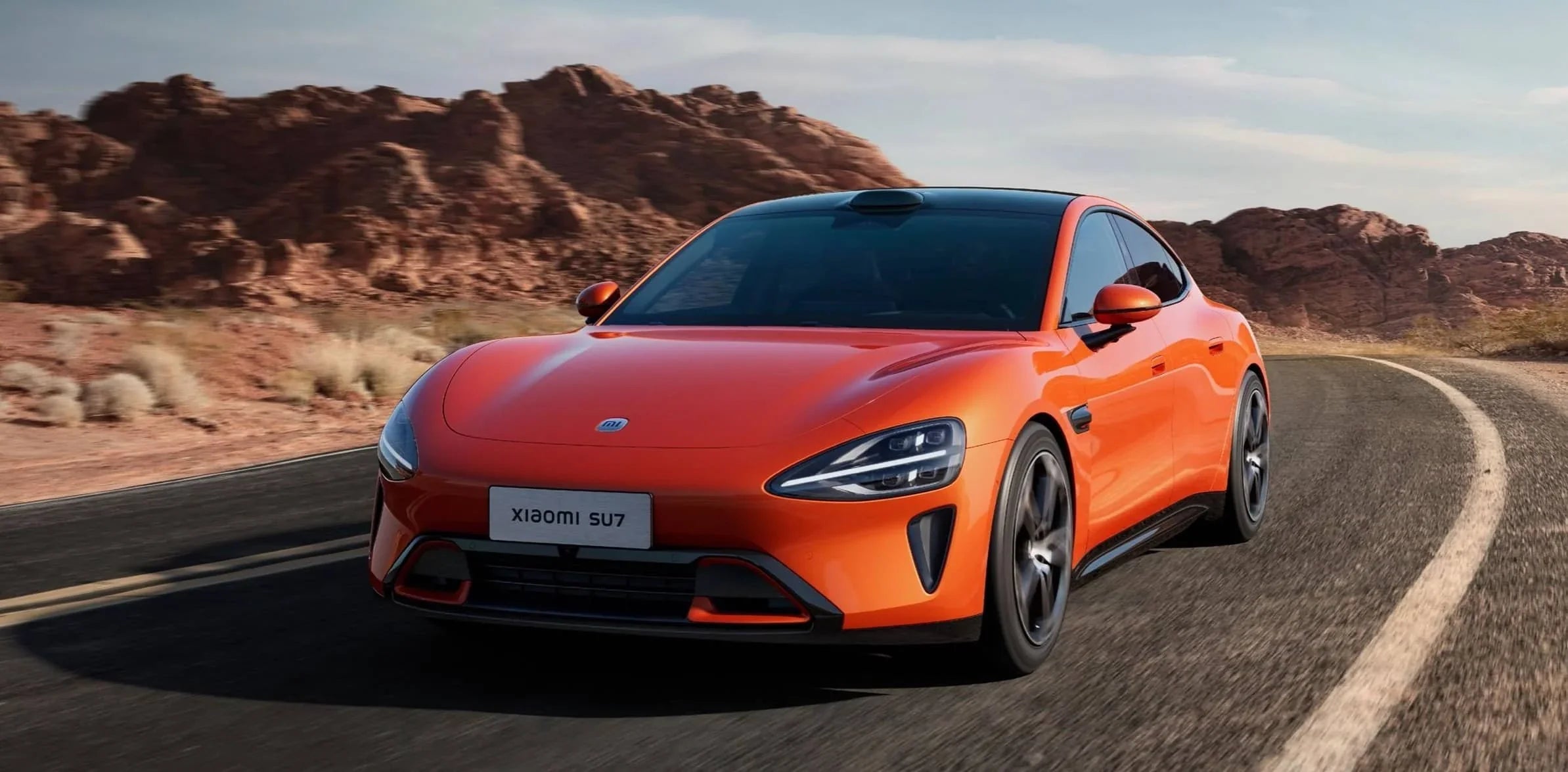
Rapid Updates Reflect a Fast-Moving Market
China’s electric vehicle sector has built a reputation for quick iteration cycles, with manufacturers frequently updating products soon after launch. The revised Xiaomi SU7 illustrates this approach clearly. Despite already achieving strong demand and broad attention, the model has been refreshed within a relatively short time frame.
Early test drives by several automotive reviewers ahead of its official release suggest that the latest version focuses less on radical redesign and more on refinement. Feedback consistently points to a vehicle that feels more polished without abandoning its original character.

Subtle Exterior Changes With Functional Tweaks
From the outside, the updated sedan remains visually close to its predecessor. Adjustments are limited to minor revisions at the front and rear, along with new wheel designs and color options.
A more notable change involves the door handles. The previous concealed design has been replaced with a new mechanism that can be operated both electronically and manually. This update appears to address earlier safety concerns raised about fully hidden systems, aligning the vehicle with evolving regulatory expectations.
Interior Enhancements Focus on Comfort and Usability
Inside the cabin, the revisions are more apparent. The center console layout has been reworked, drawing inspiration from Xiaomi’s crossover lineup. Additional mounting points have been integrated into the dashboard, allowing users to attach proprietary accessories developed within Xiaomi’s ecosystem.
Material upgrades are also evident. Laminated glass contributes to improved sound insulation, while soft-touch surfaces now appear in more areas, including the upper door panels and dashboard sections. Reviewers who experienced the car in person consistently highlighted a more upscale atmosphere compared to the earlier version.
Some noted that while cabin quietness has improved, competition within China’s EV market remains intense, with certain rivals still setting a high bar in acoustic comfort.
Engineering Updates Go Beyond Surface Changes
Beneath the exterior, the changes are more substantial than they initially appear. Structural modifications have been introduced to enhance both safety and handling. For example, the large glass roof is now reinforced by a central support element, effectively dividing it into two sections and increasing rigidity.
The vehicle also benefits from wider rear tires, contributing to improved grip. Higher-end variants now feature dual-chamber air suspension, which is expected to provide better ride quality and adaptability across driving conditions.
Powertrain updates include a new electric motor developed in-house. This unit offers faster rotational response and improved output figures. The base version now produces 320 horsepower, while the top configuration delivers 690 horsepower, marking a measurable increase over previous specifications.
Charging and Range See Meaningful Gains
One of the most significant upgrades lies in the electrical architecture. The entire lineup now adopts an 800-volt system, with even higher voltage levels in premium trims. This change enables both extended driving range and shorter charging times.
According to official figures, the longest-range version can reach up to 902 kilometers (560 miles) under China’s testing cycle. Additionally, rapid charging performance allows the car to recover approximately 670 kilometers (416 miles) of range in just 15 minutes under optimal conditions.
While these figures are based on a testing standard that tends to produce higher estimates, they still indicate meaningful progress in efficiency and charging capability.
Driving Experience and Technology Improvements
Initial driving impressions suggest that the updates translate into noticeable improvements on the road. Reviewers have pointed to smoother pedal calibration and more natural responsiveness, making the car feel less abrupt and more intuitive to control.
Handling has also received positive feedback, with sharper turn-in characteristics and better overall balance. These refinements contribute to a driving experience that feels more cohesive compared to earlier versions.
On the technology side, the vehicle now includes an upgraded driver-assistance system with increased processing capability. LiDAR sensors are standard across all variants, signaling Xiaomi’s intent to strengthen its position in advanced driver-assistance features.

A Strategic Step Toward Global Expansion
Although the changes may appear incremental when viewed individually, the combined effect is a more refined and competitive product. The consensus among early reviewers is that the updated model improves on nearly every aspect without altering its core identity.
This approach aligns with Xiaomi’s broader strategy of continuous product enhancement. With plans to begin exporting vehicles beyond China by 2027, the company appears to be preparing its lineup for more demanding international markets.
If the current trajectory continues, the SU7 could serve as a key model in establishing Xiaomi’s presence outside its home market, particularly as competition intensifies globally.
Recommend Reading: How Xiaomi Achieved EV Profitability Faster Than Nearly Every Automaker









Share:
EV Range Milestone: How 300 Miles Became Standard and 400 Could Follow
Zoox Expands Robotaxi Service to Austin and Miami in 2026