





The Evolution of Long-Range Electric Vehicles
The push for extended driving range has transformed the EV market over the past decade. Vehicles like the Tesla Model S demonstrated early on that electric cars could rival high-performance gas vehicles while offering practical daily usability. Beyond speed and styling, the Model S showcased software-driven features and introduced early autonomous capabilities, all while achieving an EPA-rated range surpassing 300 miles—an unprecedented figure at the time.
Since that breakthrough in 2016, battery technology and cost reductions have democratized 300-mile range EVs. Today, what was once a luxury feature is increasingly standard across multiple brands, signaling a broader shift in expectations for electric vehicles.
The 300-Mile Benchmark Now Widely Accessible
The number of EVs offering at least 300 miles of EPA range has expanded rapidly. According to industry analysis, 43 EV models for the 2025 model year already meet this standard, compared to just four in 2020. Projections suggest that by the end of 2026, around 60 models in the U.S. could reach this range.
This expansion is supported by both new launches and incremental improvements to existing models. Automakers have steadily upgraded battery capacity, with vehicles such as the Porsche Taycan now reaching 318 miles, and the Toyota bZ4X climbing to 314 miles after recent revisions.

Making Long-Range EVs More Affordable
In addition to technological progress, pricing for 300-mile EVs has declined sharply. When the Tesla Model 3 debuted in 2017, it made a 300-mile range attainable for around $44,000—a fraction of the cost of earlier high-range models.
Subsequent introductions, like the Chevy Equinox EV with 319 miles at $33,495 and the refreshed 2026 Nissan Leaf starting at $29,990 for 303 miles, highlight how lower entry prices have broadened access. Adjusted for inflation, the cost of a 300-mile EV has roughly halved since the Model 3’s launch.
Now, multiple options under $40,000 exist, including models like the Subaru Uncharted, the discounted Hyundai Ioniq 5, and the Tesla Model 3, making long-range electric mobility feasible for a wider range of consumers.

Looking Toward 400 Miles
While 300 miles has become a de facto standard, automakers are exploring the next frontier: 400 miles of range. Initial leaders in this space were high-end sedans or large SUVs capable of housing large battery packs, such as the Lucid Air, Tesla Model S, and Cadillac Escalade IQ. These vehicles remain largely luxury offerings, with prices far above mainstream EVs.
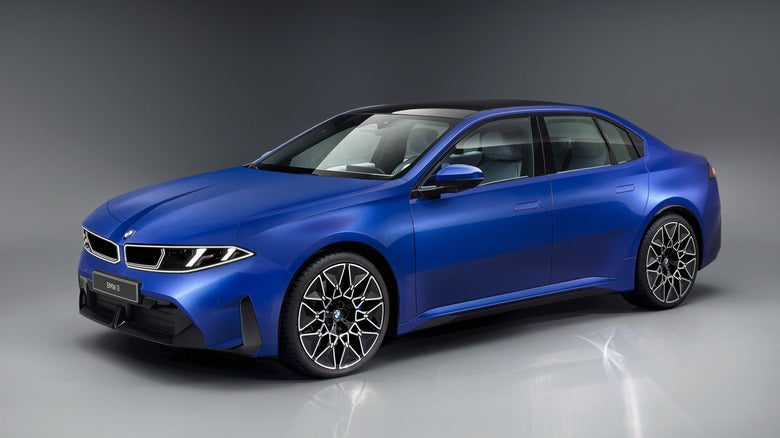
Emerging examples suggest this threshold may become more accessible. Models like the BMW iX3 and Volvo EX60 are expected to achieve 400-mile estimates while targeting mainstream midsize SUV buyers. The 2027 BMW i3 aims for 440 miles, using innovative cell-to-pack designs that reduce weight and maximize energy density.

Challenges and Considerations
Expanding 400-mile range to smaller, more affordable vehicles remains difficult. Achieving such distances requires advances in battery chemistry, energy density, and packaging efficiency. While lithium-iron-phosphate (LFP) batteries lower costs and improve durability, they lack the energy density needed for extreme ranges, meaning longer-range EVs will likely rely on high-nickel cells or next-generation solid-state technologies.
Additionally, the practical need for 400 miles varies. The average American drives roughly 30 miles per day, making a 300-mile battery sufficient for weekly commuting without frequent charging. High-capacity batteries are mainly advantageous for long road trips, especially when paired with faster charging infrastructure. Expanding networks and ultra-fast charging, such as BYD’s 10-minute top-up capabilities, may reduce the necessity for larger ranges over time.
The “What If” Factor in Consumer Behavior
Despite practical considerations, consumer psychology drives demand for extra range. Buyers often prioritize “just in case” scenarios, similar to how larger vehicles like SUVs are purchased despite limited daily occupancy. This tendency ensures that 400-mile EVs will continue to attract buyers, particularly among those seeking top-tier models or high-end SUVs, even if most daily trips do not require such distances.
The combination of competition, efficiency improvements, battery advancements, and consumer expectations indicates that 400-mile EVs will gradually grow in prevalence, first in premium segments and eventually as technologies mature and costs decline.
Recommend Reading: Do Some EVs Beat Their EPA Range? Real-World Test Results










Share:
Tesla Sales in Europe Rise After Over a Year of Declines
Xiaomi SU7 Facelift Review: What’s New and Improved in 2026