



Chinese EVs Expand Into Europe
GAC, a lesser-known Chinese automaker, has officially started building electric vehicles in the European Union. This move comes through a newly announced partnership with Magna, the contract manufacturer behind the Mercedes-Benz G-Class, Jaguar I-Pace, and the discontinued Fisker Ocean.
This strategy mirrors what Xpeng, another rising Chinese EV brand, did earlier this year to launch local production in Europe and bypass tariffs that heavily impact Chinese imports. Meanwhile, Magna benefits by securing ongoing work after production of the Jaguar I-Pace and Fisker Ocean ended.

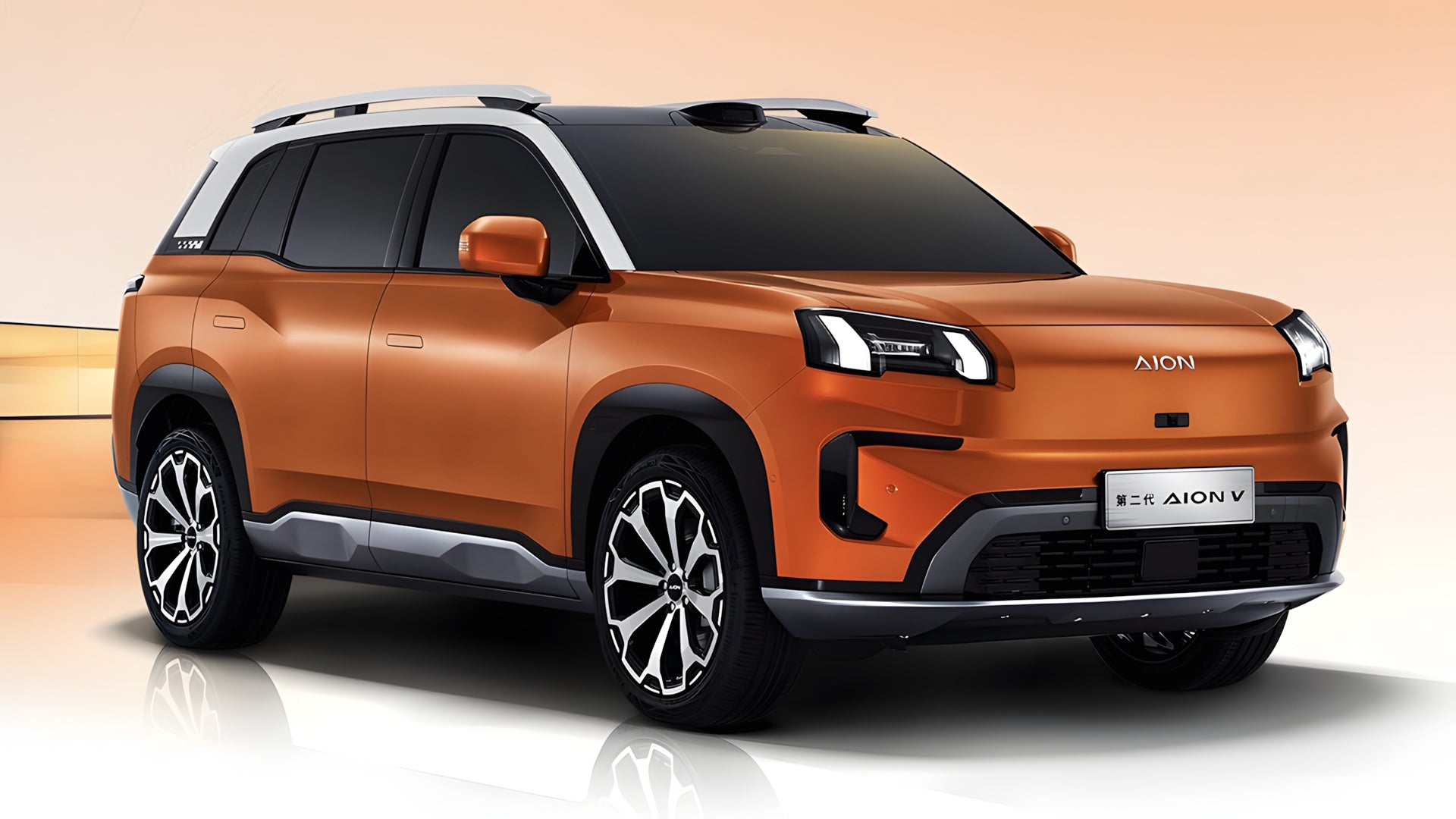
The First Model: GAC Aion V
The first European-made GAC vehicle is the Aion V, a five-door electric crossover. Recently crash-tested by Euro NCAP, the model earned a five-star rating, surpassing some legacy European automakers whose vehicles achieved only four stars.
The Aion V is equipped with a front-mounted drive unit producing 201 horsepower and a single 75.2-kWh lithium iron phosphate (LFP) battery, providing a WLTP-certified range of 316 miles. On the EPA cycle, this would translate to roughly 271 miles.
While the Aion V’s performance isn’t groundbreaking, the vehicle shines in standard equipment and pricing, which is characteristic of many Chinese EVs.
Equipment and Pricing
The 181-inch-long crossover starts at $41,500 (€35,990) in Germany, including VAT. For that price, buyers receive a compact EV similar in size to a Toyota RAV4, with features often reserved for more expensive models:
-
Panoramic sunroof
-
Heated steering wheel
-
Six-way power-adjustable driver seat
-
Heated and ventilated front seats
-
Heated rear seats
-
Dual-zone automatic climate control with heat pump
-
Automatic high beams
-
Two integrated displays
Charging capability is competitive, with 180 kW DC fast-charging and 11 kW AC.
Comparison With Tesla
For context, the Tesla Model Y Standard in Germany, which is longer and wider than the GAC Aion V, costs $46,000 (€39,990). The Euro-spec Model Y is built at Tesla’s German factory, avoiding tariffs that affect imported Chinese EVs. Tesla’s Shanghai-built Model 3 still faces tariffs in Europe, and the company has not announced plans for local production of that model.
By comparison, GAC’s Aion V offers a strong value proposition, with solid features at a lower price point, demonstrating the competitive pressure Chinese EVs are bringing to the European market.
Strategic Approach to Production
GAC is not alone in targeting Europe. Several Chinese automakers are pursuing similar paths to establish a foothold:
-
Leapmotor, in partnership with Stellantis, briefly planned to build its T03 EV in Poland but canceled the project. The company now aims to produce an electric crossover in Spain next year.
-
Xpeng, like GAC, partnered with Magna to assemble two models in Austria.
-
BYD is preparing to launch its first European factory in Hungary by year-end.
These moves reflect a trend: Chinese EV brands are leveraging local production to avoid tariffs, reduce costs, and quickly adapt to European preferences.
Magna’s Role
Magna plays a critical role as a European manufacturing partner. Known for high-quality assembly of premium vehicles, Magna ensures that models like the Aion V meet European safety and quality standards.
This arrangement benefits both parties. GAC gains immediate production capability and market entry, while Magna secures work following the end of other contract production projects, maintaining operations and workforce utilization.
Why Europe Matters
Europe is increasingly vital for Chinese EV brands. The region’s strong EV adoption, supportive infrastructure, and premium-conscious consumers create significant market potential. By producing vehicles locally, brands like GAC can:
-
Avoid heavy import tariffs
-
Offer competitive pricing
-
Tailor vehicles to local preferences
-
Ensure faster delivery and after-sales support
For GAC, the Aion V serves as a test case for understanding European consumer behavior while building credibility in a competitive market.

Looking Ahead
If successful, the Aion V could pave the way for a broader European expansion for GAC. Subsequent models are expected to follow, potentially challenging both traditional automakers and other Chinese entrants like Xpeng and BYD.
With growing competition, features, pricing, and local production will likely determine which Chinese EV brands succeed in Europe. GAC’s approach demonstrates a blend of strategic partnerships, safety emphasis, and value-oriented offerings to capture market share.
As Chinese EV makers continue to refine their European strategies, consumers may soon find a wider range of affordable, well-equipped electric vehicles, reshaping the competitive landscape.
Recommend Reading: Xpeng Expands Its EV Ambitions in Europe With Affordable Models and Bold Tech
Share:
How Xiaomi Achieved EV Profitability Faster Than Nearly Every Automaker
2026 Cadillac Escalade IQ: Full-Electric Flagship With Massive Range