



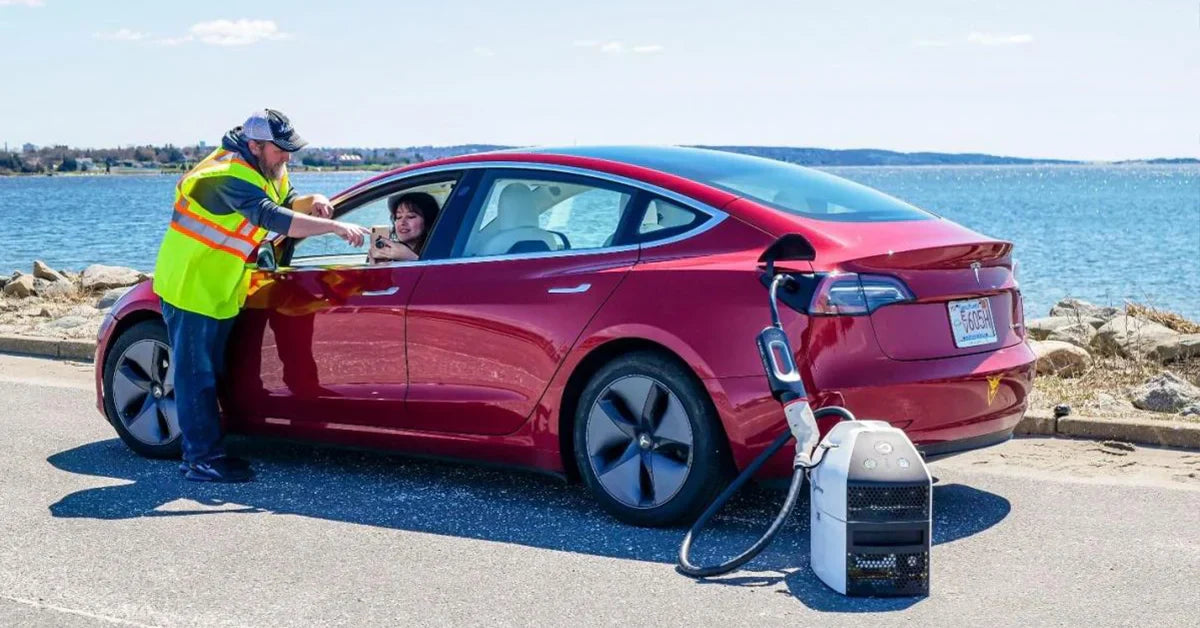
As electric vehicles gain mainstream traction, the expectations for roadside support are shifting. Traditional roadside assistance—focused on towing, jump-starts, and fuel delivery—no longer fits the needs of EV drivers who face issues such as depleted batteries, charger failures, software faults, and extreme-temperature charging limitations.
Over the past three years, a new category of EV-specific roadside services has rapidly expanded across the U.S., Europe, and Asia. These services are more than simple towing—they bring charging, diagnostics, and energy delivery directly to the stranded EV driver.
Below is an in-depth look at the key players, real-world examples, and why these services are quickly becoming essential infrastructure for the EV era.

Mobile DC Fast-Charging Vans: Energy Delivered to Your Car
One of the fastest-growing EV support innovations is the mobile charging van, equipped with battery packs or onboard generators capable of delivering Level 2 or even DC fast charging.
AAA Mobile Charging Units (U.S.)
Across states such as California, Texas, Florida, and Washington, AAA has deployed vans equipped with 5–10 kWh onboard batteries.
These units can deliver:
-
Level 2 charging (up to 7 kW)
-
10–15 miles of range within 15–20 minutes
-
Enough energy to reach the nearest public charger
AAA’s adoption proves that mobile charging is no longer experimental—it’s a mainstream service complementing towing.
SparkCharge “Roadie” and “ChargeUp” Network
Boston-based SparkCharge created the Roadie, a modular, portable DC fast charger that can be delivered anywhere. Their “ChargeUp” service sends a technician to a stranded EV and provides:
-
20–60 kW DC charging
-
Up to 1 mile of range per minute
-
Delivery through app-based on-demand booking
This is currently one of the only mobile DC fast-charging services widely available in the U.S., making it highly relevant for EV drivers who rely on fast delivery.
Germany’s ADAC & Britain’s AA: European Leaders
Europe’s major auto clubs have added mobile charging units:
-
ADAC’s yellow roadside vans now carry 3.5 kW mobile chargers
-
The UK’s AA uses EV Boost units delivering up to 7 kW
In dense European cities with limited towing routes, mobile charging is becoming the primary EV rescue method.

Portable Energy Modules: Plug-and-Go Charging Anywhere
A newer category of roadside support involves portable battery packs—essentially large “power banks” for EVs.
NIO Power Mobile (China)
NIO operates the world’s most advanced EV roadside energy service. Its vans carry:
-
Up to 90 kWh of onboard energy
-
40–50 kW DC fast charging
-
Over 1,000 mobile service vehicles across China
NIO Power can not only charge a vehicle but also provide high-speed diagnostics, remote fault analysis, and battery health updates on the spot.
JDT PowerBox & CATL Portable Packs
Several Chinese suppliers are launching modular energy blocks that can be rolled out to stranded cars. These boxes deliver:
-
5–15 kWh
-
10–25 miles of emergency range
-
Compatibility with both CCS1 and Type 2
These are becoming popular with taxi fleets and last-mile delivery EV operators.

Battery Swap Roadside Support
NIO Mobile Swap Assistance
While NIO is famous for stationary swap stations, the company also deploys mobile swap support teams equipped to:
-
Tow the car to the nearest station
-
Perform on-site battery diagnostics
-
Pre-book a battery swap so the driver skips the queue
Although swap systems are not widely adopted outside China, the model demonstrates how deep integration between energy systems and roadside support can streamline EV ownership.
Software Diagnostics and OTA-Based Roadside Repair
EVs experience a unique type of roadside issue: software malfunctions, often related to charging, BMS communication, or sensor errors. Modern EV roadside services increasingly include:
Remote Diagnostics
EV service providers can:
-
Access error codes remotely
-
Perform real-time battery balancing
-
Push temporary fixes before a full repair
Mobile technicians from Tesla, Rivian, BMW, and Hyundai already use OTA-based recovery procedures to resolve:
-
Charge port failures
-
Cabin preconditioning issues affecting charging
-
High-voltage interlock loop errors
Many of these issues can be fixed without towing.
On-Site Firmware Resets
Technicians carry secure tablets that can:
-
Reflash a charging controller
-
Reset thermal management systems
-
Reactivate disabled battery modules
This reduces downtime and lowers the need for physical workshop visits.

Tow + Charge Combo Services
Some companies now combine towing with partial charging to avoid congested chargers.
Blink Roadside Partnership
Blink Charging partners with regional tow operators to offer:
-
2–5 kWh “quick charge” before towing
-
Delivery directly to a reliable charger, not the closest one
-
Priority access to Blink’s own DC fast chargers
This is becoming common in states with charger reliability issues.
Smart Rescue Fleets for Commercial EV Operators
Delivery fleets and ride-hailing companies operate on tight schedules, so EV downtime is expensive. To address this, new commercial roadside solutions are emerging.
Ryder + In-Charge Energy
Ryder’s EV rental fleet uses mobile service units capable of:
-
Unit-to-vehicle portable charging
-
On-site battery thermal conditioning
-
Fast diagnostics for commercial-grade packs
This helps fleets avoid costly towing and reduces lost driving hours.
Uber’s Fleet Rescue Partnerships
In select cities, Uber partners with mobile energy companies to provide rapid recovery for drivers using EVs, including:
-
On-demand charging
-
Fault analysis
-
Temporary battery warm-up in extreme cold
The service is still limited but reflects a growing trend.

Why EV-Friendly Roadside Services Matter
As EV adoption grows, several factors make these new services essential:
-
Public charger reliability remains inconsistent
-
Range anxiety still affects new EV drivers
-
Battery performance varies dramatically in extreme weather
-
Software issues create new types of roadside failures
Most importantly, towing an EV is time-consuming and expensive compared to delivering 10–20 miles of power on the spot.
These services bridge the transition period between today’s imperfect charging network and a future where charging is plentiful, fast, and reliable.

Looking Ahead: What’s Next?
We can expect rapid growth in:
-
Mobile 100–200 kW DC charging trucks
-
Small-scale battery trailers for fleet operators
-
Smart roadside robots capable of autonomous energy delivery
-
AI-powered predictive rescue dispatching
EV roadside services are evolving faster than gas-car support ever did.
They are becoming a crucial safety net for modern drivers and an important business opportunity in the EV ecosystem.
Recommend Reading: Google Maps Adds Live Supercharger Data to Simplify EV Travel


Share:
How to Manage Battery Range on Remote Trips
How to Cut EV Charging Costs by 30%: Practical Strategies That Actually Work