





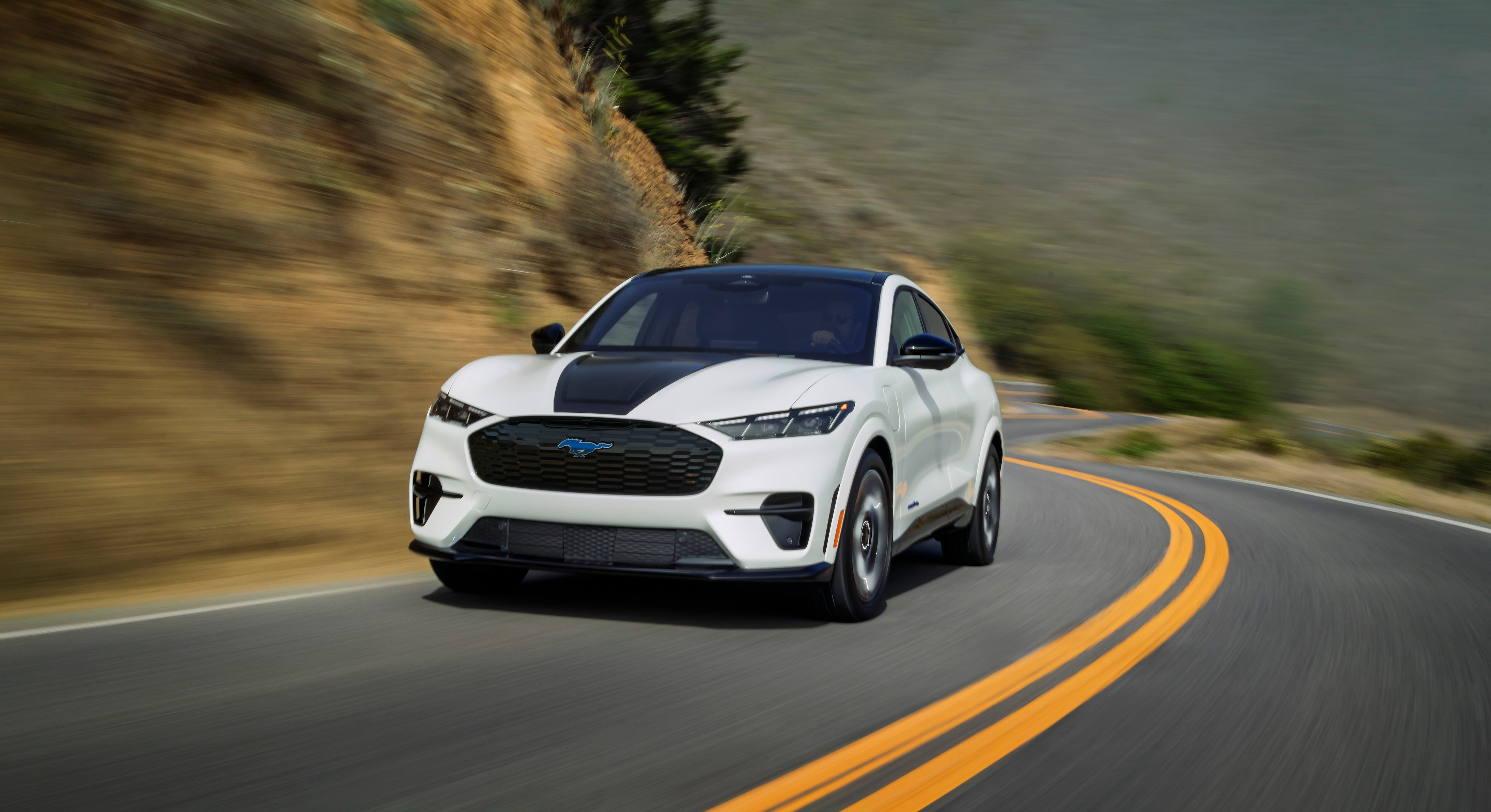
Ford Turns Front Storage Into an Extra-Cost Feature
Ford will no longer include a front trunk as standard equipment on the 2026 Mustang Mach-E. Buyers who want access to the storage compartment beneath the hood must now pay $495, ending five years of including the feature at no additional charge.
The change was first noted by Ford Authority, which reported that the automaker decided to make the front cargo area optional after reviewing customer usage patterns. According to Ford’s planning team, many owners were not regularly using the compartment, making it a candidate for cost reduction or monetization.

A Feature Once Central to the Mach-E’s Identity
When the Mach-E debuted for the 2021 model year, its forward storage area was promoted as one of the vehicle’s standout attributes. With close to 5 cubic feet of capacity and a built-in drain, it could function as everything from luggage space to a washable cooler for ice and drinks.
That practicality was trimmed in 2024, when Ford introduced a heat pump that reduced the compartment’s size by roughly half. Even so, the reshaped space remained usable for smaller items such as gym bags or carry-on luggage. Compared with some rival electric vehicles offering minimal front storage—or none at all—the Mach-E’s solution was considered relatively functional.
Under the new structure, however, the physical space remains under the hood, but access will require the added payment. Without selecting the option, customers effectively forgo using that area for cargo.
Industry Trend Toward Monetizing Features
Ford’s decision reflects a broader shift in the automotive sector. In recent years, manufacturers have increasingly experimented with subscription services and paid unlocks for features that were once bundled into the purchase price.
While a $495 charge is modest compared with some software-based upgrades, the principle may draw attention. Front storage in electric vehicles exists largely because the absence of an internal combustion engine frees up space. Charging separately for its usability may strike some buyers as unconventional.
Ford is not alone in attaching a price tag to forward cargo compartments. The Dodge Charger EV, for example, offers a 1.5-cubic-foot front storage area as part of a broader R/T package costing about $5,000. In that case, the compartment is bundled with performance enhancements and additional equipment, rather than sold as a standalone option.
How Important Is a Frunk to Buyers?
The practical value of a front trunk varies widely across the EV market. Some models integrate sizable, well-shaped compartments, while others provide only shallow bins suitable for charging cables. In certain vehicles, the space is so limited that it holds little more than emergency equipment.
Sales data suggests that the presence of a front trunk is not necessarily decisive. The Tesla Model 3 and Tesla Model Y both include front storage and rank among the world’s best-selling electric vehicles. However, strong performers such as the Chevrolet Equinox EV and Volkswagen ID.4 do not offer comparable compartments in most configurations.
Similarly, several electric models from General Motors and the Volkswagen Group omit front trunks entirely, yet continue to post competitive global sales results. This pattern indicates that consumers prioritize factors such as price, range, charging access, and brand reputation over auxiliary cargo solutions.

Cost Savings or Consumer Backlash?
From a manufacturing standpoint, removing standard equipment can help manage production costs and simplify supply chains. If data shows limited usage, converting the feature into an option could improve margins without significantly affecting demand.
At the same time, the Mach-E’s original marketing emphasized versatility, with the front compartment highlighted as an innovative benefit of electric design. Charging extra for something previously included may prompt questions about value perception, particularly in a segment where competition is intensifying.
Whether buyers accept the change may depend on how often they rely on additional storage. For some drivers, the compartment is a convenient bonus. For others, it may have gone largely unused. If Ford’s internal research is accurate, most customers may not view the omission as a deal-breaker.
As electric vehicles continue to mature, automakers are reassessing which features remain standard and which can generate incremental revenue. The 2026 Mach-E’s optional front trunk illustrates how even seemingly inherent EV advantages are subject to reevaluation.
Recommend Reading: Ford Mustang Mach-E Records Best Sales Month as EV Market Heats Up


Share:
Donut Lab Says Solid-State Battery Test Results Are Imminent
Europe EV Sales Rise in January as U.S. Market Slows