



Startup Promises Independent Validation After CES Claims

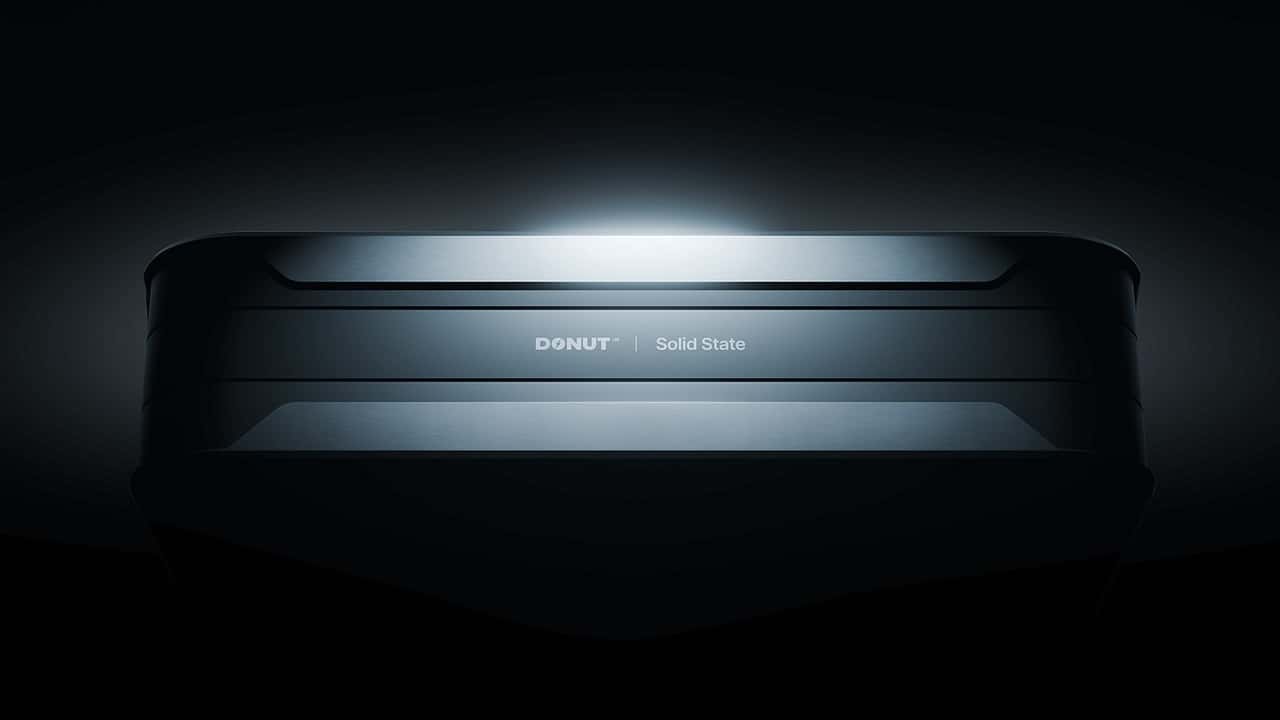
Finnish battery newcomer Donut Lab says it will soon release third-party verification to support its bold statements about a production-ready solid-state battery. The company, which drew widespread attention at this year’s Consumer Electronics Show, faced sharp criticism after presenting performance figures without accompanying technical documentation or live demonstrations.

In a recently published video update, Chief Executive Officer Marko Lehtimaki stated that independent assessments have already been conducted by VTT Technical Research Centre of Finland, a government-owned research institution. According to the company, detailed findings will be unveiled through a series of videos beginning February 23, alongside supporting material hosted on a newly launched website designed to address skepticism directly.

Production-Ready Solid-State Battery Promises Ultra-Fast Charging


Performance Targets That Raised Eyebrows

Solid-state battery development has long been viewed as a major technological leap for electric mobility. Industry leaders and emerging firms alike have pursued the concept for years, aiming to replace conventional liquid electrolytes with solid materials to improve safety, charging speed, durability, and energy density. Despite ongoing research, most major manufacturers indicate commercial readiness remains several years away.

Against that backdrop, Donut Lab’s specifications appeared unusually ambitious. The startup claims its battery achieves 400 watt-hours per kilogram, substantially above the 200–300 Wh/kg typical of current lithium-ion systems. It also asserts that charging can be completed in under 10 minutes, with a lifespan reaching 100,000 charge cycles—far beyond the roughly 1,500–3,000 cycles associated with many existing EV batteries.

The company further maintains that its chemistry avoids rare earth elements and toxic materials, and that the pack can operate in temperatures ranging from -30°C to 100°C. These performance thresholds, if verified, would represent a significant shift in battery capability.


Industry Pushback and Funding Pressures

At the trade show, however, observers noted the absence of technical papers, patent disclosures, or working demonstrations. Analysts and battery specialists questioned whether the stated metrics were achievable within current scientific constraints. The reaction was swift, with some established manufacturers publicly casting doubt on the feasibility of the claims.

Lehtimaki acknowledged that skepticism has tangible consequences. Heightened scrutiny, he said, complicates fundraising efforts essential for scaling manufacturing. He argued that releasing validated data is necessary both to reassure potential partners and to distinguish measurable results from marketing language.

The CEO also suggested that resistance from incumbent players is not unusual when disruptive technologies emerge. According to his remarks, transformative advances can threaten existing business models, making industry acceptance slower and more contentious.

Production-Ready Solid-State Battery Promises Ultra-Fast Charging


Planned Deployment With Verge Motorcycles

Donut Lab previously stated that its battery would be installed in a production motorcycle built by Verge Motorcycles during the first quarter of this year. Verge has reiterated that early manufacturing remains scheduled within that timeframe, though it cautioned that initial output will be extremely limited. Customers placing new orders may face deliveries later this year or possibly next year due to constrained volumes.

If the independent testing confirms the company’s performance figures, Donut Lab could challenge prevailing assumptions about the timeline for solid-state commercialization. Conversely, if results fall short of expectations, the episode may reinforce caution around breakthrough announcements in an industry accustomed to incremental progress.

For now, the startup’s strategy centers on transparency. By releasing third-party data into the public domain, Donut Lab aims to convert debate into measurable evaluation. Whether that approach restores confidence—or intensifies scrutiny—will likely depend on the rigor and completeness of the forthcoming evidence.

Recommend Reading: A Little-Known Automaker Could Bring Solid-State Batteries to U.S. Roads First

FAQs - Solid-State Batteries for Electric Vehicles

What is a solid-state battery in electric vehicles (EVs)?

A solid-state battery is an advanced energy storage technology that replaces the liquid or gel electrolyte in traditional lithium-ion batteries with a solid electrolyte. This design promises higher energy density, faster charging, and improved safety for electric vehicles.

How are solid-state batteries different from lithium-ion batteries?

Compared to conventional lithium-ion batteries, solid-state batteries:

  • Use solid electrolytes instead of flammable liquid electrolytes.
  • Offer higher energy density (more range in smaller size).
  • Support faster charging while reducing overheating risks.
  • Have the potential for longer cycle life and durability.
What are the main advantages of solid-state batteries for EVs?

Key benefits include:

  • Extended driving range (potentially over 500–700 miles per charge).
  • Enhanced safety due to reduced fire risks.
  • Faster charging speeds compared to current lithium-ion packs.
  • Longer lifespan, lowering total EV ownership costs.
What challenges are preventing mass production of solid-state batteries?

Despite their promise, solid-state batteries face hurdles such as:

  • High manufacturing costs compared to lithium-ion.
  • Scaling difficulties for large EV battery packs.
  • Durability issues with solid electrolytes under real-world conditions.
  • Need for new supply chains and production infrastructure.
Which automakers are developing solid-state batteries?

Several companies are investing heavily in solid-state EV technology, including:

  • Toyota (planning limited solid-state EVs by 2027).
  • BMW (working with Solid Power).
  • Volkswagen Group (via QuantumScape partnership).
  • Nissan (aiming for commercial use by 2028).
  • Startups like Factorial Energy, ProLogium, and SES are also key players.
When will solid-state battery EVs be available?

Industry forecasts suggest commercial solid-state EVs may debut around 2027–2030. Toyota and Nissan are leading with pilot projects, while startups like QuantumScape aim to deliver solid-state cells to automakers before 2030.

How much longer can EVs drive with solid-state batteries?

Solid-state batteries are expected to provide 50%–100% more energy density than lithium-ion packs. This could extend EV ranges from today’s 250–350 miles to 500–700 miles per charge, depending on vehicle design and efficiency.

Are solid-state batteries safer than lithium-ion batteries?

Yes. Because they use non-flammable solid electrolytes, solid-state batteries greatly reduce risks of thermal runaway, fires, and explosions. This safety improvement is one of the biggest reasons automakers are pursuing solid-state technology.

How will solid-state batteries impact EV charging times?

Solid-state batteries could enable 10–15 minute ultra-fast charging while reducing heat buildup. This is significantly faster than most current lithium-ion EVs, which typically require 30–60 minutes at DC fast chargers to reach 80% capacity.

What is the future outlook for solid-state EV batteries?

The future of solid-state batteries looks promising but will likely follow a gradual adoption curve:

  • 2025–2027: Pilot programs and premium/luxury EV models.
  • 2028–2030: Wider adoption in mainstream EVs.
  • Beyond 2030: Potential to replace lithium-ion as the dominant EV battery technology, unlocking higher range, lower costs, and safer energy storage.

EV News

View all

Volkswagen ID.3 Neo changes specs range interior updates

Volkswagen ID.3 Neo changes specs range interior updates

Volkswagen’s ID.3 Neo introduces major usability improvements, including physical controls, upgraded materials, and extended range up to 391 miles, marking a refined evolution of its compact EV.


Read more

Jeff Bezos-Backed Slate Auto Raises New Capital for Low-Cost Electric Truck Program

Jeff Bezos-Backed Slate Auto Raises New Capital for Low-Cost Electric Truck Program

Slate Auto secures $650 million in new funding to support its affordable EV truck program. The startup plans a stripped-down pickup with optional upgrades, aiming for production this year while navigating rising prices and a competitive EV market.

Read more

Lucid Motors Appoints New CEO and Secures Additional Investment

Lucid Motors Appoints New CEO and Secures Additional Investment

Lucid Motors names Silvio Napoli as its new CEO amid leadership transition and financial pressure. The company also receives major new investments from Saudi PIF and Uber as it prepares to scale production and expand its EV lineup.

Read more