





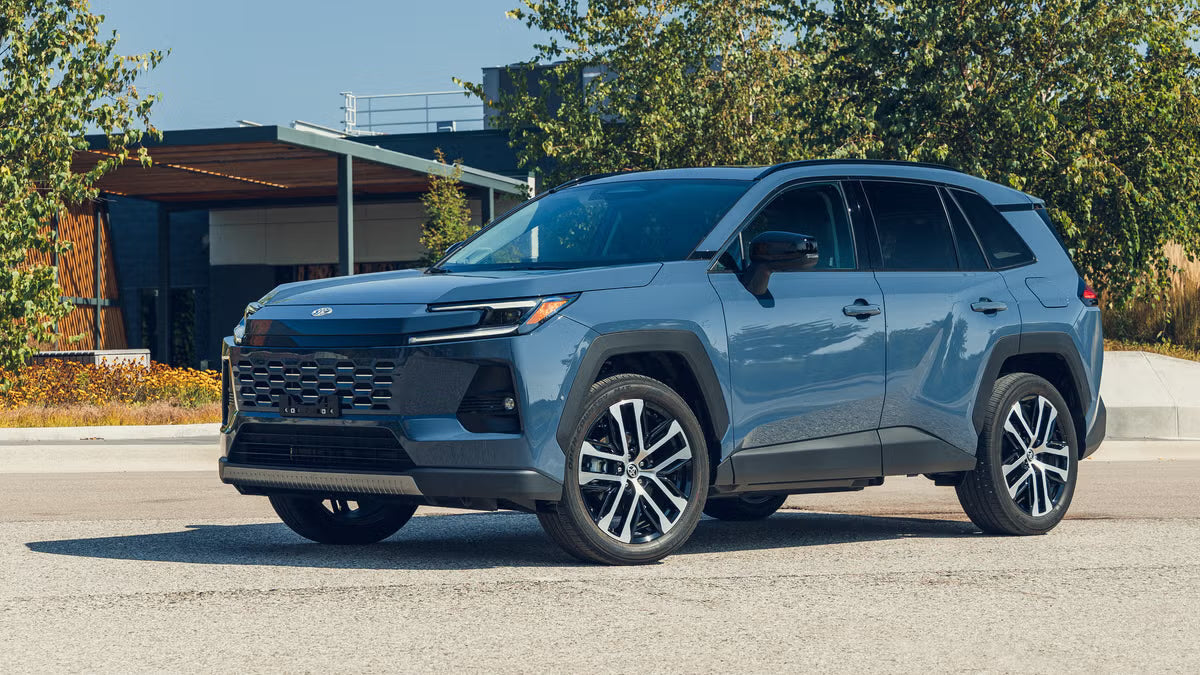
Lower Pricing Across the Lineup
Toyota has opened order books in the United States for the 2026 Toyota RAV4 Plug-In Hybrid, and the latest version arrives with a notable shift: pricing has moved downward compared with the outgoing model year.
The entry-level SE trim now starts at $42,950 including destination, which represents a $3,315 reduction versus last year’s equivalent configuration. In a market where vehicle prices have generally trended upward, this adjustment stands out.
The range has also expanded from two to four trims. Alongside the SE, buyers can now choose the Woodland, XSE, and a new performance-oriented GR Sport variant.

Expanded Trim Choices
One of the key additions is the Woodland grade, previously limited to the conventional hybrid version of the RAV4. For 2026, it becomes available with the plug-in hybrid system at a starting price of $46,750.
The XSE trim, positioned above Woodland, is listed at $48,650, which is $1,910 less than the comparable model it replaces. This reduction applies despite feature enhancements and updated equipment.
At the top of the lineup sits the GR Sport, a newly introduced flagship. Although it carries visual and chassis upgrades, its starting price of $49,950 is $610 below the former top-tier XSE Plug-In Hybrid from the prior model year.
Performance and Powertrain Enhancements
Under the hood, the RAV4 Plug-In Hybrid retains a 2.5-liter gasoline engine paired with an electric motor system. However, total system output increases to 320 horsepower, up from 302 horsepower previously.
All-wheel drive continues as standard equipment across the PHEV lineup, maintaining the model’s appeal for drivers in colder climates or those seeking added traction.
Beyond raw output, the suspension setup varies depending on trim. The GR Sport receives chassis tuning adjustments and a sport-focused exterior package, including revised bodywork and a broader stance. Despite these additions, it undercuts last year’s highest-priced variant.
Improved Electric Driving Capability
A larger battery pack enables a significant improvement in electric-only driving distance. The new model delivers up to 50 miles of all-electric range, compared with 42 miles for its predecessor.
This increase may reduce the need for gasoline usage during short daily commutes, allowing more owners to operate primarily in electric mode under typical conditions.
Charging options have also been upgraded. The Woodland and XSE trims now include DC fast-charging capability via a CCS connector as standard equipment. Toyota estimates that replenishing the battery from 10% to 80% can be completed in approximately 30 minutes at a compatible fast charger.
At home, using a Level 2 charging station, a full recharge requires several hours, consistent with expectations for vehicles in this category.

Value Positioning in a Competitive Segment
The revised pricing strategy and feature additions suggest Toyota is seeking stronger competitiveness in the plug-in hybrid SUV space. By lowering the entry cost while enhancing range, output, and charging capability, the 2026 RAV4 Plug-In Hybrid improves its overall value proposition.
Importantly, even the most expensive GR Sport trim undercuts last year’s top model while offering higher performance and distinctive styling cues. Meanwhile, the expanded trim selection allows buyers to prioritize efficiency, rugged aesthetics, or sportier dynamics without stepping outside the plug-in lineup.
In sum, the 2026 Toyota RAV4 Plug-In Hybrid arrives with lower prices, greater electric range, more power, and broader trim diversity. In a segment where incremental upgrades are common, this update represents a more comprehensive revision that could strengthen the model’s position in the U.S. market.
Recommend Reading: 2026 Toyota C-HR EV Review: Strengths and Weaknesses


Share:
Hyundai Ioniq 5 Sales Rise Despite Broader EV Slowdown
Tesla Cybercab Production Begins at Texas Factory