





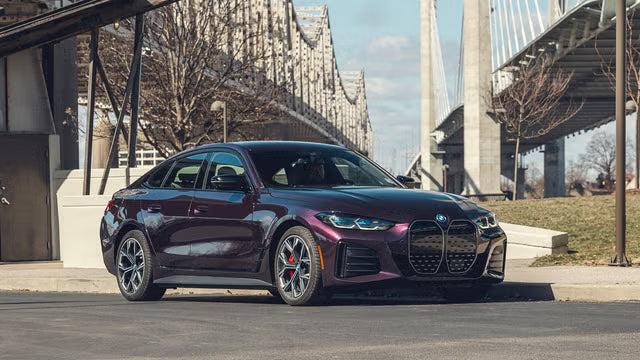
BMW closed 2025 with its strongest-ever sales performance in the United States, extending its record streak to a third consecutive year. However, beneath the headline numbers lies a clear shift in buyer behavior: plug-in hybrids and gasoline models powered BMW’s growth, while demand for fully electric vehicles softened sharply.
The results highlight a broader recalibration underway in the U.S. market, where customers appear increasingly cautious about committing to battery-electric vehicles amid changing incentives and economic uncertainty.

Strong Overall Sales Mask EV Weakness
BMW delivered 388,897 vehicles in the U.S. in 2025, representing a 4.7% increase year over year and marking a milestone during the brand’s 50th anniversary in the American market. Much of that success came from internal combustion and electrified hybrid models, which continued to resonate with mainstream buyers.
By contrast, BMW’s EV lineup struggled. Total U.S. EV sales fell to 42,484 units, down 16.7% compared to 2024. The slowdown became especially pronounced in the final months of the year, when incentive changes reshaped purchasing decisions.
EV Sales Drop Sharply in the Fourth Quarter
BMW’s electric vehicle sales declined most dramatically in Q4 2025. Following the expiration of the $7,500 federal EV tax credit for leases, BMW delivered just 7,557 EVs in the fourth quarter, a steep 45.5% year-over-year decline.
According to the company, the downturn reflected broader industry trends. BMW noted that BEV demand softened across the U.S. market throughout 2025, with the sharpest pullback occurring late in the year as affordability concerns intensified.
Plug-In Hybrids Gain Momentum Despite Market Headwinds
While EV sales declined, plug-in hybrids emerged as a key stabilizer for BMW’s electrification strategy. In Q4, BMW sold 7,141 PHEVs, nearly matching EV volumes despite a year-over-year drop for the quarter.
On a full-year basis, plug-in hybrids told a very different story. BMW sold 25,351 PHEVs in 2025, representing a 30.7% increase over 2024. The data suggests that many buyers are opting for partial electrification, valuing electric driving capability without the perceived compromises of full battery dependence.

BMW U.S. EV and PHEV Sales Breakdown
BMW U.S. EV Sales – Q4 and Full-Year 2025
BMW Bets on Choice and the Next-Gen iX3
BMW leadership maintains that flexibility remains central to its strategy. The brand continues to emphasize customer choice across gasoline, plug-in hybrid, and fully electric drivetrains, rather than forcing a single transition path.
That philosophy will soon be tested with the U.S. launch of the all-new BMW iX3, scheduled to arrive this summer. Built on a dedicated EV platform, the iX3 is positioned as an electric alternative to the X3—BMW’s best-selling vehicle in America.
BMW says the iX3 will offer up to 400 miles of driving range, 10–80% fast charging in roughly 21 minutes, 463 horsepower, and a significantly upgraded digital interior. The model is expected to play a critical role in restoring BMW’s EV momentum in the U.S.
Recommend Reading: BMW EVs Gain Access to Tesla Superchargers Ahead of Schedule


Share:
Costco Members Can Save Thousands on New Cadillac and Volvo EVs
Chevrolet Equinox EV Emerges as America’s Best-Selling Non-Tesla Electric Car